
In a bustling city that never seems to rest, a small and unnoticed life was fading away. Amid the constant flurry of pedestrians and the relentless sound of traffic, a solitary cat wandered through the crowded streets. Every step it took was fraught with difficulty and pain. While most people hurried past, a few stopped long enough to witness the struggle.
The cat made no sound, drew no attention to itself; it was merely trying to survive.
For those who paused to really see, it was evident that something was terribly amiss. The cat moved with a stiff and slow gait, often pausing as if to muster the strength for another step. Its body told a tale of prolonged suffering—from thirst, exhaustion, and neglect.
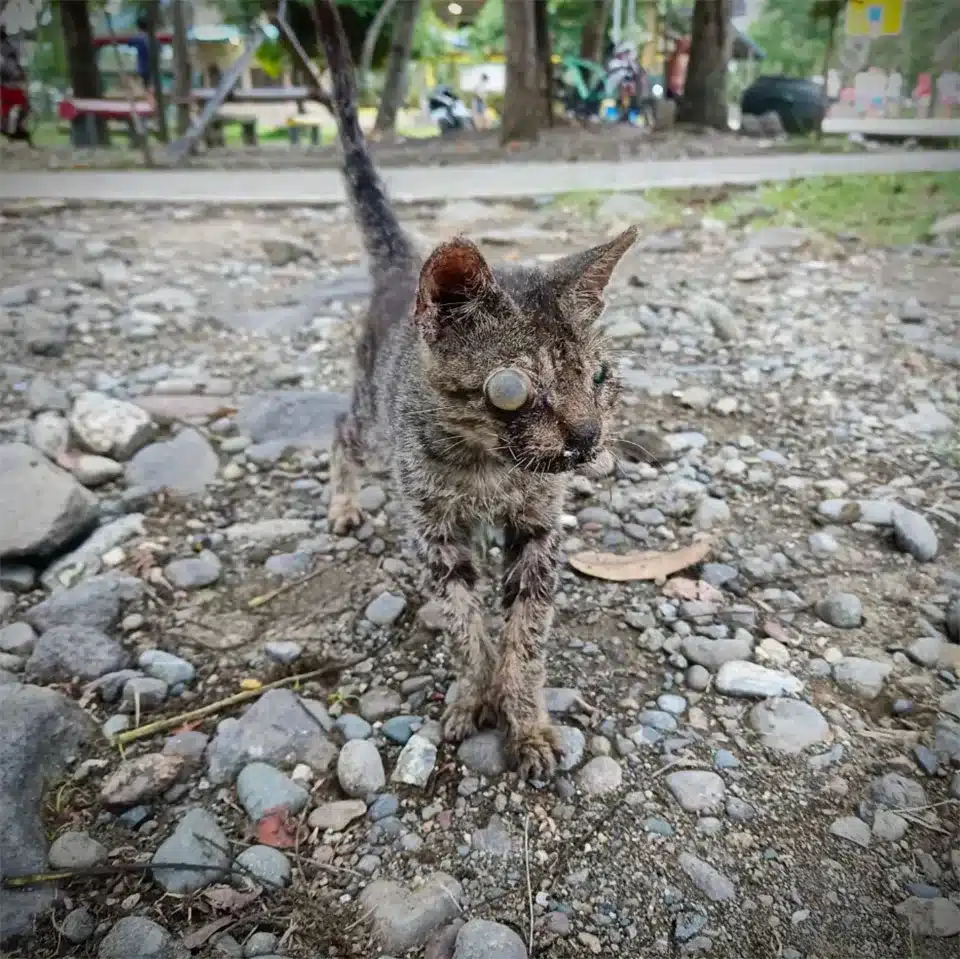
Then, someone made a life-changing call.
Before long, a local rescue team arrived, approaching with urgency but also care. They understood that a frightened animal might flee if approached too quickly, but the cat remained still. It seemed too exhausted to react.
Upon lifting the cat, the seriousness of its condition was undeniable. One eye was severely injured and infected, and dehydration had left it weak and frail. These weren’t fresh wounds—they were the culmination of weeks, maybe even longer, of enduring suffering alone.
The cat was rushed to a veterinary clinic where the staff was set for immediate action.
Dr. Marcus Lin, the attending veterinarian, recognized the urgency upon first glance. The injuries were severe and complications seemed inevitable. Timely intervention was critical for survival. The first step was stabilization: rehydrating the cat, administering medication for the infection, and handling it gently to reduce stress.
The most daunting task was yet to come.
Surgery was necessary for the injured eye.
For strays, such injuries can lead to widespread infection and severe health issues if left untreated. Dr. Lin and his team worked meticulously, knowing the precision required to prevent further damage. After hours of delicate surgery, they felt cautious relief. The critical phase was over, but the recovery journey was just beginning.
The path to recovery would be long.
In the days following the surgery, the cat needed constant monitoring. Its body was frail, and its immune system required support through careful nutrition and strict medication schedules. A calm and quiet environment was vital for its rest and recuperation.
Healing, however, was not purely physical.
Animals that have suffered neglect often bear invisible scars. Fear lingers, and trust erodes. At first, the cat flinched at sudden movements and stayed withdrawn, wary of every hand. The caregivers understood this. They didn’t force interactions or rush the process.
Instead, they simply stayed.
Silence was replaced by gentle voices. Chaos gave way to comforting routines. Gradually, the cat started to respond with small signs of curiosity—a cautious look, a tentative step forward, a quiet sound.
Dr. Lin monitored these little milestones closely. “Recovery isn’t just about physical healing,” he said. “It’s about helping the animal feel safe again.”
The cat was making efforts.
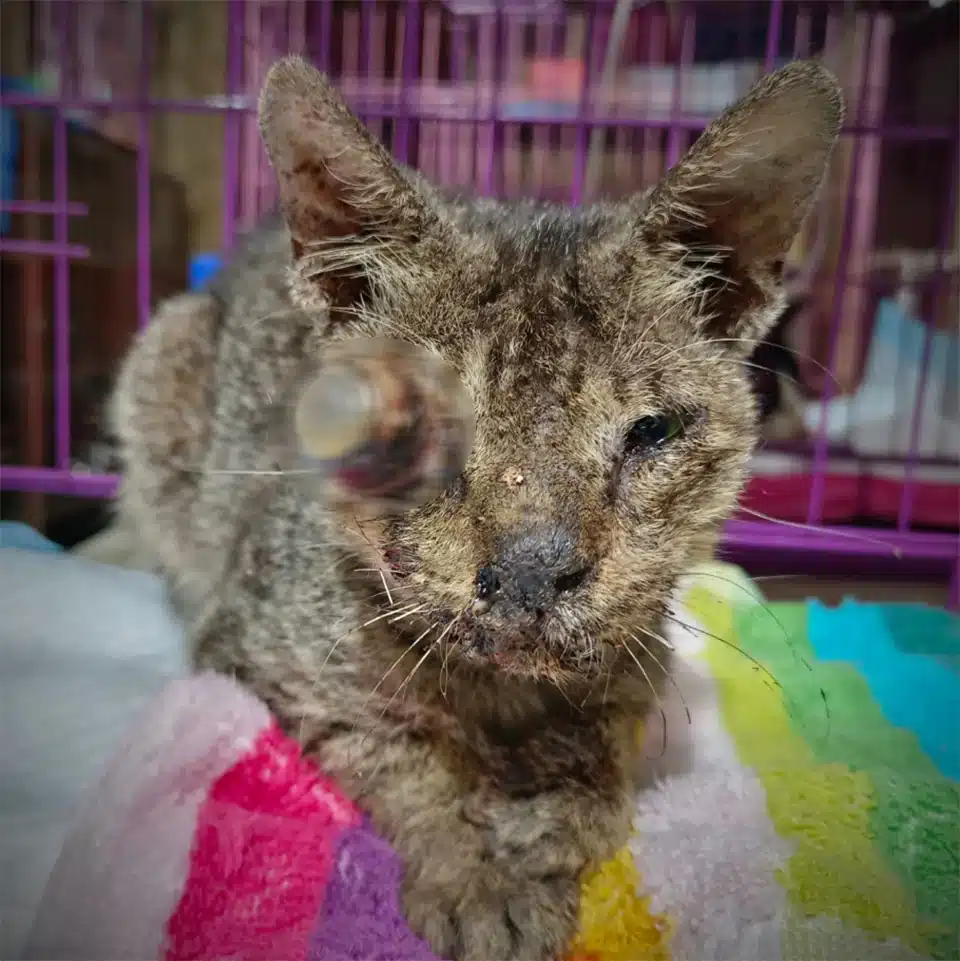
Over time, strength returned bit by bit. The cat started eating more confidently and explored its surroundings, learning that it could move freely without fear. Caregivers noticed something remarkable—the cat, despite its ordeal, was beginning to adapt, showing a will to live.
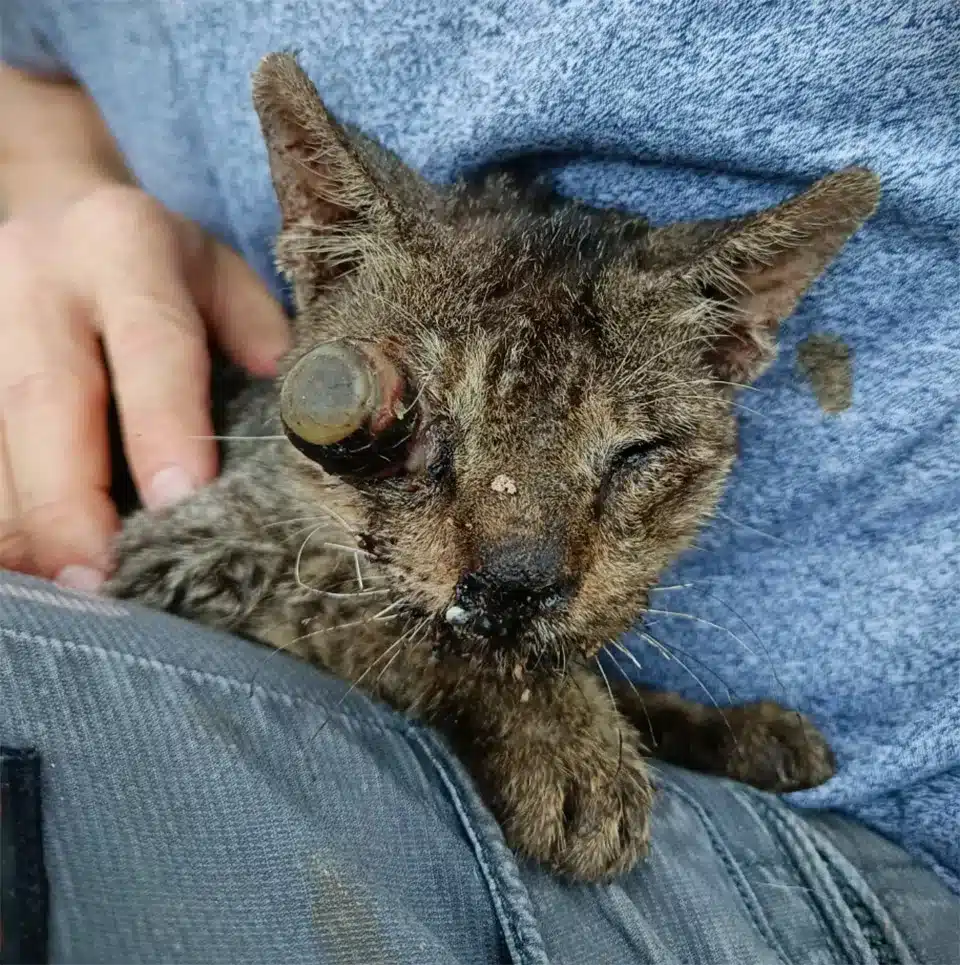
This story of resilience spread slowly beyond the clinic. Those who heard about the rescue offered support, made donations, and sent messages of encouragement. Some even inquired about fostering. The collective support mattered immensely—not only providing financial aid but reminding everyone involved that compassion can multiply.
The cat’s journey continued.
There were challenging days when setbacks occurred—days of low energy or resurfacing fear—but patience met each hurdle. Caregivers adapted to the cat’s needs, respecting its rhythms and boundaries. Trust was being rebuilt slowly.
Eventually, the cat started seeking gentle attention. It lingered near familiar faces and accepted touch, slowly but surely. These were moving moments—not due to their drama but because they were genuinely earned.
Dr. Lin often reflected on this, noting, “Animals remember, but they also forgive. That’s what makes these stories so powerful.”
The ultimate goal wasn’t just survival. It was about finding peace, comfort, and a life free from fear.
When the time is right, the cat will be ready for a forever home—a place where it can relax and find consistent care and unconditional love. A place where pain is absent.
This isn’t an isolated story.
Every day, countless animals suffer unseen, some receiving help in time, others not. Attention and compassion make the difference—someone noticing, acting, caring.
This cat’s journey is a poignant reminder of this truth.
That vulnerability can coexist with resilience.
That suffering can be transformed through compassion.
That even the most fragile lives can recover when given the opportunity.
From the streets to the clinic, from injury to healing, this cat’s life has been painstakingly reclaimed, a testament not only to medical skill but to empathy, patience, and the power of a caring community.
Where once there was pain, now there is progress.
Where fear once dominated, trust is being built.
Where once there was abandonment, hope has flourished.
And it all began because someone chose to see beyond their rush and take a moment to care.
In a world often swept up in its own pace, this story asks us to pause, to observe more closely, and to remember that kindness, when acted upon, can mend even the most broken beginnings.
A second chance was given.
And a life chose to embrace it.
Read more Dogs News.