
The Crested Barbet (Trachyphonus vaillantii), a colorful bird native to sub-Saharan Africa, is known for its vivid, fruit-like plumage that has earned it the nickname “fruit salad.” Part of the Lybiidae family, this bird is easily recognized by its striking and diverse coloration.
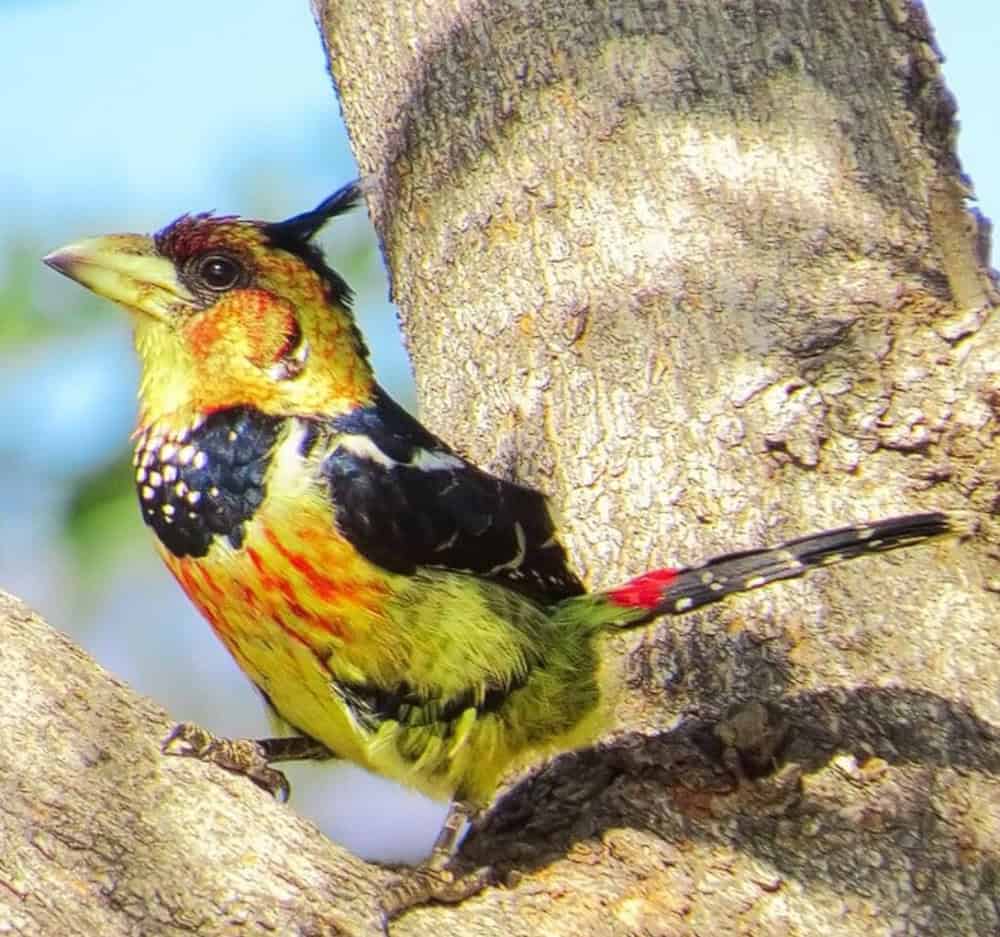
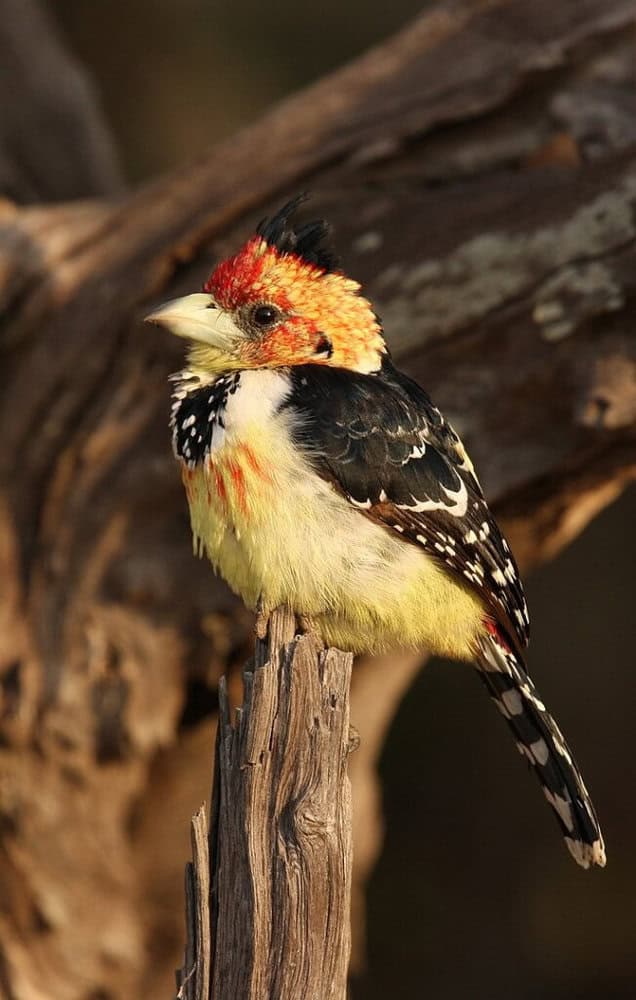
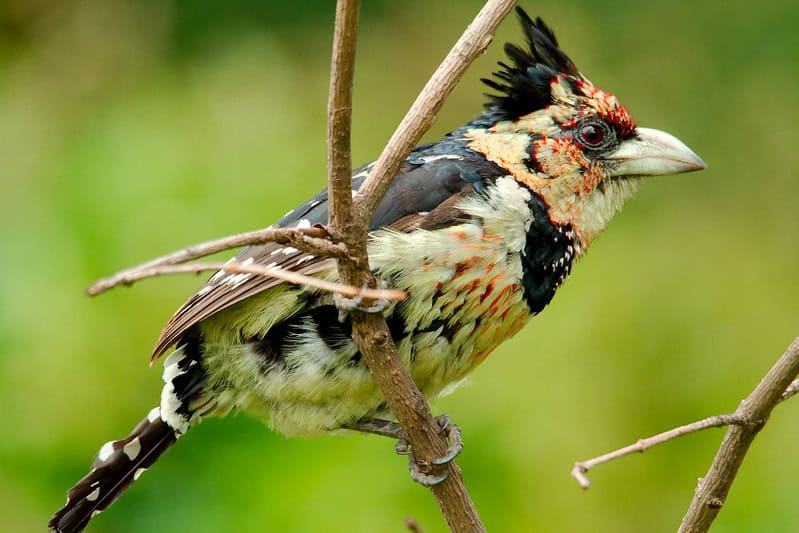
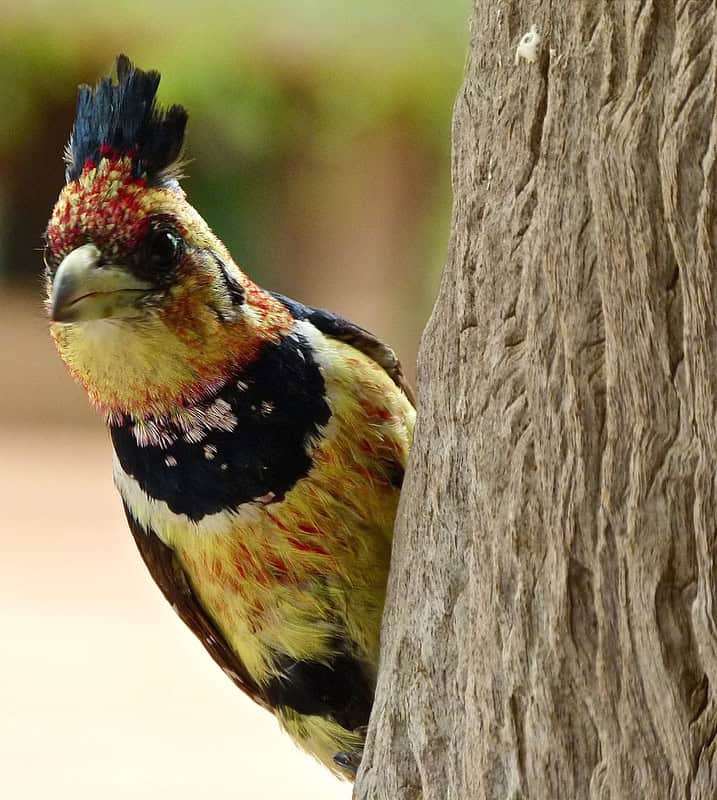
These birds display an array of bright colors: a yellow head with fine red markings, a yellow chin, and a primarily red face. Their upper parts, including the back and wings, are black with white specks, strikingly contrasting.
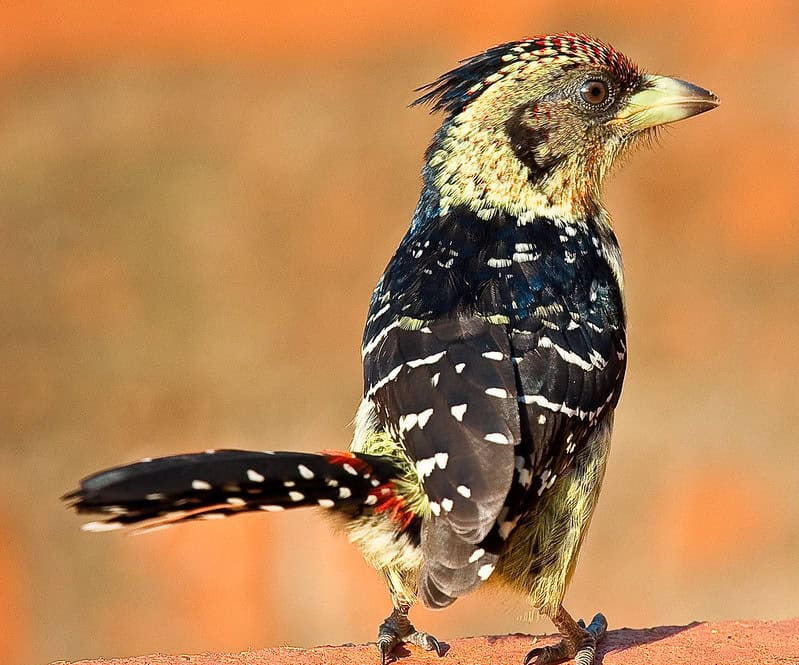
The tail is black with white bars, and the rump is vibrant red. Their underparts are primarily yellow, with a broad black band on the breast that features white flecks.
This band is bordered by white, creating a contrast against the lower yellow breast, which is streaked with red. A broad black band decorates the area behind the neck, and the belly remains yellow.
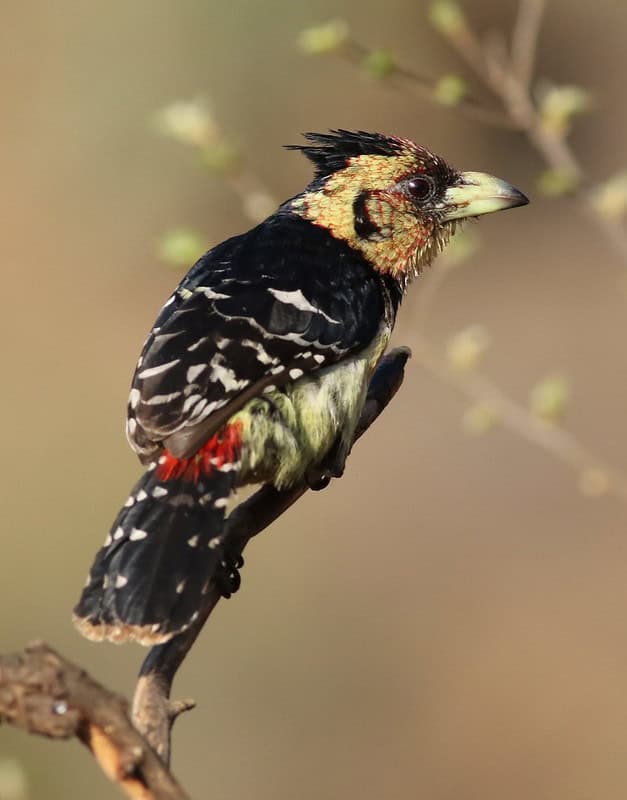
Female Crested Barbets look similar to males, though their colors are slightly less vivid. Both sexes have short bills, olive-green bare skin around their eyes, and greenish-gray legs and feet. These eye-catching birds are commonly found across northeastern South Africa, extending into Zimbabwe, Botswana, Mozambique, and northern Namibia.
Crested Barbets are adaptable in their choice of habitats, often appearing in gardens, parks, exotic plantations, woodlands, riverside bushveld, tree savannahs, and near water sources, typically at altitudes between 200 and 1,800 meters.
Their diet includes insects, fruit, worms, snails, and occasionally the eggs of other birds. During the breeding season, which spans from September to December, they often nest in sisal logs, creating a tunnel-like entrance that leads to a spacious nesting chamber.
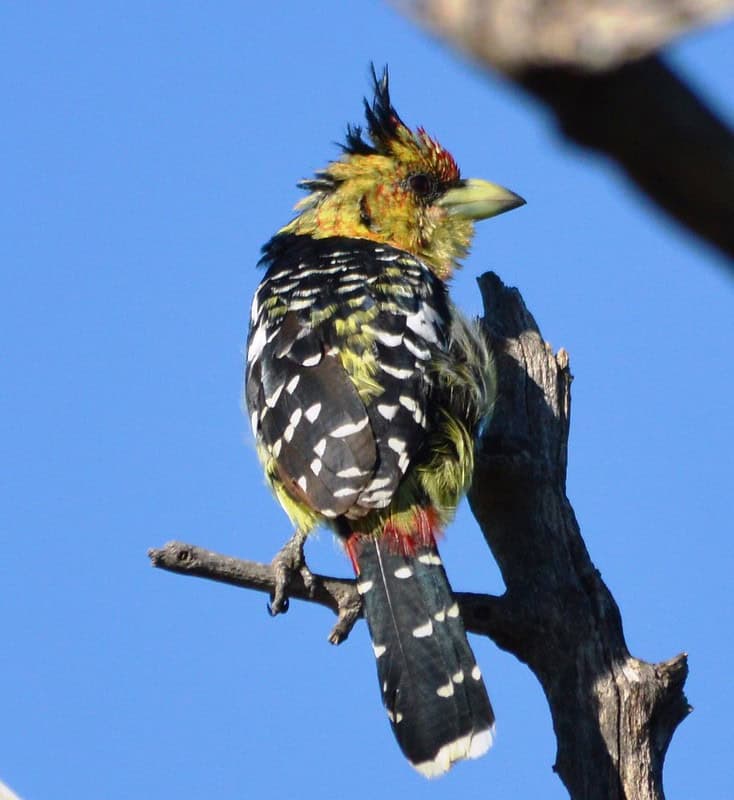
Clutches of one to five eggs are laid, with an incubation period of around 13 to 17 days, handled solely by the female. Both parents help feed the young, who take about a month to feed. A pair of Crested Barbets may raise to five broods in a single season.
Thanks to their wide range and relatively stable population, Crested Barbets currently hold a healthy status in the wild, as they do not meet the vulnerability criteria set by the IUCN.
Read More Birds