
Known also as the black-throated diver, the Arctic loon is a migratory bird from the northern hemisphere, belonging to the Gaviidae family. Previously grouped with the Pacific loon, it is now recognized as a distinct species alongside other loons like the yellow-billed and common loons.
Loons share a similar appearance and behavior with ducks, although they lack the marked gender differences found in ducks, as male and female loons look identical. From afar, the Arctic loon’s dark plumage helps it blend into open ocean waters.
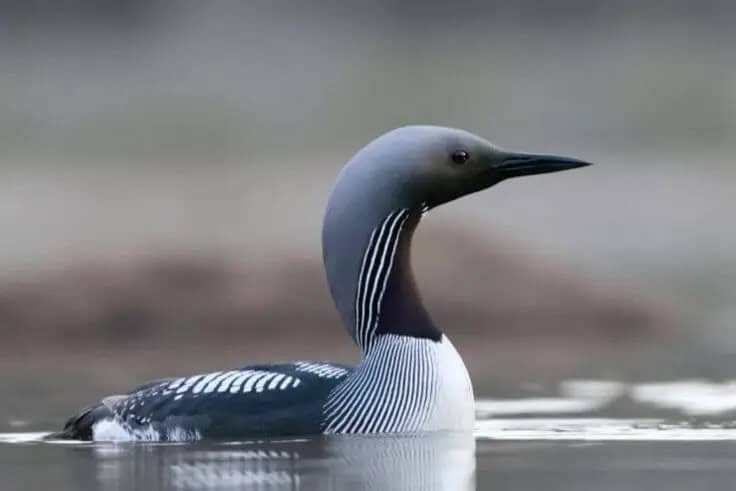
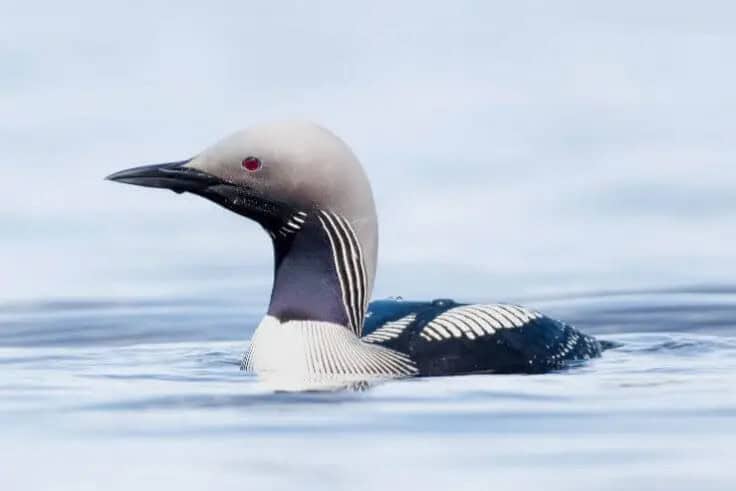
Upon closer inspection, however, the breeding adult displays a striking mix of gray, black, and white, with bold neck and breast stripes, a signature black throat patch, and checkered white markings on the back.
Outside the breeding season, this patterning fades, leaving adults and juveniles with muted brown coloring and pale undersides. The Arctic loon is smaller and more streamlined than the Pacific loon, with an overlapping range in areas like Japan and Alaska, leading to occasional identification mix-ups.
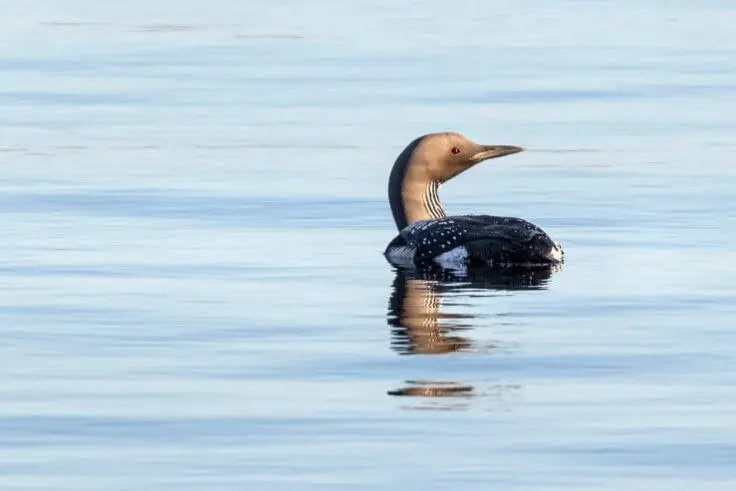
The Pacific loon has a shorter bill and rounded head, while the Arctic loon has a more pointed bill and slightly upturned head. Notably, they share a similar cackling call.
The Arctic loon has two recognized subspecies; the eastern G. a. viridigularis can be identified by a green throat patch. Originating in Europe during the Paleogene period, fossils of the earliest loons have been found in the Czech Republic.
As skilled swimmers, Arctic loons use their webbed feet to maneuver underwater with agility. They can dive up to 16 feet, holding their breath for up to 90 seconds, to capture prey.
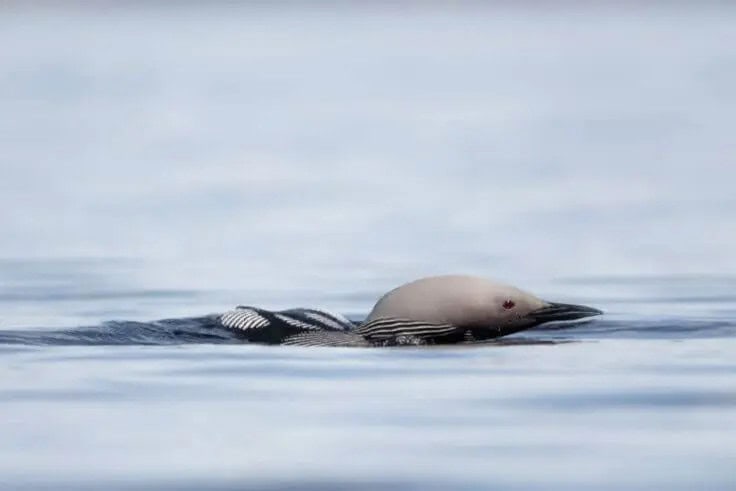
With backward-facing ridges in their upper mandible to help grip slippery fish, Arctic loons have a high hunting success rate of around 80%.
They also swallow pebbles, which assist digestion and possess solid bones that reduce buoyancy, helping them dive deeper. They can also compress their feathers to become more streamlined, although their foot placement makes them clumsy on land.
Arctic loons are strong fliers, requiring a long water “runway” to take off. During flight, they often emit a barking call. Adapted to fresh and saltwater, they can process salt through specialized glands above their eyes, which expel salt through their nostrils.
Seasonal Movements and Habitat
These loons breed across the Arctic and subarctic regions, from the British Isles to Siberia and Alaska. In winter, they migrate south to ice-free European and Asian coasts, with some wintering in the Baltic, Aegean, Black, Caspian, and North Seas. They are rarely seen south of Alaska, as such sightings are usually misidentifications with the Pacific loon.
In the breeding season, Arctic loons prefer secluded lakes in the taiga, tundra, and boreal forests. In May, they start constructing ground nests made from local vegetation on lake islands.
Males produce a rhythmic, whistling song during this period, and pairs engage in synchronized courtship displays before mating near the lakeshore. Each pair typically lays two eggs, with both parents involved in incubation and care.
Only one chick usually survives, with nestlings vulnerable to predation and flooding. They fledge at around two months and mature in two to three years. Arctic loons are monogamous and return to the same nesting area each year, often staying with their mates even during migration and winter.
Diet-wise, Arctic loons feed mainly on fish but will also eat mollusks, crustaceans, aquatic insects, and sometimes plant material.
Status and Conservation
Despite their wide range, Arctic loon populations are declining. Habitat loss due to pollution, particularly heavy metals and oil, threatens their feeding grounds. Fishing nets and offshore wind farms also pose risks.
Although classified as “least concern” by the International Union for Conservation of Nature (IUCN), they are protected under agreements like the Conservation of African-Eurasian Waterbirds and the Migratory Bird Treaty Act in North America.
Conclusion
Aquatic birds like the Arctic loon, which depend on clean lakes and rivers, are sensitive indicators of environmental health. Their decline reflects broader issues affecting aquatic ecosystems.
Conserving these birds benefits them and the broader ecosystems they inhabit, highlighting the importance of protecting our northern lakes, seas, and oceans.
Read More Birds