
The barn swallow is a beloved symbol of spring’s arrival in the Northern Hemisphere. With its wide distribution and significant cultural presence, this unique bird is widely recognized and celebrated.
There are six subspecies of barn swallow, four of which are strongly migratory, giving them one of the broadest ranges among bird species.
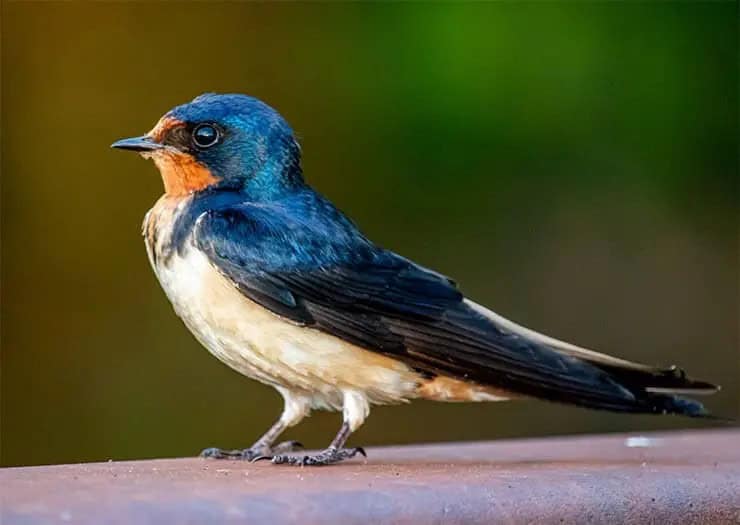
Quick Facts about the Barn Swallow
- Lifespan: 4 years
- Length: 18 cm (7.1 in)
- Wingspan: 33.2 cm (13.1 in)
- Weight: 19 g (0.67 oz)
- Family: Hirundinidae
- Subspecies:
- H. r. rustica – Europe
- H. r. transitiva – Middle East
- H. r. savignii – Egypt
- H. r. gutturalis – Far East
- H. r. tytleri – Siberia and Mongolia
- H. r. erythrogaster – North America
Identifying the Barn Swallow
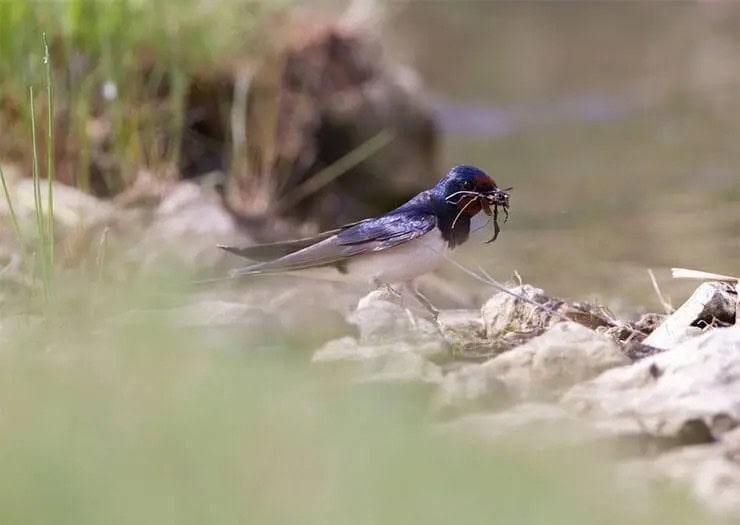
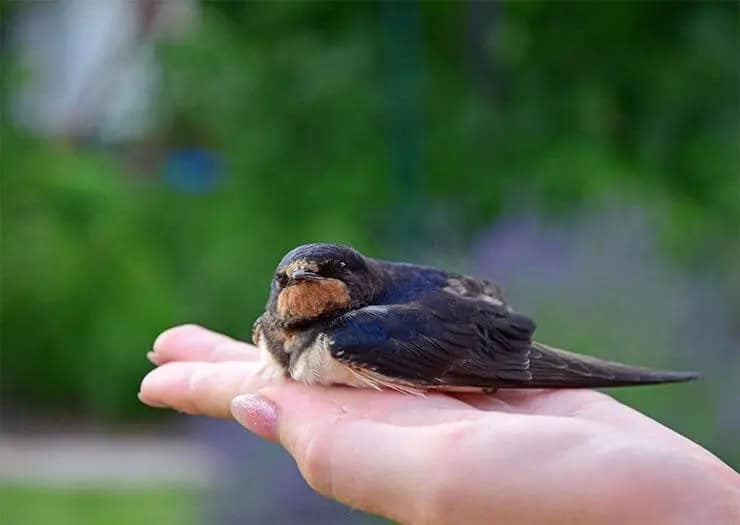
Barn swallows are known for their blue upperparts and contrasting cream-white to rufous undersides. Their distinctive forked tail, which features white spots, is longer in males and plays a role in both mate selection and flight. Females and juveniles have slightly duller plumage and shorter tails.
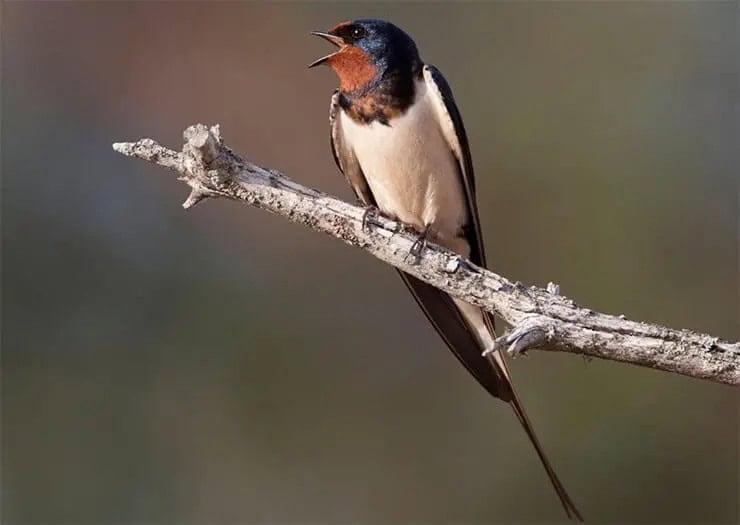
Fun Fact: The tail streamers in male barn swallows contribute to their aerodynamics and influence reproductive success.
Name Origin
The barn swallow earned its name due to its habit of nesting in barns and other human structures. The genus name Hirundo means “swallow,” while rusticus denotes “of the country,” underscoring the bird’s presence across both rural and urban areas in North America and beyond.
Vocalizations
Barn swallows are most vocal during breeding, with males singing to attract mates. They have various calls, including a “wit-wit-wit” contact call and specific alarm calls for different predators, such as a “splee-plink” when sensing danger, a sharp “siflitt” to deter mammals, and a “flitt-flitt” alert for raptors.
Range and Migration
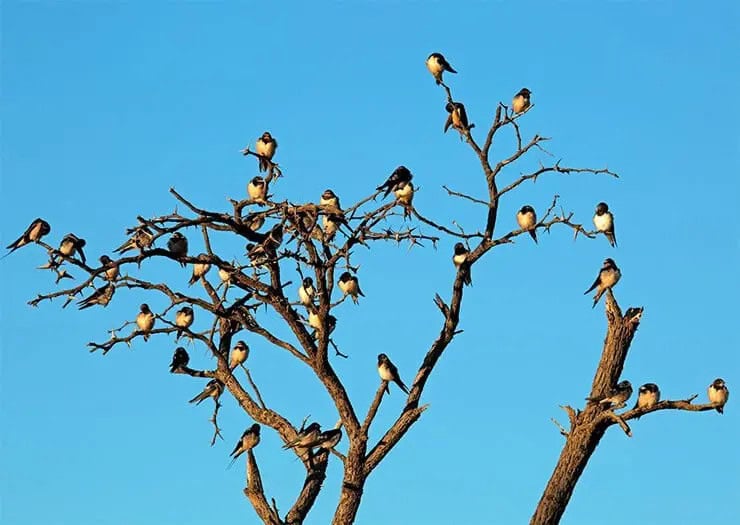
Barn swallows breed throughout the northern hemisphere, from temperate regions to the edge of the Arctic. During winter, they migrate to the southern hemisphere, with populations found in parts of Africa, South America, and Asia. Though rare, some have been spotted in places as far as Antarctica.
Preferred Habitat
Barn swallows favor open landscapes near water, such as meadows, farmland, and pastures. They avoid densely forested or heavily urbanized areas. During winter, they adapt to grasslands, savannas, and wetlands, often roosting on ledges and wires.
Predators and Pests
Barn swallows form large flocks in winter, which can attract predators like falcons, sparrowhawks, and even vampire bats. They also face lice infestations, causing visible holes in their feathers.
Breeding and Nesting
Male barn swallows arrive early in breeding areas to secure nesting sites, where they perform courtship displays. Males with larger tail spots typically produce more offspring. While barn swallows are monogamous, some engage in extra-pair mating.
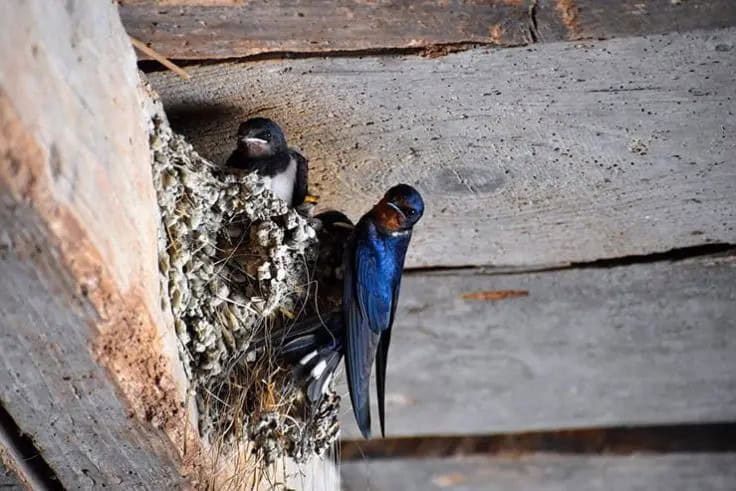
Their nests, often built from mud under bridges and eaves, are lined with grasses and down. Each clutch contains about five eggs, which hatch after roughly 19 days. Fledglings rely on their parents for about a week before becoming independent.
Diet
Barn swallows are insectivores, feeding mainly on flies and aphids in summer. In winter, they eat flying ants, bees, and beetles. They catch most prey mid-air but may also hunt on the ground or skim water surfaces. They are known to follow animals, catching insects disturbed by movement.
Conservation
While barn swallow populations are generally stable, some areas face challenges like habitat loss and pesticide use. Climate change may also affect them by causing drought-related health issues, such as weight loss and poor feather growth. Barn swallows benefit ecosystems by controlling insect populations.
Cultural Significance
The barn swallow has appeared in literature since ancient times, with references in works from Aristotle to Shakespeare. In Oscar Wilde’s The Happy Prince, the bird plays a central role. Sailors view barn swallow tattoos as symbols of a safe return due to the bird’s long migratory journeys.
It is also the national bird of Estonia and Austria and frequently appears on postage stamps globally. With its cultural resonance and ecological importance, the barn swallow remains a cherished herald of spring across continents.
Read More Birds