
The common shelduck, often found along the coasts and brackish lagoons of northern Europe and parts of Asia has an unusual habit of nesting in burrows originally dug by other animals, including foxes, badgers, and rabbits.
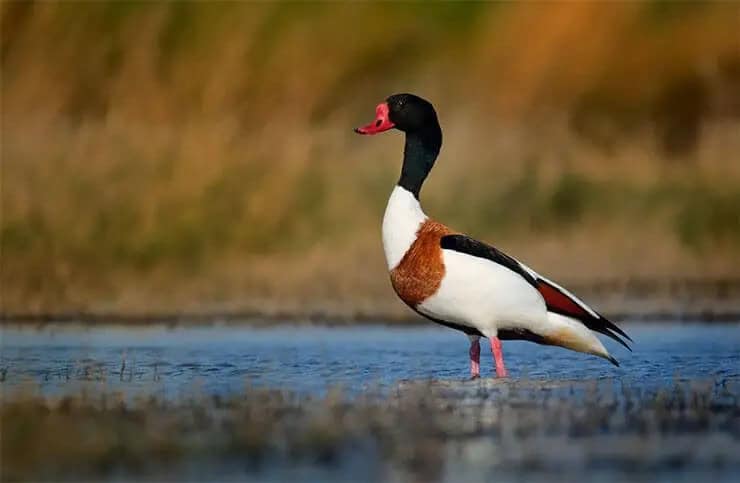
Known for its striking black, white, and dark green feathers and a distinctive reddish band on its chest, the common shelduck lacks strong camouflage but compensates with a bold, defensive nature, fiercely guarding its eggs and young from predators.
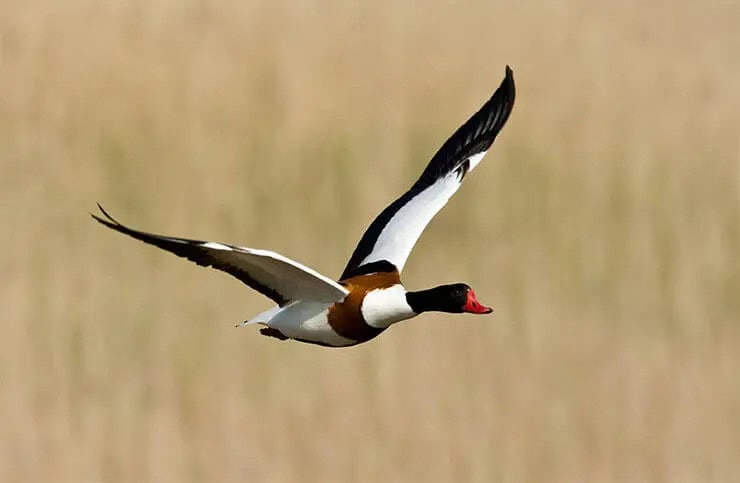
Although the shelduck’s colorful plumage may suggest an exotic origin, it’s a familiar sight along the shores of the North and Baltic Seas.
Its behavior and appearance place it somewhere between traditional ducks and geese, and, like many waterfowl, it gathers in large groups for molting toward the end of summer.
This process requires a safe habitat, and European conservation efforts have focused on creating artificial nesting sites, especially in areas like northern Italy, to support its breeding.
Though the shelduck population isn’t particularly large, preserving and enhancing nesting habitats is vital to ensuring the species’ resilience. Despite needing pre-dug burrows for nesting, shelducks have shown adaptability, with some taking to cultivated fields as alternative breeding sites. Interestingly, they share burrow spaces with foxes, which rarely pose a threat to the shelduck’s eggs or chicks.

Key Facts:
- Scientific Name: Tadorna tadorna
- Size: 850 – 1450 g; 58 – 67 cm long; 110 – 133 cm wingspan
- Lifespan: Up to 19 years
- Diet: Includes insects, worms, fish, and plants
- Habitat: Lakes, waterways, brackish wetlands
- Threats: Habitat loss, poaching, and nest disturbance
Characteristics and Appearance
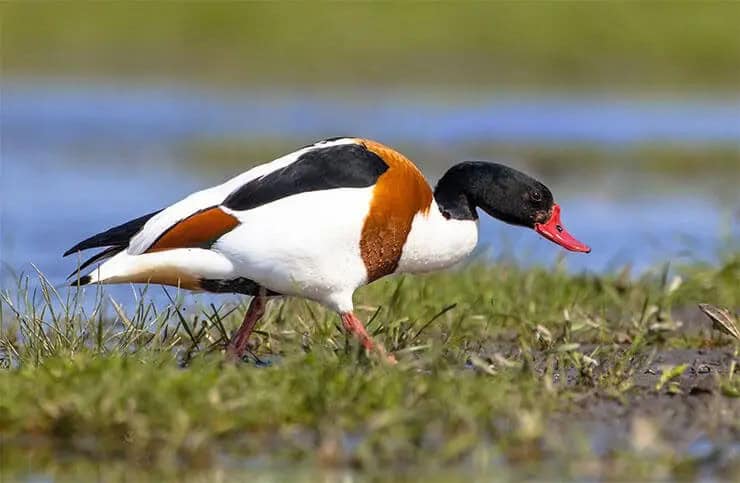
The common shelduck, with a body length of 55-65 cm and a wingspan that can exceed one meter, resembles a wild goose in form but stands out for its vivid coloration. Its mostly white plumage contrasts with a dark green head and neck, a reddish-brown chest band, and a dark strip running along the belly and wing tips.
During spring, its red bill brightens, only to fade as autumn approaches. Males are distinguishable by a beak protuberance that forms in the breeding season, while females sport a small white patch between the beak and eyes, with softer tones in their plumage. Generally quiet, the shelduck’s call is seldom heard.
Range and Habitat
The common shelduck primarily populates northern European coasts, notably around the North and Baltic Seas, and extends as far east as Siberia, China, and Japan.
A smaller population resides in Sardinia, Italy. In captivity, they are sociable with their species and others, showing minimal wariness around caretakers and displaying goose-like behaviors.
Diet and Feeding
Shelducks feed on a varied diet of seeds, herbs, berries, and algae, as well as small animals like mollusks, snails, and worms. They feed in shallow waters, using their bills to filter food and adapt well to balanced diets when in captivity, supplementing with the same types of food found in the wild.
Breeding and Reproduction
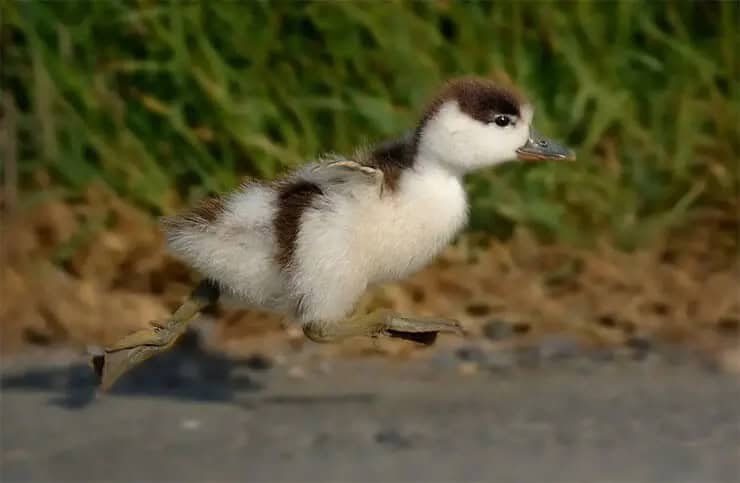
After selecting a nesting site, a shelduck pair defends their territory from intruders. Females lay between 7 and 14 eggs, incubating them for 26-30 days.
Upon hatching, chicks leave the nest within two months, rapidly learning to swim and forage. The mother takes them to water immediately to help them hone their survival skills.
Conservation Challenges
Despite being distributed across Europe and Asia, the common shelduck faces significant challenges. Up to 24% of the global population nests within the EU, with around 45,000 breeding pairs.
However, habitat loss due to wetland degradation, marsh reclamation, and environmental disruption remains a persistent threat, particularly as brackish wetlands disappear.
Conservationists in Europe have undertaken initiatives to remove invasive predators, such as the American mink in Finland, which has helped increase shelduck populations in areas previously threatened by these nocturnal hunters.
By promoting sustainable habitat practices and curbing environmental disruptions, conservation efforts aim to secure a future for the common shelduck, allowing it to continue its unique, adaptive lifestyle along Europe’s northern coasts.
Read More Birds