
In the lush tropical forests of Central and South America, the purple-throated fruitcrow (Querula purpurata) stands out as a remarkable bird with unique characteristics. Part of the Cotingidae family, known for its striking and diverse members, this species is the only one in its genus.
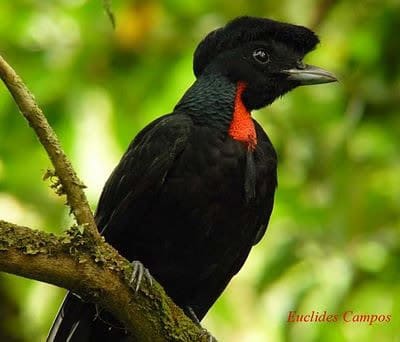
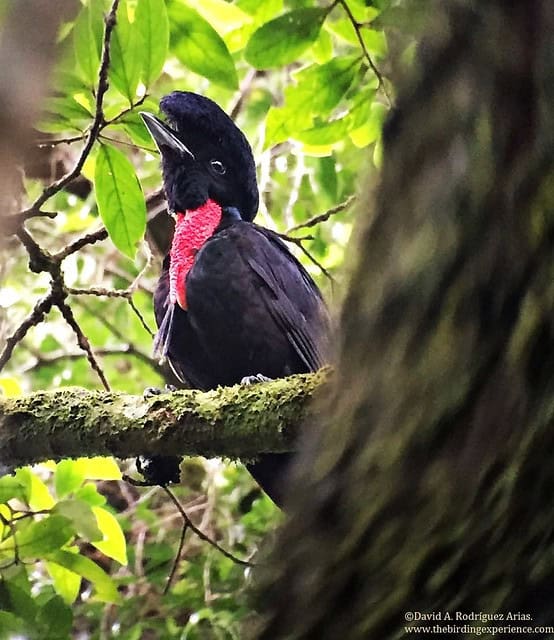
With its sleek black feathers and striking features, the purple-throated fruitcrow makes quite an impression in its natural environment.
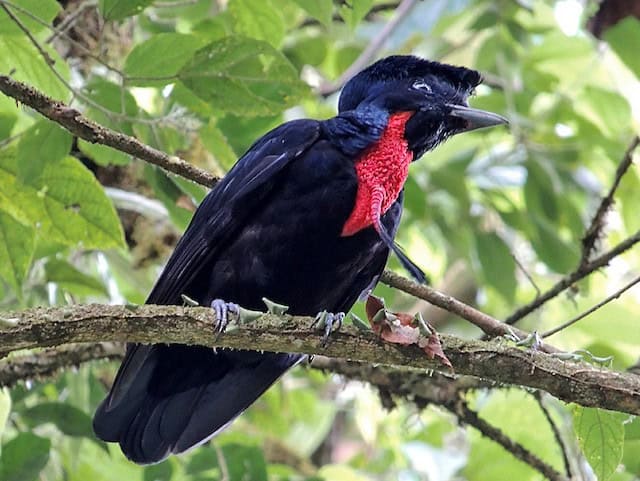
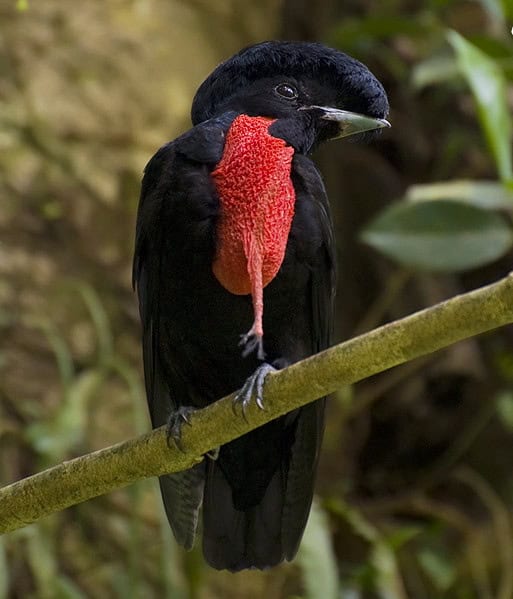
This medium-sized bird, particularly the male, is known for its striking appearance. A large, purple-red patch on its upper throat is one of its most eye-catching traits, reminiscent of the iridescent throat markings in hummingbirds.
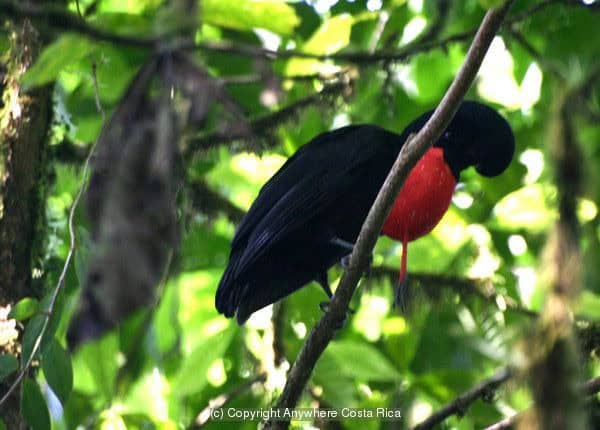
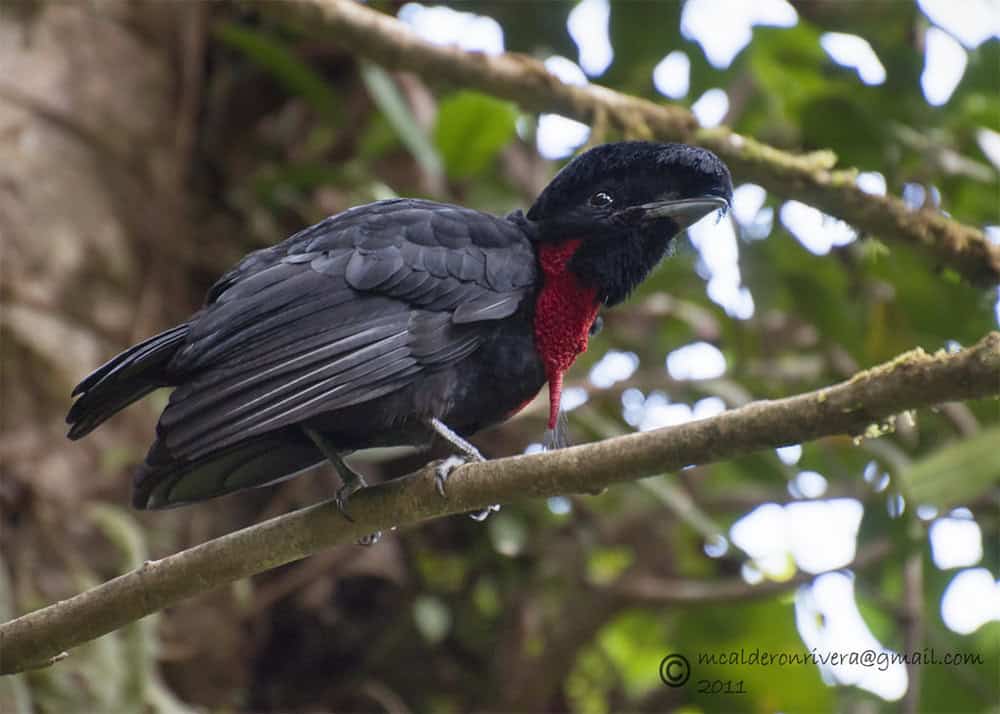
This vivid color extends along the sides of its neck, providing a beautiful contrast against its shiny black body. The bird also has a short, broad, grayish beak complemented by black eyes and gray legs.
The purple-throated fruitcrow is native to Nicaragua, Costa Rica, Panama, and parts of northern South America.
It thrives in humid lowland forests, where it primarily feeds on insects and fruit. The glossy black feathers of the male, paired with its vibrant throat patch, give this bird a truly elegant look.
When it comes to nesting, these birds build rather messy cup-shaped nests from small twigs. These nests are often placed in easily noticeable spots and are fiercely guarded by the entire group. Only one female lays an egg, but all adult members take part in caring for it.

Interestingly, during the fledgling period, which lasts about 32 to 33 days, the young birds are fed mostly insects rather than fruit.
This diet, rich in protein, helps the chicks grow quickly, ensuring a faster developmental process. This feeding strategy plays a crucial role in the survival and growth of the young fruit crows within their group.
Read More Birds