
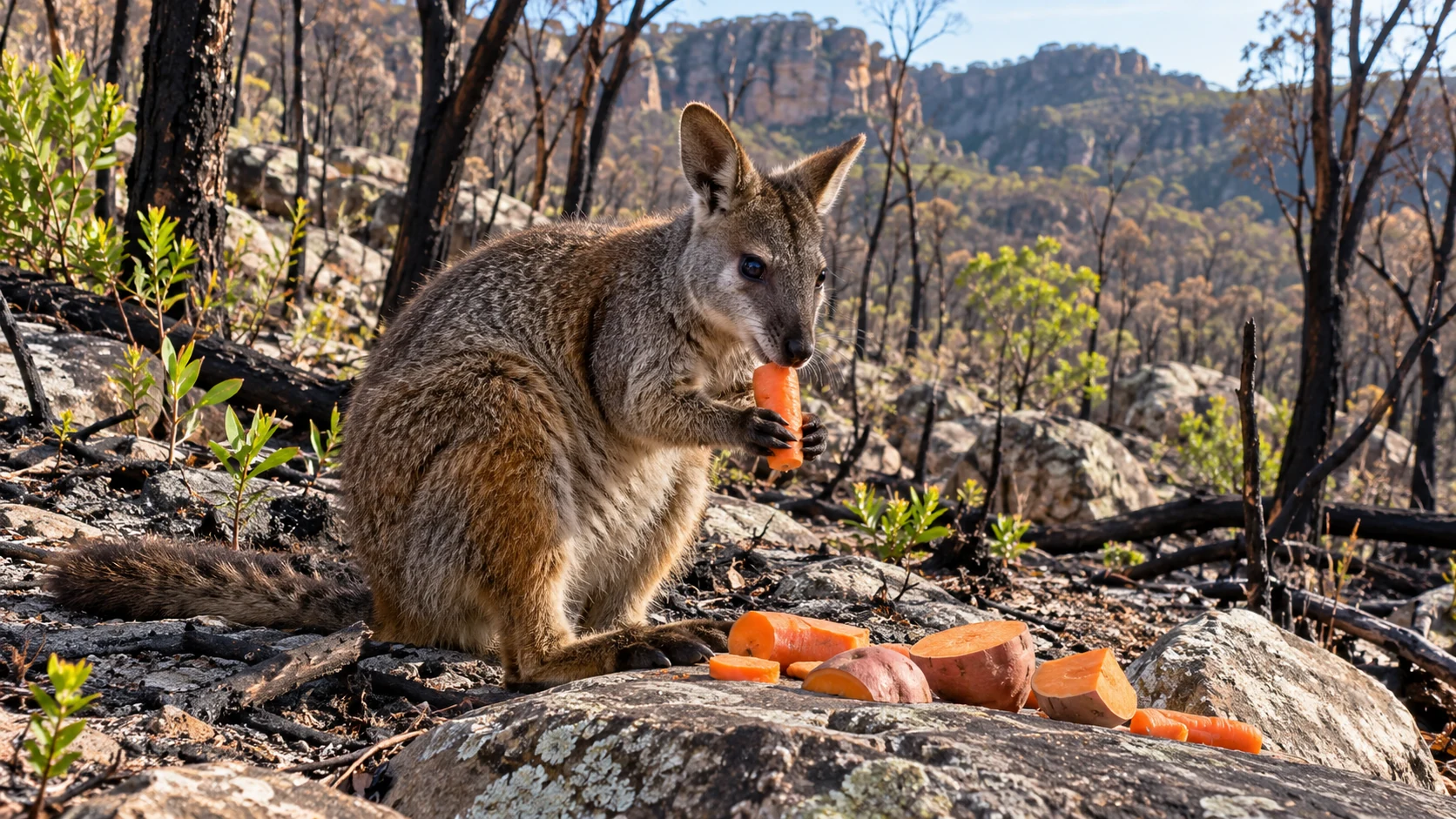
After the 2019–2020 bushfires swept through New South Wales, endangered brush-tailed rock-wallabies faced a second emergency. Many had survived the flames in their rocky refuges, but the fires had stripped away the vegetation they relied on for food.
Wildlife teams responded with an operation that became one of the most memorable images of Australia’s Black Summer recovery: helicopters, vehicles, boats and people on foot carrying carrots and sweet potatoes into remote wallaby habitat.
More than 14,500 kilograms reached wallaby colonies
Early reports described more than 2,000 kilograms of supplementary food being delivered to colonies in places including the Capertee and Wolgan valleys, Yengo National Park and Kangaroo Valley. That figure captured only the first stage of what became a much larger program.
According to the New South Wales government’s report on the immediate bushfire response, National Parks and Wildlife Service staff and the Saving our Species program coordinated the delivery of more than 14,500 kilograms of carrots and sweet potatoes between January and March 2020.
The food reached more than a dozen colonies across the state. Locations included Wollemi and Yengo national parks, Jenolan Karst Conservation Reserve, Mann River Nature Reserve, Guy Fawkes River National Park and Kangaroo Valley. Supplies were contributed through a partnership that included WWF-Australia, Woolworths and Foodbank.
Why emergency feeding was needed
Brush-tailed rock-wallabies often shelter among cliffs, caves and boulder fields. Those rocky areas can help some animals survive a fast-moving fire, but survival does not guarantee that enough vegetation remains afterward. During drought and after severe fire, natural food can be scarce just when animals are already under stress.
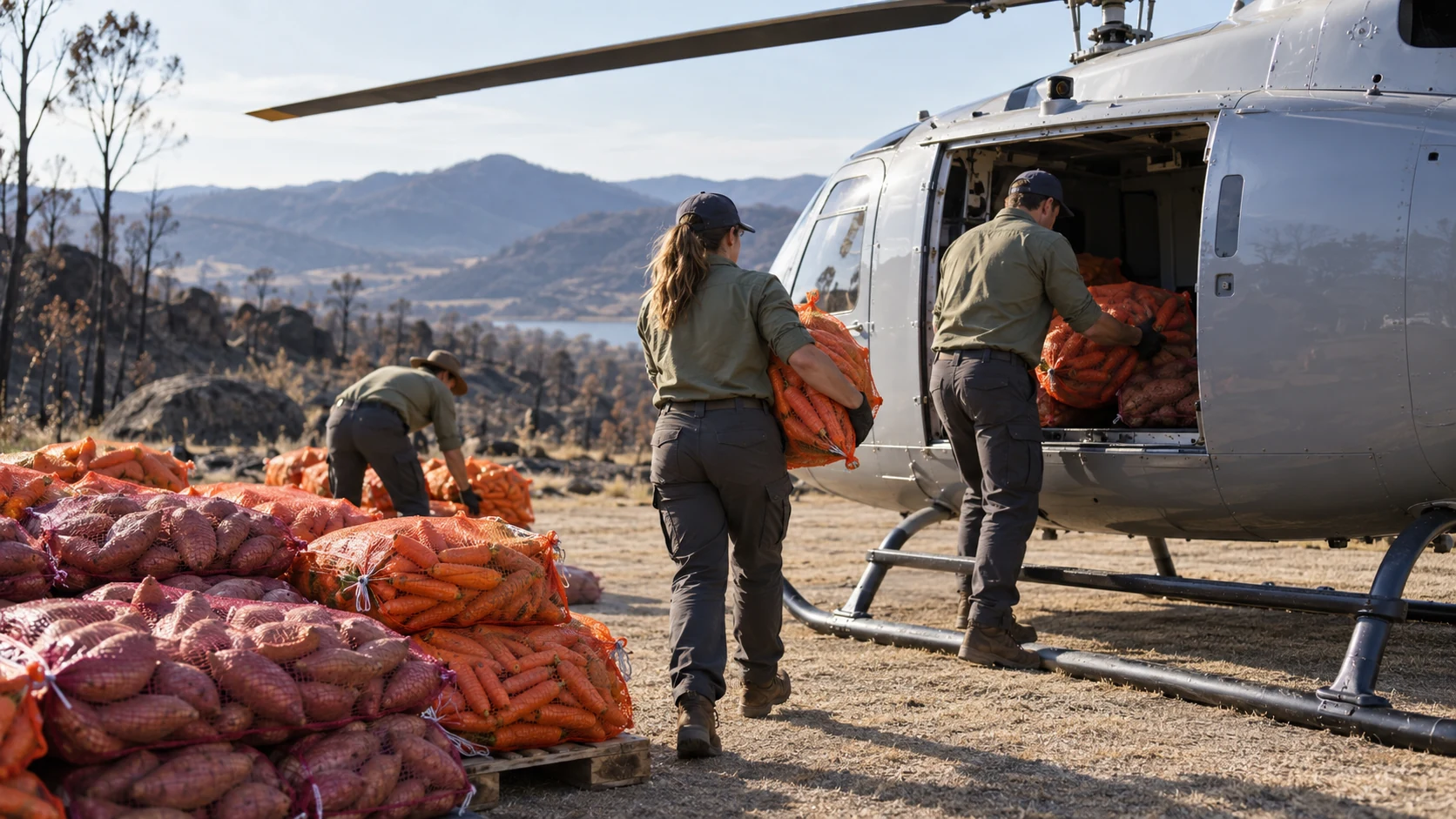
The vegetables were a temporary intervention, not an attempt to replace the wallabies’ natural diet forever. Sweet potatoes also supplied moisture, while the aerial drops allowed teams to reach colonies in steep or isolated country. Other deliveries were made by four-wheel-drive vehicle, boat and on foot.
The NSW report said natural food resources were regenerating across much of the habitat after the operation. Monitoring was intended to measure how well supplementary feeding worked and to guide future emergency responses.
A threatened species before the fires
The brush-tailed rock-wallaby was already endangered in New South Wales before the Black Summer disaster. It faces long-term pressure from habitat loss and fragmentation, predation by foxes and cats, competition with introduced herbivores and changes to fire patterns.
The scale of the 2019–2020 fires made those existing risks more severe. NSW National Parks later reported that more than 80% of the species’ known habitat in the state had burned. Surveys in Oxley Wild Rivers National Park still found surviving animals, and wallabies with young were observed during 2020.
Operation Rock Wallaby was therefore not simply a dramatic carrot drop. It was a targeted, short-term measure designed to bridge a dangerous gap between the fire and the return of native vegetation. The food gave surviving colonies time—time for plants to regrow, for monitoring to continue and for a threatened species to remain in its own habitat.
Sources
- NSW Wildlife and Conservation Bushfire Recovery: Immediate Response supplement
- NSW National Parks: recovery from the 2019–2020 fires
- NSW National Parks: brush-tailed rock-wallaby recovery monitoring
