
The debate over experiments involving monkeys is often presented as a choice between scientific progress and animal welfare. The reality is more complicated: nonhuman primates remain important in some areas of biomedical research, while regulators and research agencies are also accelerating the development of methods that could reduce or replace their use.
Monkeys are used because their genetics, anatomy, physiology and behavior share important similarities with those of humans. A 2023 National Academies review concluded that nonhuman-primate models still contribute to research in areas including infectious disease, organ transplantation, neuroscience and emerging public-health threats. The same review said that, at the time of its assessment, no alternative could fully reproduce the complete multiorgan interactions required for every research question.
Scientific value does not erase welfare concerns
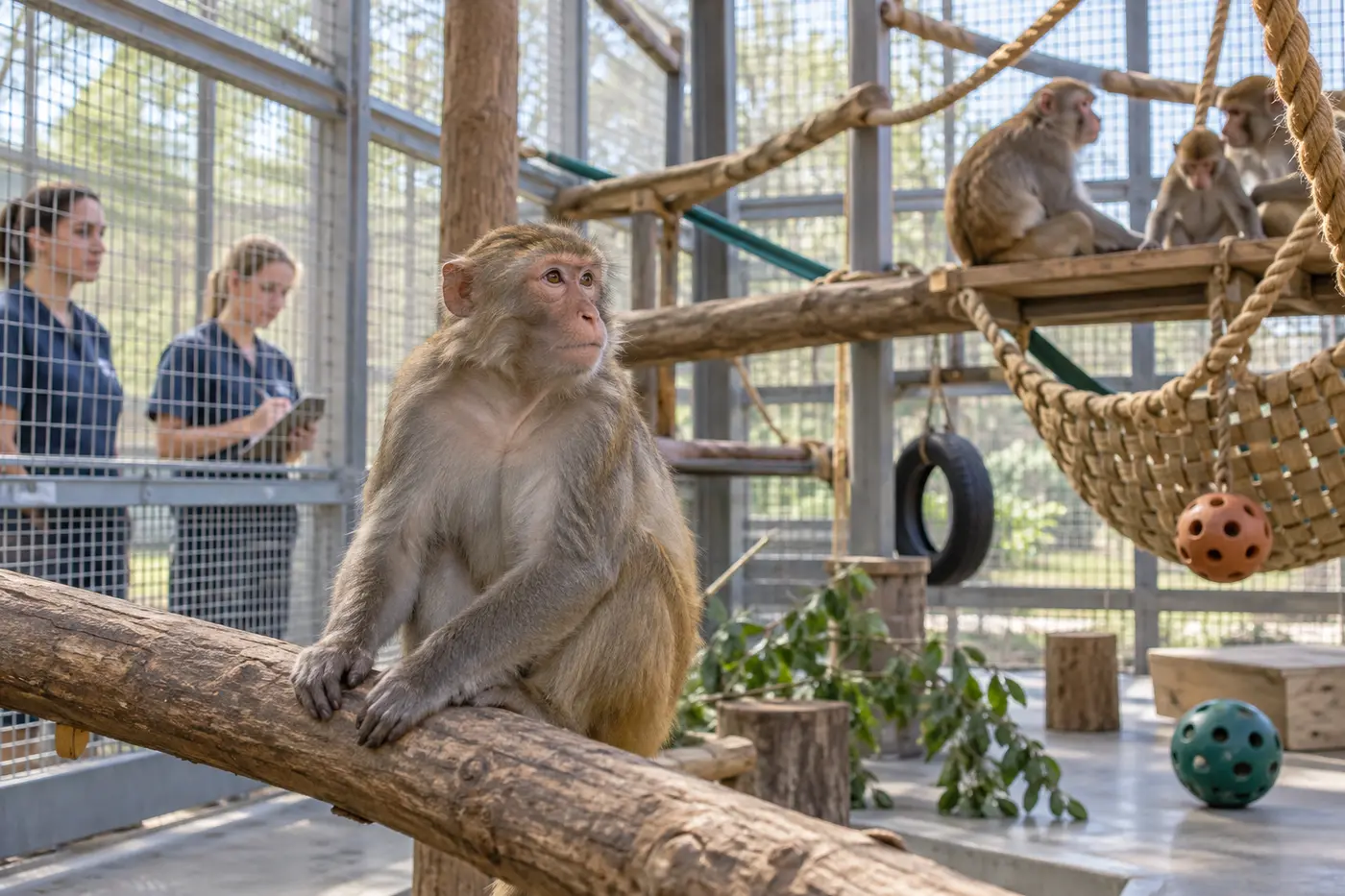
Nonhuman primates are intelligent and highly social. Captivity, repeated handling, isolation, invasive procedures and environments that limit natural behavior can create serious welfare concerns. In the United States, research facilities using regulated species are overseen under the Animal Welfare Act, which sets standards for housing, handling, veterinary care and general well-being. Those safeguards matter, but regulation does not settle the ethical question of whether a study should use primates in the first place.
Responsible research therefore depends on more than legal compliance. A proposed study should have a clear scientific justification, use the fewest animals necessary, refine procedures to minimize pain and distress, and consider alternatives before animals are used. Welfare measures such as compatible social housing, enrichment, skilled veterinary care and humane endpoints are also essential when a primate study proceeds.
Human-based methods are advancing
Alternatives are no longer limited to simple cell cultures. Researchers now work with human organoids, organ-on-chip systems, computational models, advanced imaging and real-world clinical data. These approaches can sometimes reveal human-specific effects that animal studies do not capture.
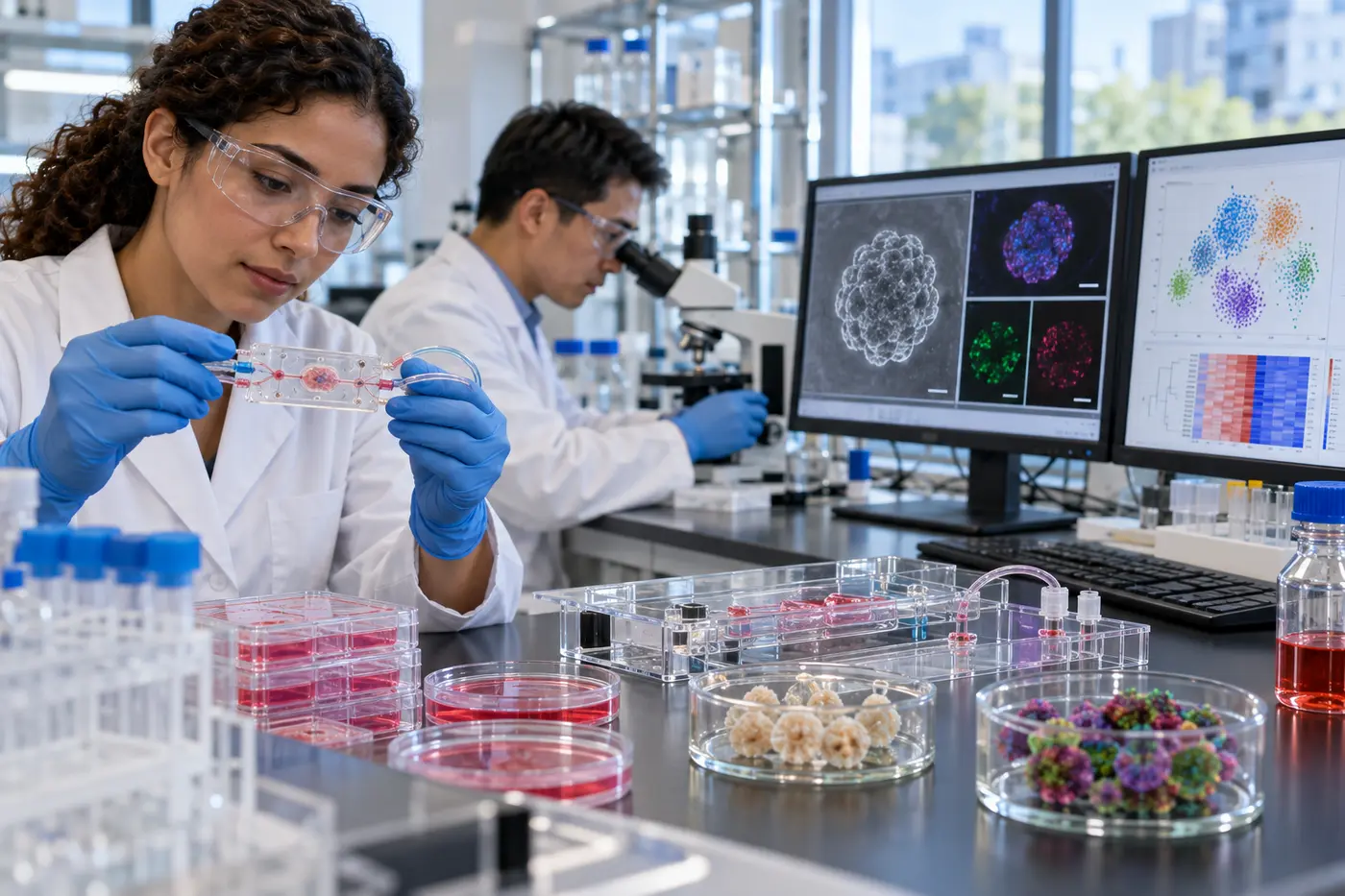
Policy is beginning to move in the same direction. In April 2025, the U.S. Food and Drug Administration announced a roadmap to reduce animal testing in drug development, beginning with certain monoclonal antibodies and encouraging human-relevant methods. By 2026, the FDA reported progress toward reducing or eliminating some nonhuman-primate studies. The National Institutes of Health has likewise said it will prioritize human-based research technologies while reducing reliance on animal models.
That does not mean all monkey experiments have already ended or that every study can immediately be replaced. It means the scientific standard is changing. Where a validated human-based method can answer the question as well as—or better than—an animal study, it should be used. Where no adequate replacement yet exists, researchers face a higher burden to justify the work and protect the animals involved.
The goal should be measurable replacement
A credible path forward is neither an indefinite defense of the status quo nor a claim that every experiment can stop tomorrow. It is sustained investment in validated alternatives, transparent reporting, stronger review of proposed primate studies and a presumption against animal use whenever a reliable nonanimal method is available.
Science and compassion do not have to move in opposite directions. Better human-based models could protect animals while also producing evidence that is more directly relevant to patients. The most meaningful measure of progress will be whether those methods steadily make more primate experiments unnecessary.
Sources
- National Academies: Nonhuman Primate Models in Biomedical Research
- FDA roadmap to reduce animal testing
- NIH human-based research initiative
- USDA oversight of research facilities
