
Deer are among the most familiar wild animals in the United States, and debates about their management can quickly become emotional. Hunters and wildlife agencies often describe regulated hunting as a practical way to reduce locally abundant herds. Animal-welfare advocates ask whether managing a population must also make the killing of individual animals a recreational activity.
The most accurate answer is that there is no single national solution. Deer numbers, habitat conditions, disease risks, vehicle collisions and legal authority vary from one place to another. Hunting is widely used, but it is not the only tool available.
Why some agencies reduce deer numbers
White-tailed deer can thrive near farms, suburbs and protected landscapes. Where a herd becomes locally abundant, heavy browsing can prevent tree seedlings and other vegetation from recovering. Deer may also damage crops and landscaping, contribute to road collisions and complicate efforts to manage diseases such as chronic wasting disease.
These impacts are not the same everywhere. A deer population that is compatible with habitat and community goals in one county may create serious ecological or safety concerns in another. Effective management begins with local population estimates, vegetation monitoring and clearly defined objectives—not with the assumption that every deer herd is “too large.”
Where hunting fits
State wildlife agencies commonly use regulated hunting to influence deer numbers. Seasons, license allocations and limits on the number and sex of animals taken can be adjusted to local goals. Supporters also point to revenue, food and cultural traditions associated with hunting.
But population management and recreation are different ideas, even when they overlap. A management program should be judged by whether it has a documented need, measurable targets, humane standards, safety controls and transparent monitoring. Calling an activity “management” should not end questions about avoidable suffering or whether a less harmful option could work.
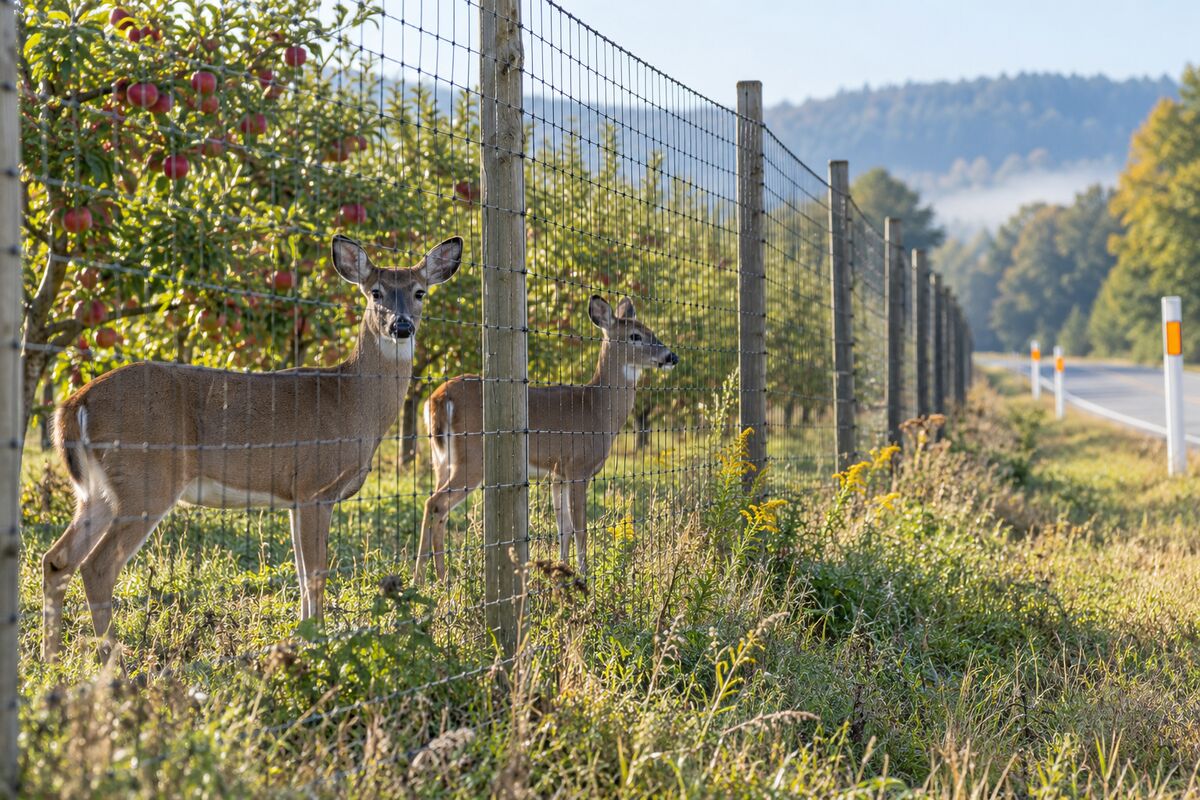
Nonlethal tools can prevent some conflicts
Fencing can protect orchards, gardens and forest regeneration areas. Repellents, changes to landscaping, better waste practices and public education can also reduce attractants or damage. Road design, warning systems and driver awareness may help address collision risks. These measures do not necessarily reduce the total number of deer, but they can reduce the harm that creates pressure for lethal control.
Penn State Extension describes deer-damage management as a complicated issue with alternatives that depend on cost and the level of damage people can tolerate. Its guidance includes fencing and repellents alongside regulated hunting. That integrated approach is important: preventing a specific conflict may be more appropriate than trying to reduce an entire local population.
What about fertility control?
The U.S. Department of Agriculture’s National Wildlife Research Center has studied reproductive-control tools for white-tailed deer. Its work includes the immunocontraceptive vaccine GonaCon, which is registered for fertility control in white-tailed deer and several other species.
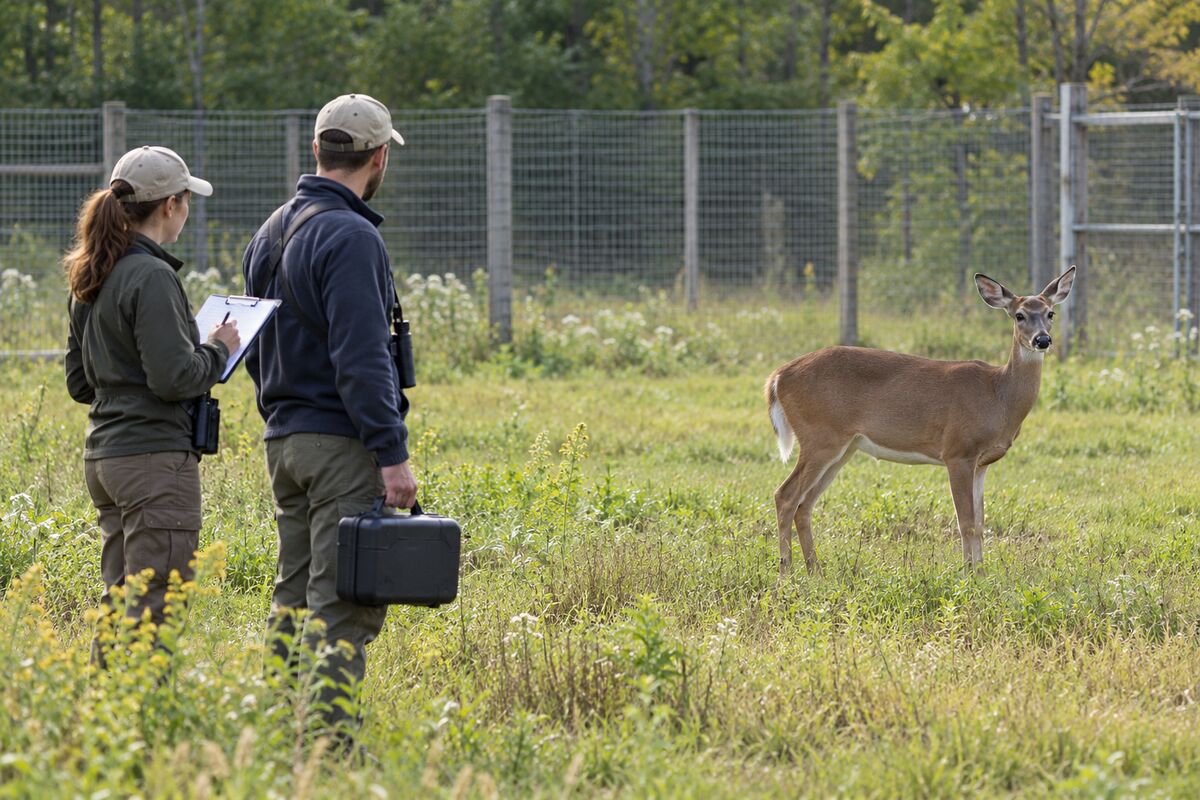
Fertility control is promising, particularly for relatively contained herds where individual animals can be reached and monitored. It also has limitations. Treatment can be labor-intensive and expensive, immigration can offset reduced births, and population decline is gradual because existing animals remain alive. The method may therefore be better suited to maintaining a reduced population than rapidly lowering a large, open herd.
The National Park Service’s Fire Island deer plan illustrates this distinction. The plan uses removal operations and allows public hunting only in the Fire Island Wilderness, while retaining fertility control as an option for maintaining the population after density has been reduced.
A better question than “hunting or nothing”
The choice does not have to be framed as unlimited hunting versus doing nothing. A community can combine habitat protection, fencing, road-safety measures, fertility control where feasible, and carefully limited lethal methods where officials conclude that rapid reduction is necessary.
Animal welfare should remain part of every decision. Deer can experience fear, pain and stress, and those costs should not disappear from the discussion simply because a program has a management goal. At the same time, claims about nonlethal methods should acknowledge questions of scale, cost, access and effectiveness.
Deer management does not automatically have to mean recreational hunting. It does require evidence, local context and honest evaluation of every available tool. The strongest policy is the one that clearly defines the problem, prevents avoidable conflicts and causes the least harm while meeting a measurable ecological or public-safety need.
Sources
- USDA APHIS: Population Management and Reproductive Control
- USDA APHIS: Wildlife fertility-control product registration
- Penn State Extension: White-tailed deer damage-management options
