
Amid the diverse terrains of the American Southwest, the Verdin bird, a tiny yet lively presence, captures the attention of bird enthusiasts. This small gray bird can be found in brush habitats ranging from southern Utah and southwestern Oklahoma to central Mexico.
Despite being relatively common, its small size and ability to blend in with its surroundings can make it tricky but rewarding to spot. The Verdin’s understated appearance, with its mostly gray body, is complemented by occasional flashes of yellow on its head and rusty patches on its shoulders.
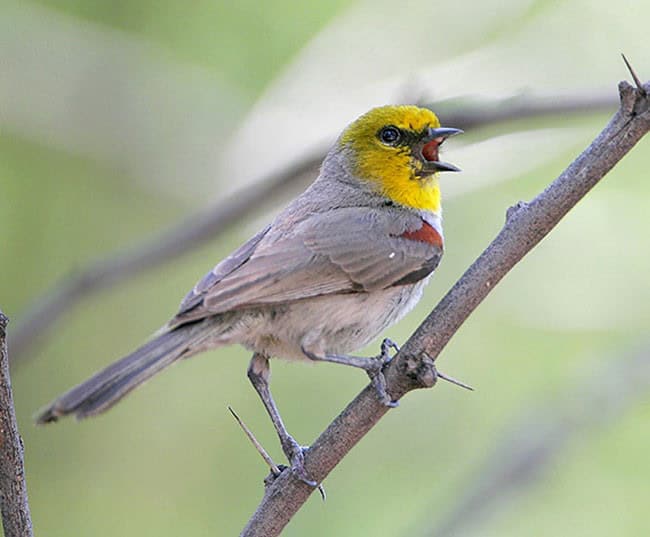
Jennie Duberstein, coordinator of the Sonoran Joint Venture, describes the joy of watching these birds flit among the branches, often unnoticed until their vibrant colors appear.
While historically linked to chickadees, recent research has shown the Verdin is more closely related to certain small songbirds from Europe, Asia, and Africa, according to bird experts Kenn and Kimberly Kaufman.
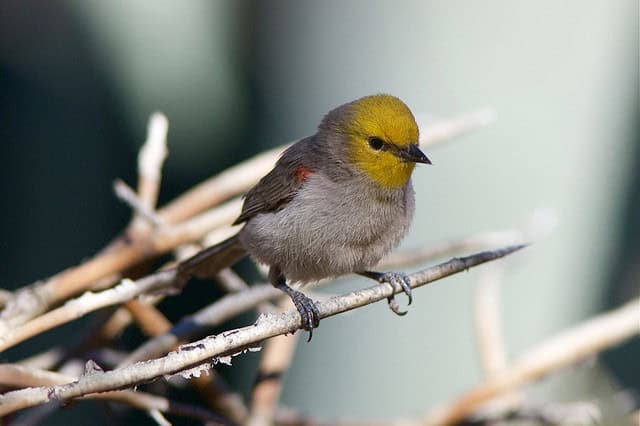
If you want to see a Verdin in its natural environment, Saguaro National Park near Tucson, Arizona, is a prime spot to observe its energetic behavior.
Verdins feed mainly on insects, but you can also attract them to your yard by planting mesquite, paloverde trees, and cacti like chollas, which they love.
Jennie Duberstein suggests adding hummingbird feeders with sugar water or nectar plants to lure these birds in. Their agility even allows them to feed while hanging upside down.
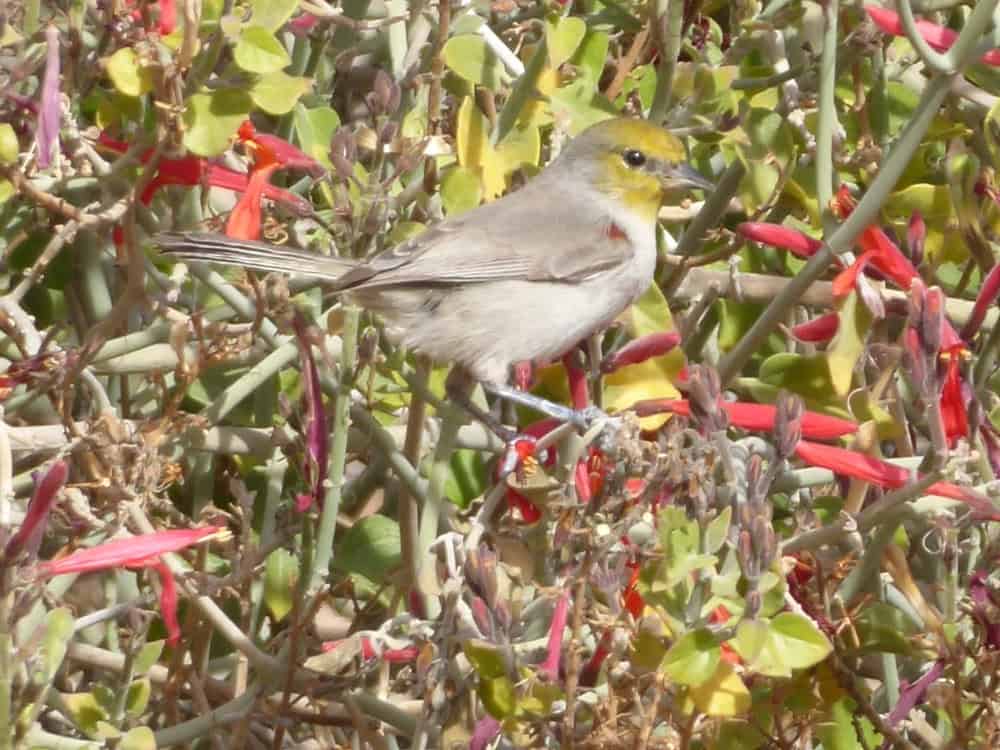
Verdins are also remarkable nest builders, constructing round, thorny nests year-round. These nests, about 6 inches in diameter, serve as both roosts and nesting sites, with an entrance usually located at the bottom.
The design helps protect against predators and keeps the nest cool in summer and warm in winter. Male Verdins build the thorny outer structure, while females line the inside with soft materials like grass and plant fibers.
If you’re hoping to invite these energetic birds to your backyard, planting native shrubs can provide them with suitable nesting and roosting spots and shade during hot weather.
Juvenile Verdins have a different look from the adults, with all-gray plumage and a bright yellow beak that gradually changes as they mature. Caroline Horowitz from Chandler, Arizona, shared her excitement after spotting a juvenile Verdin during an early morning walk, appreciating its brief but beautiful appearance.
In the rugged landscapes of the Southwest, the Verdin thrives, showcasing nature’s adaptability. Its vibrant energy and resilience offer a reminder of the hidden wonders that await those who explore the wild.
Read More Birds