
The frilled coquette, a hummingbird no bigger than the size of a finger, displays a brilliant combination of colors and unique features.
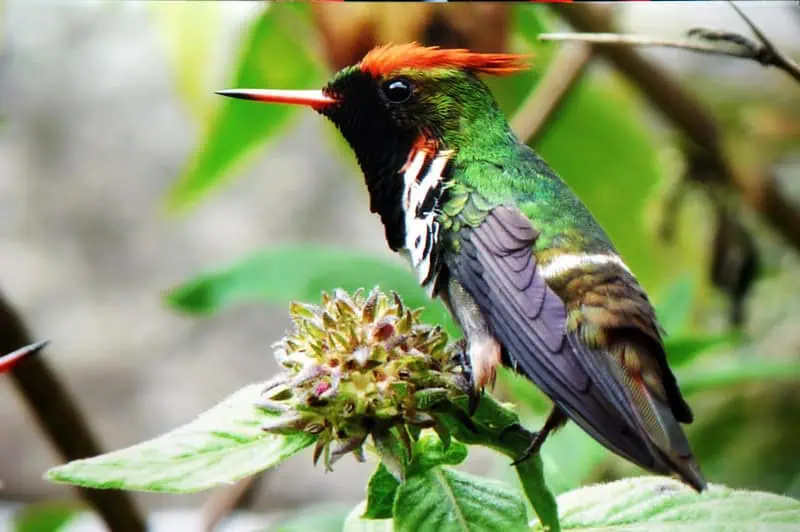
This tiny bird is distinguished by its vivid orange crest, white and green feather patterns, and striking red beak with a black tip.
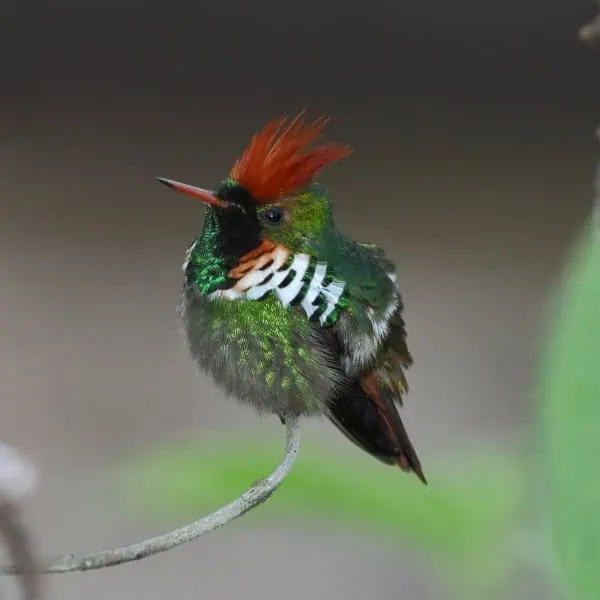
Description: Measuring just 7.1 to 7.7 cm (about 2.8 to 3 inches) and weighing only around 2.66 g (0.094 oz), the frilled coquette is one of the smallest birds in the world.
Both male and female birds have a short red bill with a black tip, bronze-green upper parts with a white band across the rump, and dark crescent markings.
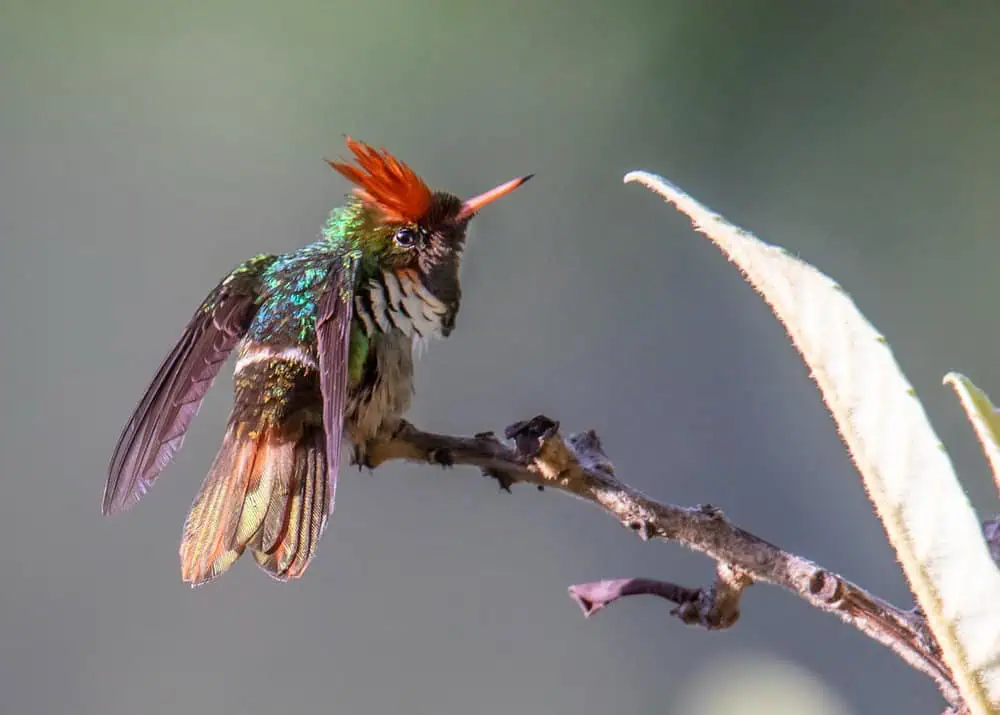
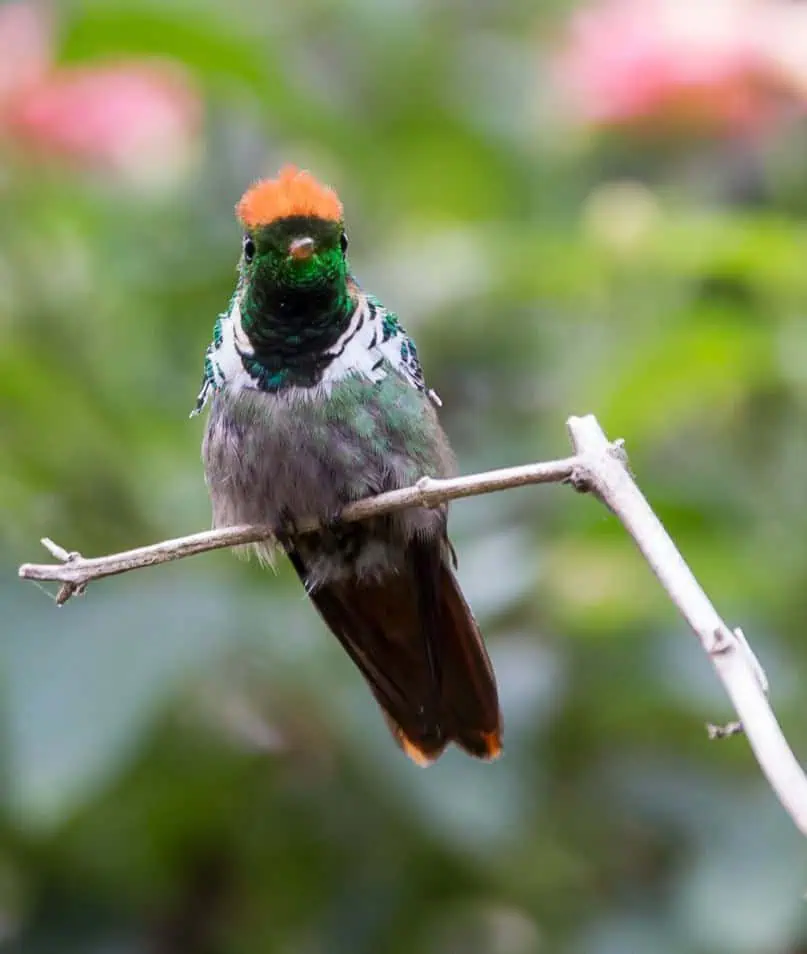
Adult males feature a bright reddish-orange crest and fan-shaped green and white cheek feathers. Their forehead and throat shimmer in iridescent green, while the rest of their underparts display a grayish-green tone.
Central tail feathers are bronze-green, while the outer feathers are reddish with bronze-green accents. Females, in contrast, do not have the male’s crest or cheek tufts.
Instead, they show a whitish throat with reddish spots, dark crescents, and grayish-green underparts. Juveniles resemble adult females in appearance.
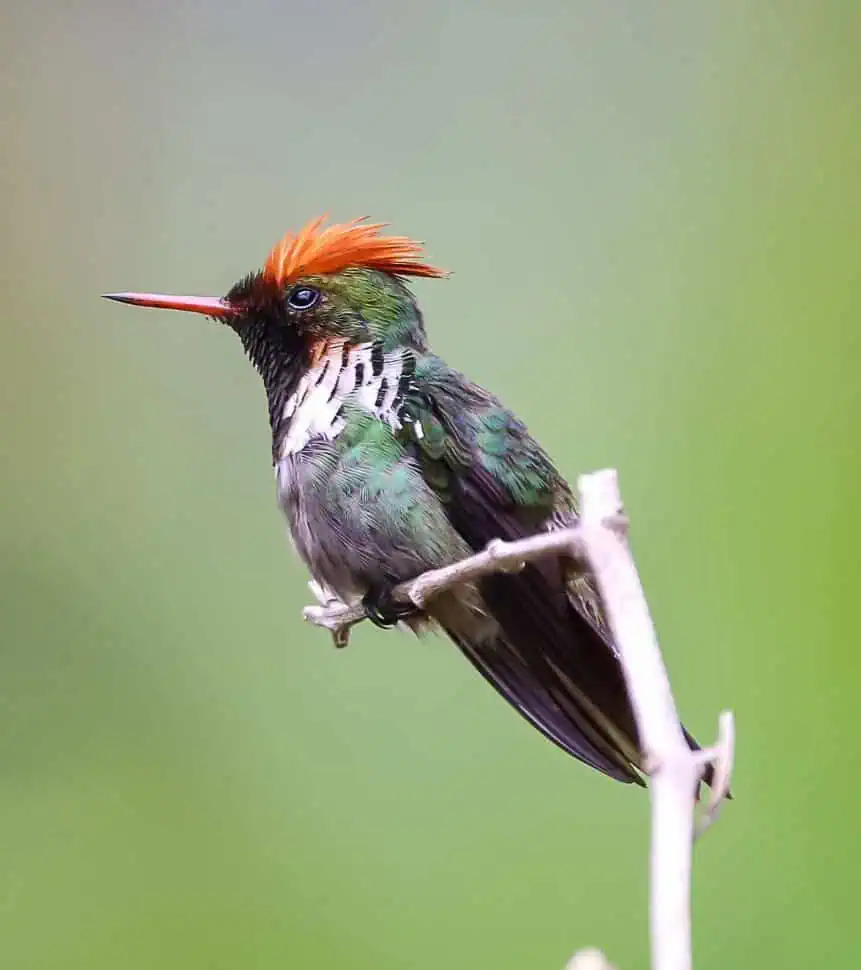
Habitat and Distribution: The frilled coquette is primarily found in eastern and southern Brazil, from Espírito Santo to Rio Grande do Sul, with some sightings in Bolivia and Paraguay and occasionally as far north as Alagoas.
They prefer semi-open landscapes, including forest edges, secondary forests, coffee plantations, gardens, and even dense forests, ranging from sea level to elevations up to 1,000 meters (3,300 feet).
Diet: This tiny hummingbird feeds on nectar from various small flowering plants and consumes small arthropods. It captures insects from perches located 2 to 5 meters (7 to 20 feet) above the ground, often yielding to larger hummingbirds nearby.
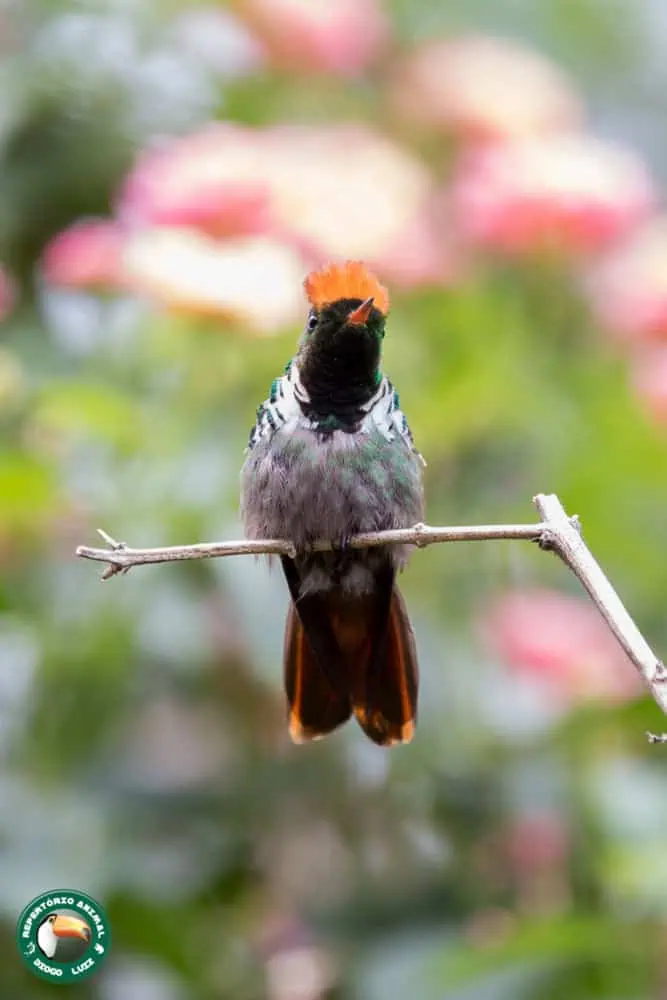
Breeding: The breeding season runs from August to March. Females construct small, cup-shaped nests of plant down and moss, often decorated with lichen.
Nests are typically situated on branches of bushes or small trees at 2 to 5 meters (7 to 20 feet). The female incubates the eggs for 12 to 13 days, and fledging occurs about 20 days after hatching.
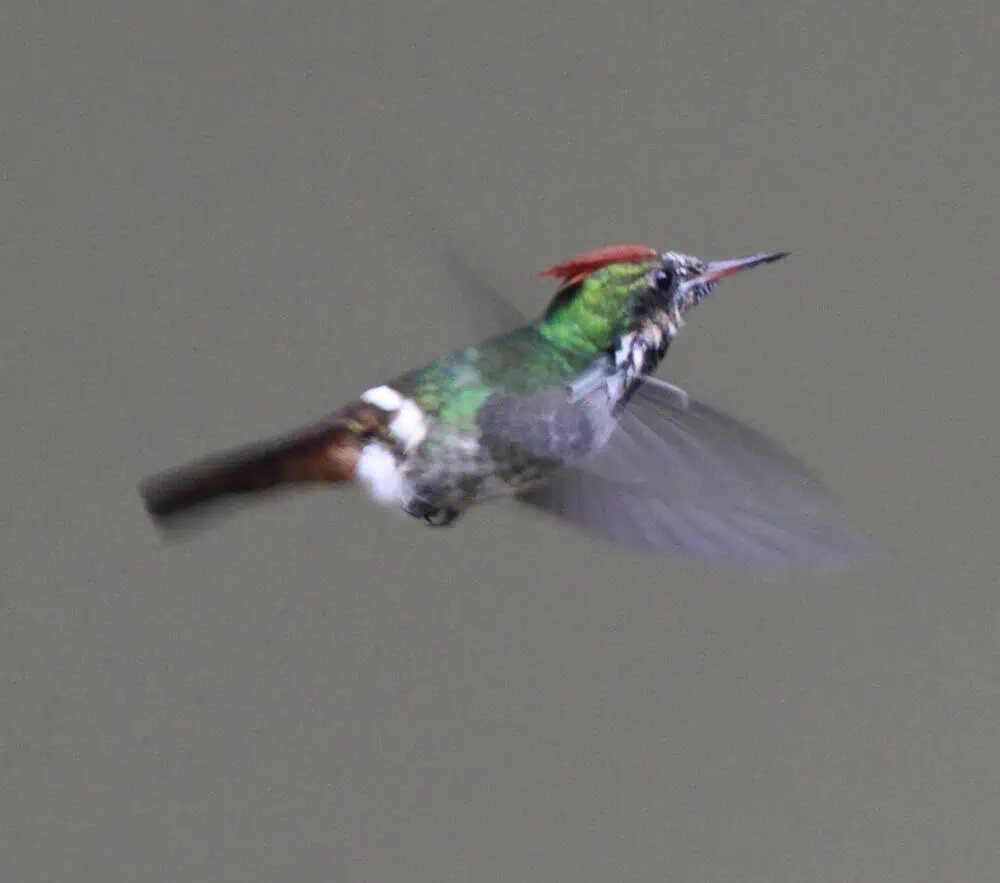
Sounds: While mostly quiet, the frilled coquette makes a brief “spark” sound during feeding. As it hovers, its wings emit a soft, bee-like hum.
Conservation Status: The frilled coquette is listed as a species of least concern by the IUCN. Although specific population numbers are unclear, this bird is common and adaptable, often thriving in human-modified landscapes like plantations and gardens. It also resides in several protected areas, ensuring additional stability for its population.


Read More Birds