
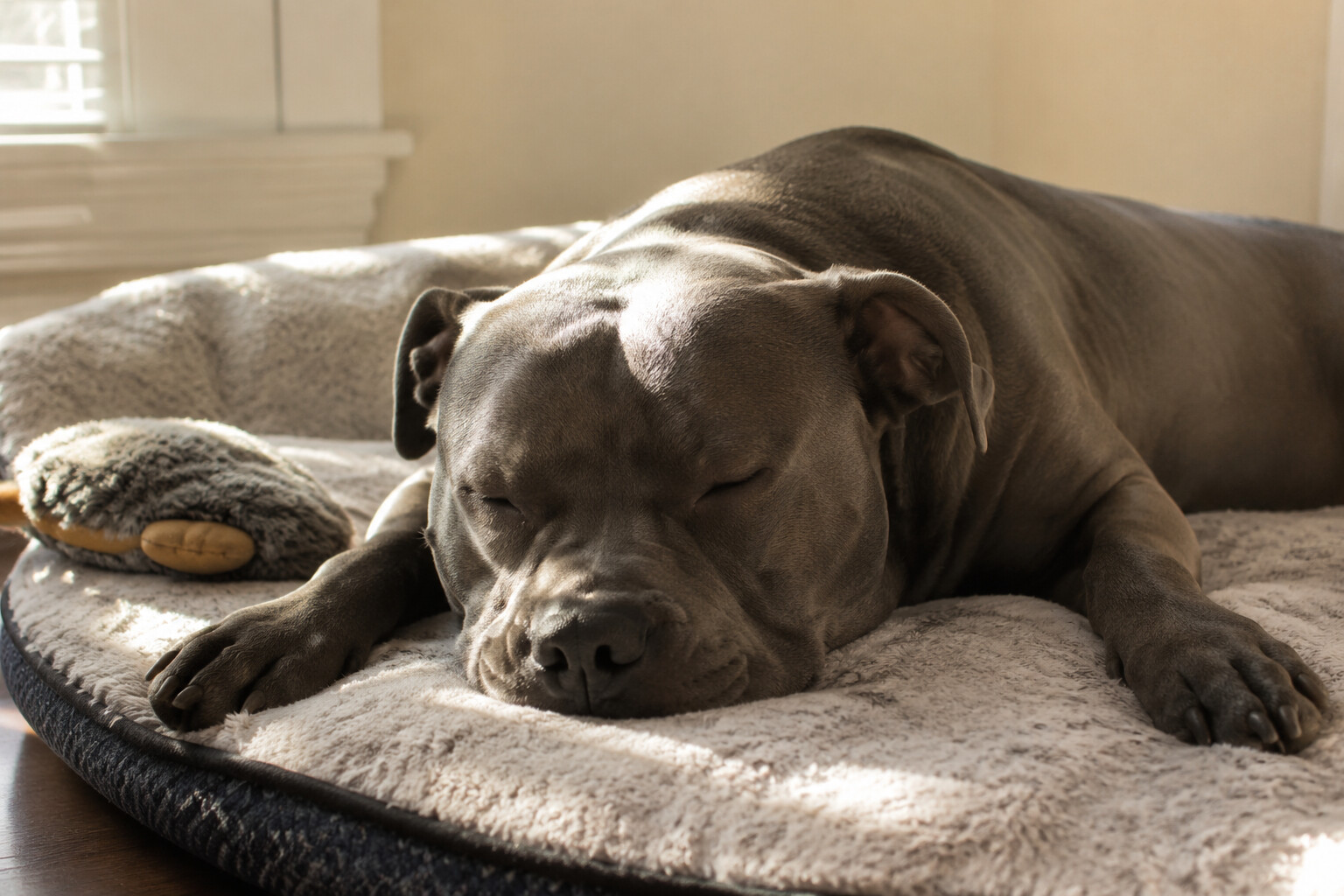
Drogo, an XL Bully rescued from a Washington neglect case involving backyard breeding, is getting a chance to experience the ordinary things that make a dog’s life feel safe: a soft bed, toys, space to move, patient care and trips to the beach.
His story has been shared by The Asher House, the Oregon sanctuary founded by Lee Asher, which took Drogo in after he was brought to safety through the Humane Society for Tacoma & Pierce County.
According to the sanctuary, Drogo had been used for breeding and kept in severe neglect before authorities intervened. The organization says he was one of several dogs rescued from the case.
From survival to a second chance
The Asher House says it welcomed Drogo along with several other dogs from the rescue. For Drogo, the transition meant moving from an environment where his basic needs were reportedly not met to one built around stability and individual care.
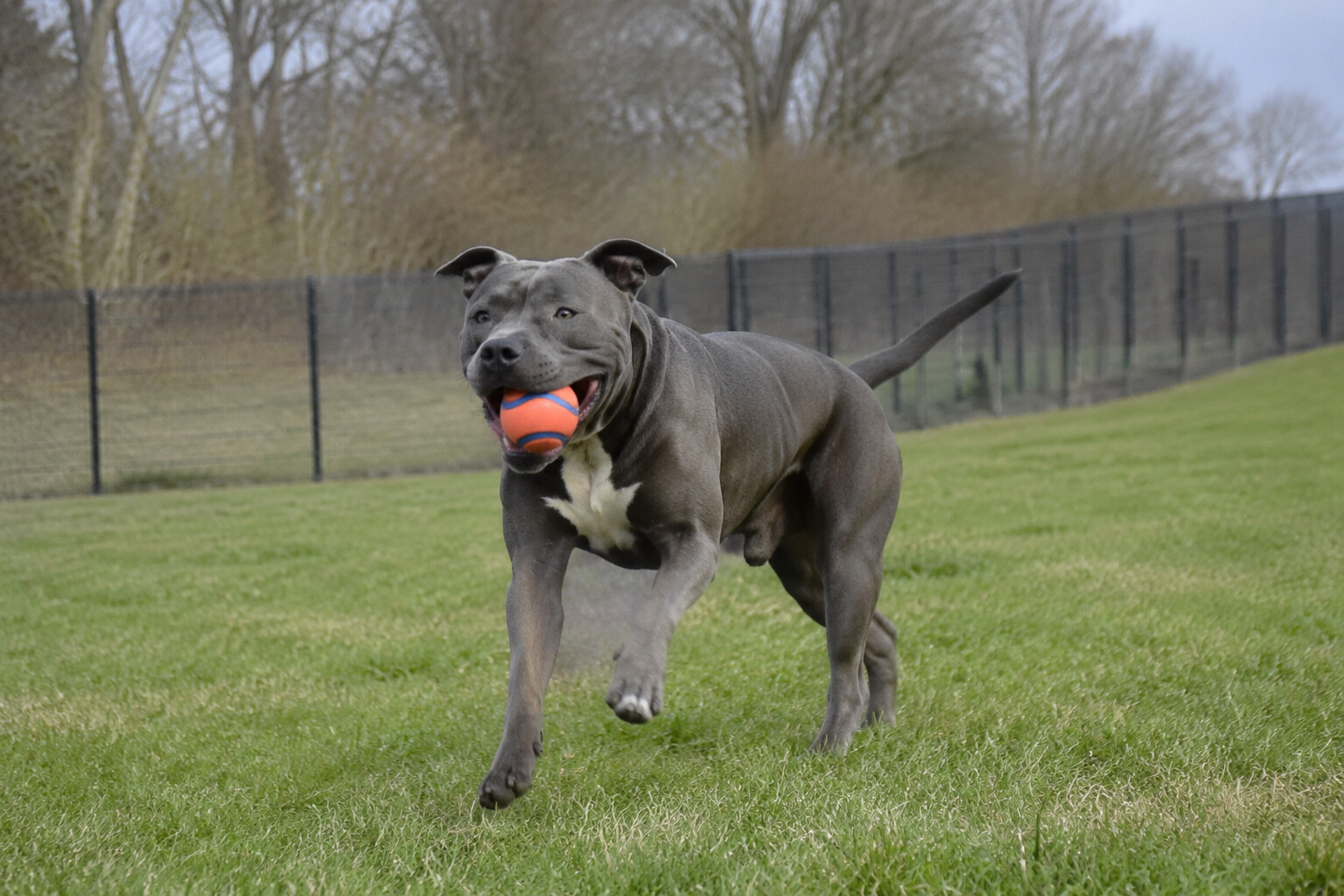
Lee Asher has described Drogo as a close companion. The dog now enjoys cuddling, toys, fetch and the ocean—simple experiences that carry special meaning for an animal whose early life, according to the sanctuary, was defined by confinement.
The point of rescue is not only removal from danger. It is the work that follows: allowing an animal time to learn routines, trust people and make choices in a safe environment.
Rehabilitation takes time and structure
The Asher House has said Drogo needs consistent handling and training as he adjusts. The sanctuary has publicly discussed resource guarding and mild barrier reactivity, describing an approach based on careful management, routine and one-on-one work.
Those details matter because recovery is rarely instant. Dogs who have experienced neglect can need structured support for a long time after rescue. A stable home, predictable boundaries and patient training can help build confidence without expecting an animal to forget what it has experienced.
More than a breeding animal
The Asher House’s account of Drogo’s progress is a reminder that rescue stories do not need to promise a perfect transformation. A dog can be both affectionate and still learning. He can need safeguards while also having a full, joyful life.
For Drogo, that life now includes a bed, toys, affection, training and the chance to run into the surf. He is no longer being valued for what he can produce. He is being cared for as an individual dog.
Sources
- The Asher House: Drogo’s story
- Lillie & Lee / The Asher House: background on Drogo’s rescue
- The Animal Rescue Site: account of Drogo’s rehabilitation
