
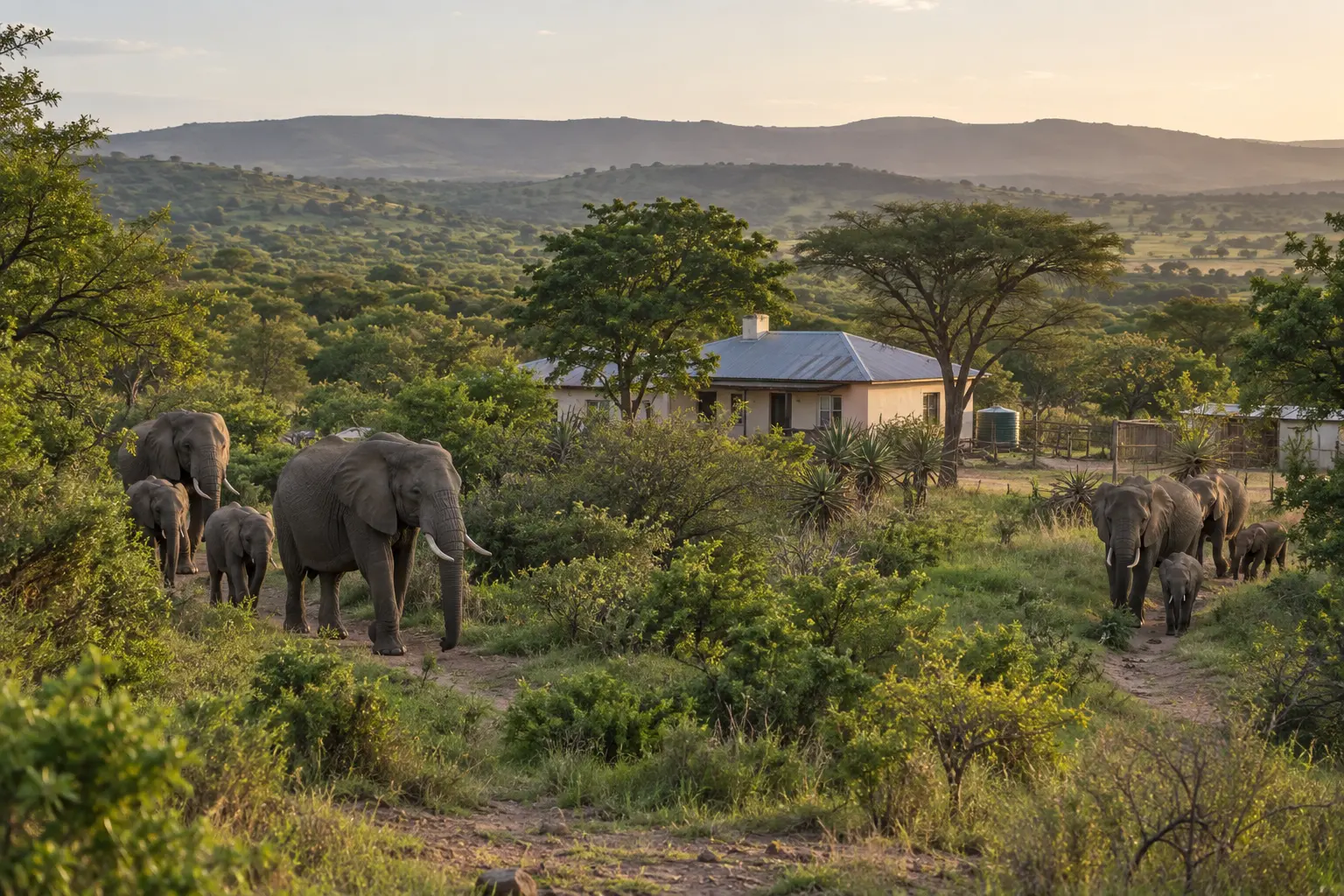
When South African conservationist Lawrence Anthony died suddenly on March 2, 2012, a striking event unfolded at Thula Thula Private Game Reserve in KwaZulu-Natal. Two elephant herds connected with Anthony appeared near the family home and remained around the property for roughly two days.
The visit has since become one of the internet’s best-known stories about animal grief. Its central event was reported at the time, but later retellings often present interpretation as fact. The elephants arrived; why they came, and what they understood, cannot be known with certainty.
What was reported at Thula Thula
Anthony’s son, Dylan, told South African media that both herds came to the house after his father’s death. The elephants had spent long periods elsewhere on the reserve, making the timing especially memorable to the family. Reports described them gathering near the home and remaining in the area for two days before moving back into the bush.
Anthony was 61 when he died of a heart attack during a trip to Johannesburg. He was widely known for taking in a herd once considered dangerous and at risk of being killed. His work building trust with those elephants later formed the basis of his book The Elephant Whisperer. He also became internationally known for helping animals at Baghdad Zoo during the 2003 Iraq war.
Where the viral story goes beyond the evidence
Online versions frequently say the elephants walked exactly 12 miles, had not visited for 18 months and somehow “knew” Anthony had died. Some accounts also say they returned on the anniversary of his death. The Earth Organization, which Anthony founded, says the elephants returned to his home on the anniversary for four subsequent years.
That organizational account is relevant to the history of the story, but it does not reveal the elephants’ motivation. Travel distance can also be difficult to interpret inside a large reserve, where elephants routinely move over extensive ranges. The safest conclusion is therefore limited: witnesses reported an unusual and well-timed visit, but no one could directly determine what prompted it.
Possible explanations are not mutually exclusive. Elephants may respond to changes in human activity, sound, scent, vehicles, routines or the behavior of other herd members. Their long-term memory and social awareness make the event scientifically interesting, yet those abilities do not allow observers to translate the visit into a human-like farewell with confidence.
What science says about elephants and death
Scientific research does show that elephants respond to death in unusual and complex ways. A 2020 review of field observations found that elephants often approach, touch and investigate carcasses at different stages of decay. Researchers also documented revisits, prolonged stillness, temporal-gland streaming and heightened social interactions near remains.
Controlled experiments have found that African elephants show greater interest in elephant skulls and ivory than in the remains of other large mammals. Other observations describe elephants touching bodies and bones with their trunks and feet, attempting to assist dying animals and remaining near dead herd members.
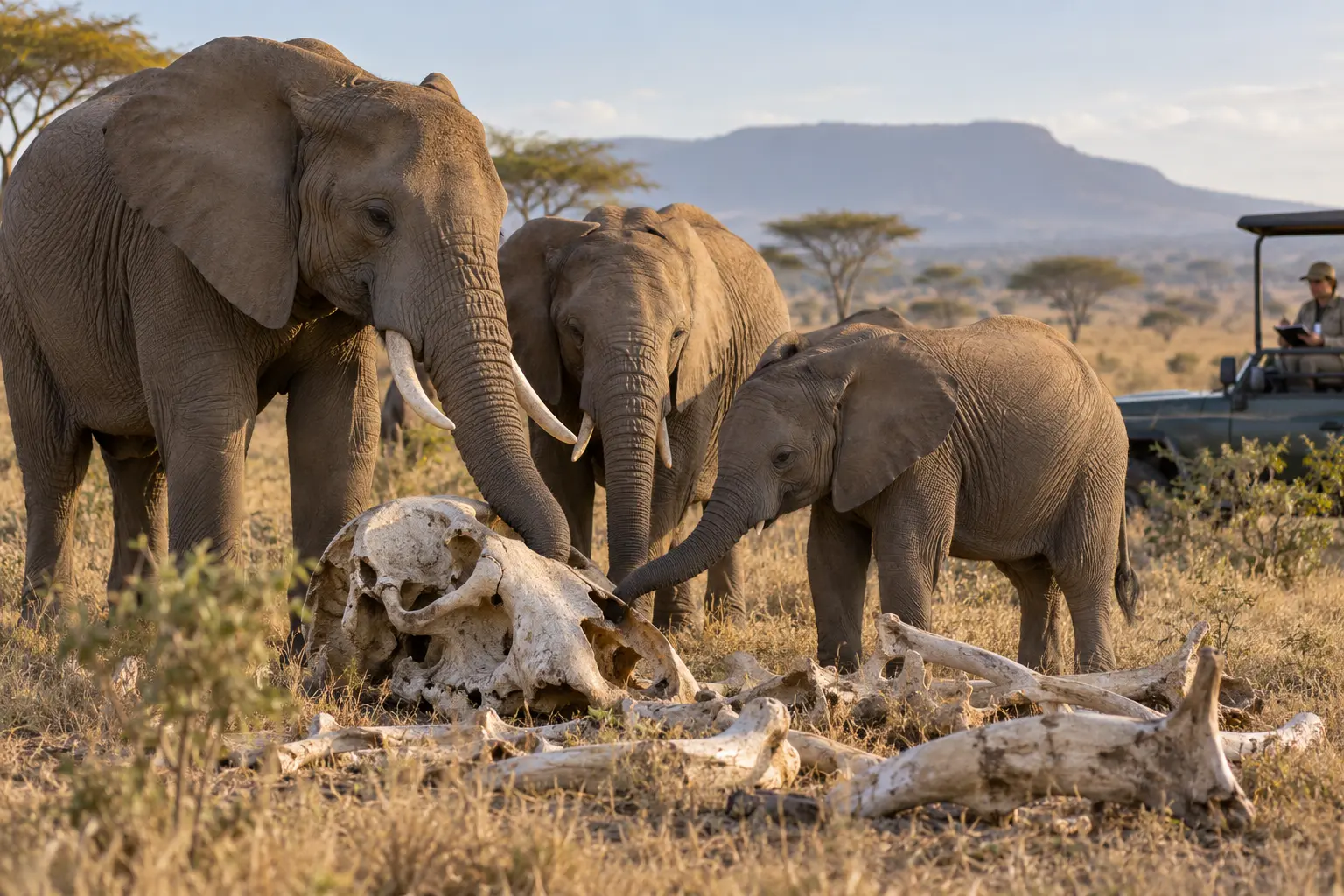
Scientists are careful about labels such as “mourning” because behavior alone cannot disclose an animal’s private mental experience. The evidence supports strong social bonds, memory and sustained interest in the dead. Whether elephants understand death in the same conceptual way humans do remains an open question.
The Thula Thula visit does not need a supernatural explanation to be remarkable. Two herds associated with a conservationist appeared at his home soon after he died, and his family experienced their presence as deeply meaningful. The honest version preserves both parts of the story: the visit was real, while its meaning remains unresolved.
Sources
- IOL: Elephants say goodbye to the whisperer
- The Washington Post: Lawrence Anthony obituary
- The Earth Organization: Lawrence Anthony’s conservation legacy
- Elephant behavior toward the dead: review and field observations
- African elephants’ interest in skulls and ivory
