
Wildfires can kill animals, destroy shelter and transform the places wildlife depend on. But the familiar image of every animal being trapped by advancing flames is incomplete. Many mobile animals move away, some smaller species shelter underground or in wet refuges, and the greatest effects may emerge after the smoke clears.
The outcome depends on the species, the season, the speed and severity of the fire, and what habitat remains nearby. A fast, intense fire can be deadly. A lower-severity burn can also create a patchwork of burned and unburned areas that some species use during recovery.
What happens while a wildfire is burning
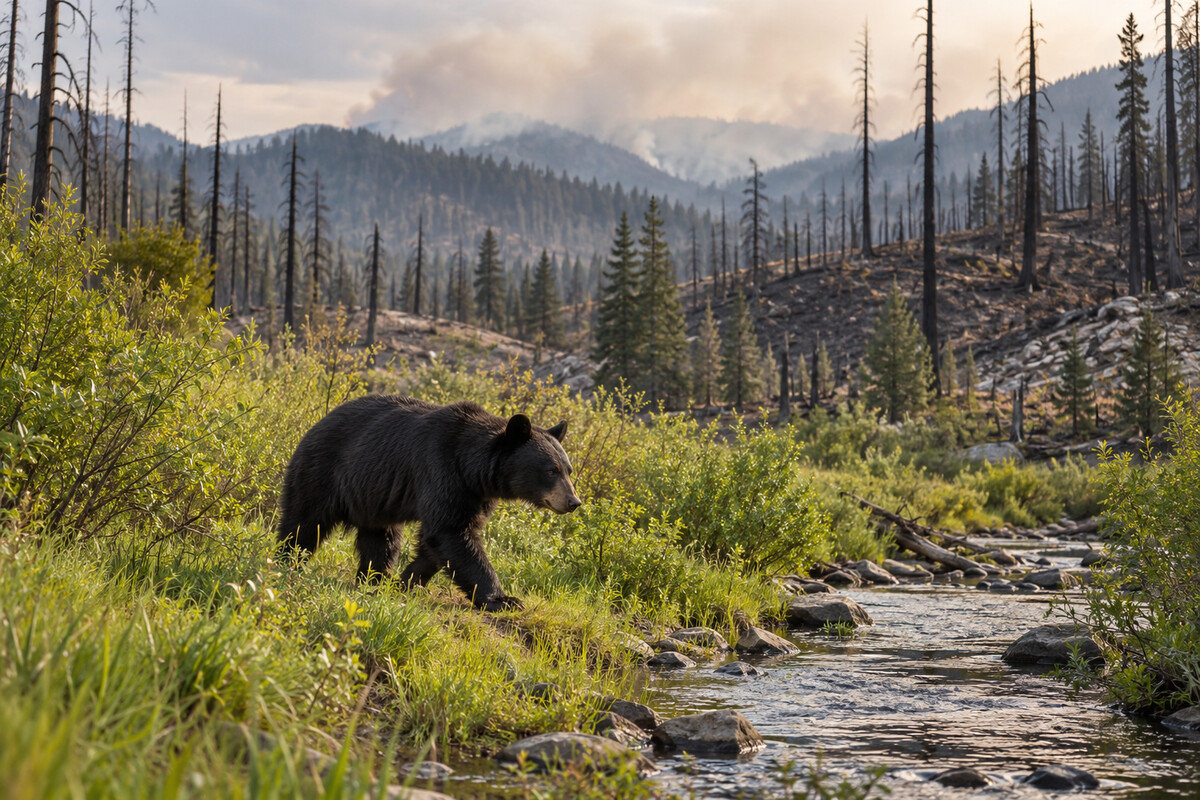
Large mammals such as deer, bears, cougars and wolves are often capable of leaving an active fire area. The National Park Service notes that large predators in Yellowstone generally move out of a fire’s path. Birds can fly away, while some small mammals, reptiles and amphibians may use burrows, rocks, water, downed wood or other protected pockets.
Escape is not guaranteed. Young animals, animals with limited mobility, nesting birds and species already weakened by drought or disease can be especially vulnerable. Rapid fire movement, heavy smoke, extreme heat and barriers such as roads or fences can reduce safe options. Some animals die directly from burns or smoke exposure, and others may be injured.
The danger continues after the flames
Survival during the fire is only the first challenge. Severe burns can remove nesting sites, shade, cover and familiar food sources. Animals may have to travel farther for water and forage, increasing their exposure to predators, vehicles and conflict with people. Ash, erosion and debris can also affect streams and wetlands.
The National Interagency Fire Center warns that post-fire landscapes can face severe vegetation loss, soil erosion, poorer water quality and flash flooding. Those changes can continue affecting wildlife long after an incident is declared contained.
Fire is also a natural ecological process
Not every fire has the same ecological meaning. Fire has shaped many North American ecosystems for centuries. Some plants and animals depend on periodic fire, and lower-severity burns can reduce accumulated vegetation, stimulate new growth and create habitat used by certain species.
That does not make destructive fires harmless. It means the scientific picture is more complicated than “fire is always bad” or “wildlife always escapes.” Very large or unusually severe fires can transform habitat in ways that make recovery difficult, especially when drought, invasive plants and repeated burning are already stressing the landscape. The U.S. Geological Survey says fire seasons are becoming longer and more intense in many dry western regions, while other stressors can compound wildfire risk and severity.
Recovery depends on protecting what remains
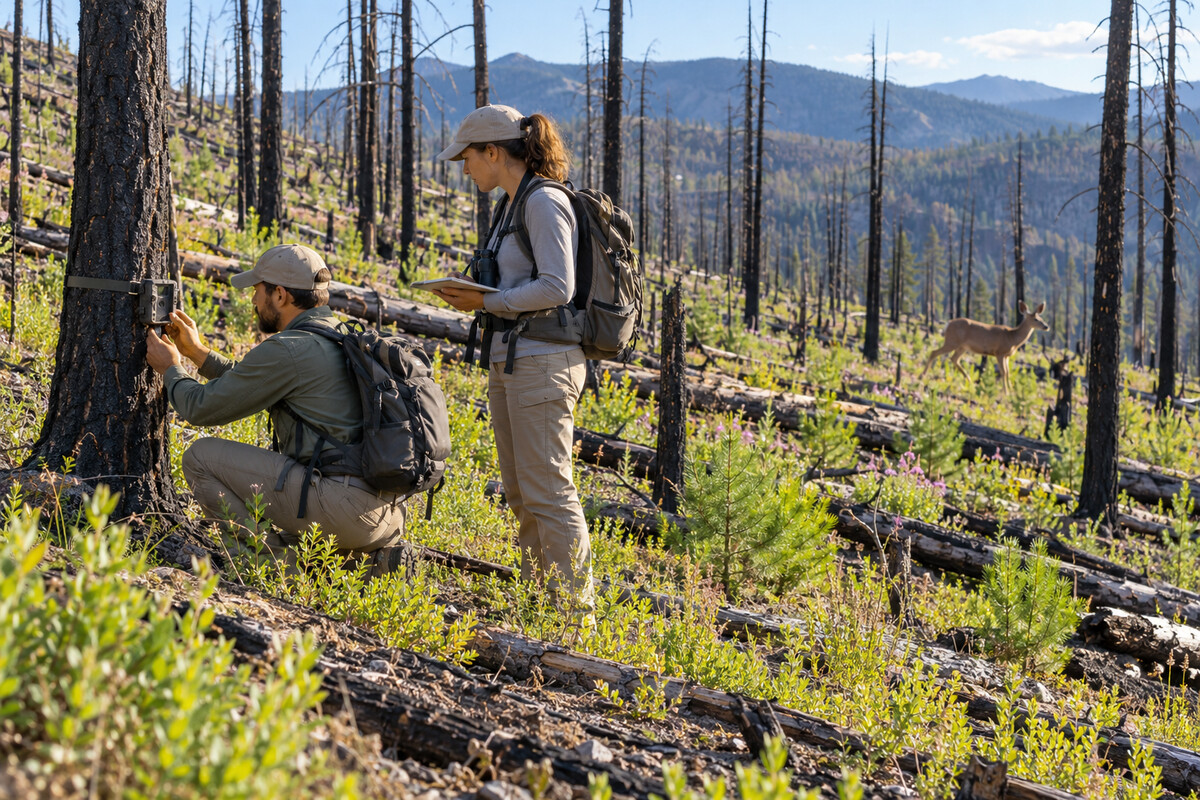
Unburned islands, stream corridors, large downed logs and nearby intact habitat can provide food, shade and refuge. Protecting these features and monitoring how species return help land managers decide where erosion control, invasive-species management or habitat restoration may be needed.
People can help by staying out of closed burn areas, giving displaced wildlife space, securing food and trash that could draw animals into neighborhoods, and contacting qualified wildlife authorities rather than attempting to handle an injured wild animal.
Remembering animals affected by wildfire should begin with accuracy. Some are lost, many escape, and others face a long struggle in altered habitat. Their future depends not only on what happens during the flames, but also on how well the land is protected and restored afterward.
Sources
- National Park Service: Ecological Consequences of Fire in Yellowstone
- National Interagency Fire Center: Post-Fire Recovery
- U.S. Geological Survey: Fire Science
- National Park Service: Wildland Fire and Wildlife
