
Wildfire images often show a landscape at its most frightening: flames moving through trees, smoke turning the sky dark and animals fleeing danger. Those scenes can be real, and individual animals may be killed, injured or displaced. But the full ecological story is more complicated than a single image of destruction.
Fire is a natural process in many North American ecosystems. Some plants and animals evolved with periodic burning, and low- or mixed-severity fire can create a patchwork of habitats that supports different species. The greatest concern is often not fire itself, but a change in the frequency, size or severity of fire—especially when repeated high-severity burns remove cover faster than a landscape can recover.
What happens to animals during a wildfire?
Animals respond in different ways. Birds and large mammals may move away from smoke and flames. Small mammals can shelter underground, while amphibians and reptiles may use moist soil, rock crevices or other refuges. These strategies do not guarantee survival, particularly when a fire moves rapidly, burns intensely or leaves few unburned patches.
Direct deaths do occur. U.S. Geological Survey research on desert fires, for example, has documented mortality and the loss of vegetation cover for tortoises and other small vertebrates. Yet reviews of fire effects in other regions have found that documented direct wildlife deaths are relatively uncommon. That does not mean no animals die; it means the number varies greatly and is difficult to measure across species and landscapes.
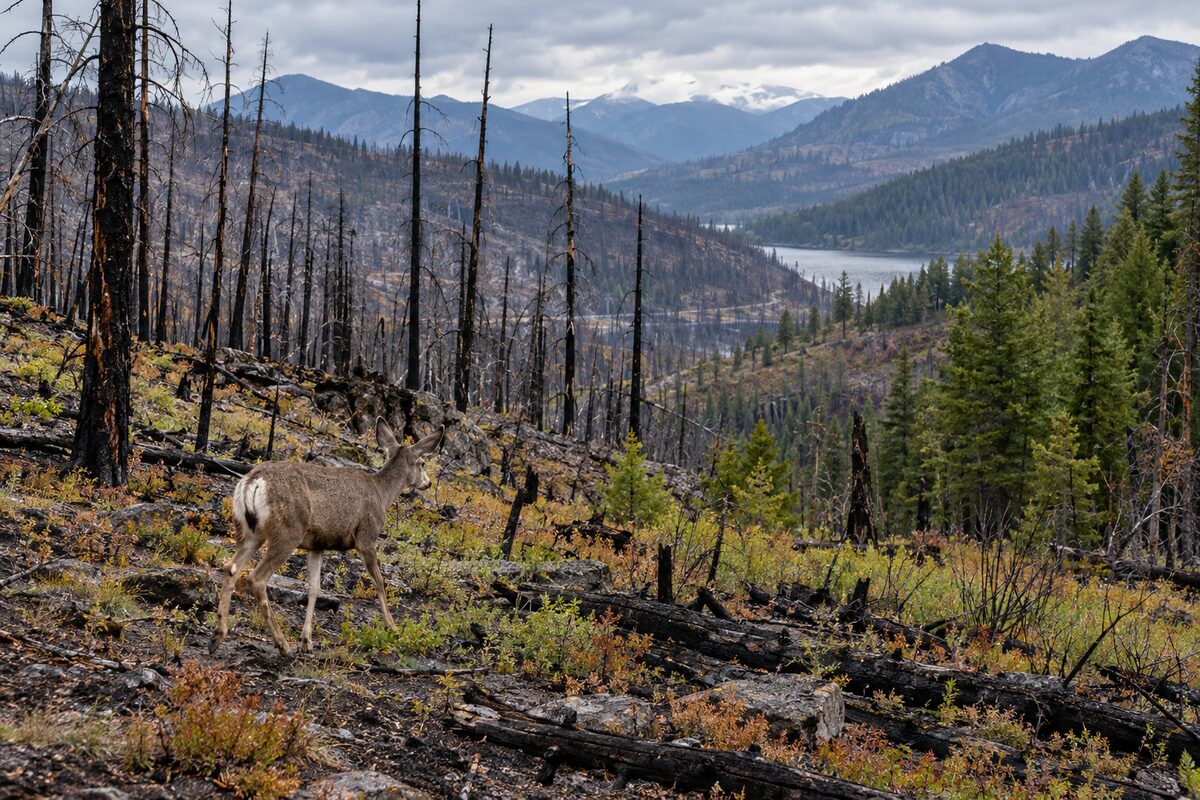
The longer-term damage may be about habitat
After flames pass, survivors still need food, water, shelter and places to reproduce. Fire can remove nesting cover, expose animals to predators and change the plants on which they depend. In sagebrush country, USGS scientists warn that wildfire-driven habitat loss is outpacing natural recovery in some places, creating serious problems for species such as greater sage-grouse.
Severity and scale matter. A patchy burn may leave green islands that serve as refuges. A very large, high-severity fire can remove broad areas of canopy and make it harder for vulnerable species to find cover immediately afterward. Invasive plants can also change how frequently an area burns, locking some habitats into a damaging cycle.
Fire can also renew an ecosystem
Not every burned landscape remains biologically poor. The National Park Service notes that fire can rejuvenate shrubs, open dense vegetation and create feeding and nesting opportunities. Dead standing trees become habitat for insects and cavity-nesting birds. New grasses and flowering plants can feed herbivores as succession begins.
Recovery does not mean every species returns at the same speed. Some animals benefit from open habitat, while others require mature forest or dense shrub cover. Monitoring after a fire helps land managers understand which species are returning, where erosion or invasive plants threaten recovery and whether restoration is necessary.
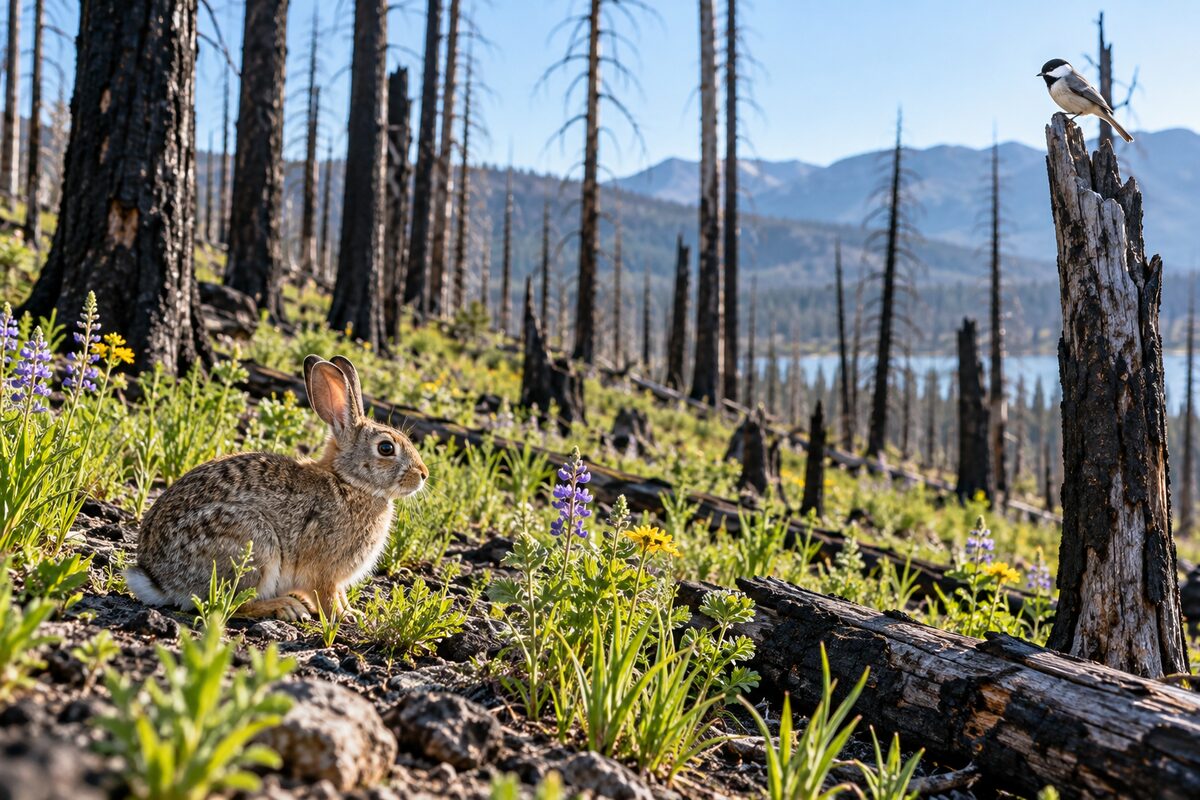
A more accurate way to remember wildlife
It is compassionate to remember animals harmed by wildfire. It is also important not to turn an unknown toll into a precise claim or portray every fire as ecologically identical. The evidence supports a careful conclusion: fires can kill wildlife and cause lasting habitat loss, but many animals survive, and many fire-adapted landscapes recover.
Protecting wildlife means reducing avoidable human ignitions, improving community fire resilience, preserving unburned refuges and restoring habitats where natural recovery is unlikely. It also means recognizing that prescribed fire and other scientifically planned treatments can sometimes reduce future risk while maintaining ecosystems that depend on periodic burning.
Sources
- U.S. Geological Survey: Effects on Animals
- U.S. Geological Survey: Wildfire and Post-fire Management
- National Park Service: Wildland Fire Ecology Resource Brief
- National Park Service: Assessing Wildlife Responses to Changing Fire Regimes
Featured and supporting images are educational editorial reconstructions. They do not depict one identified wildfire or specific animals from a documented event.
