
An injured lovebird named Nitya has returned to the air in an unusual way: inside a transparent cabin carried beneath a small drone.
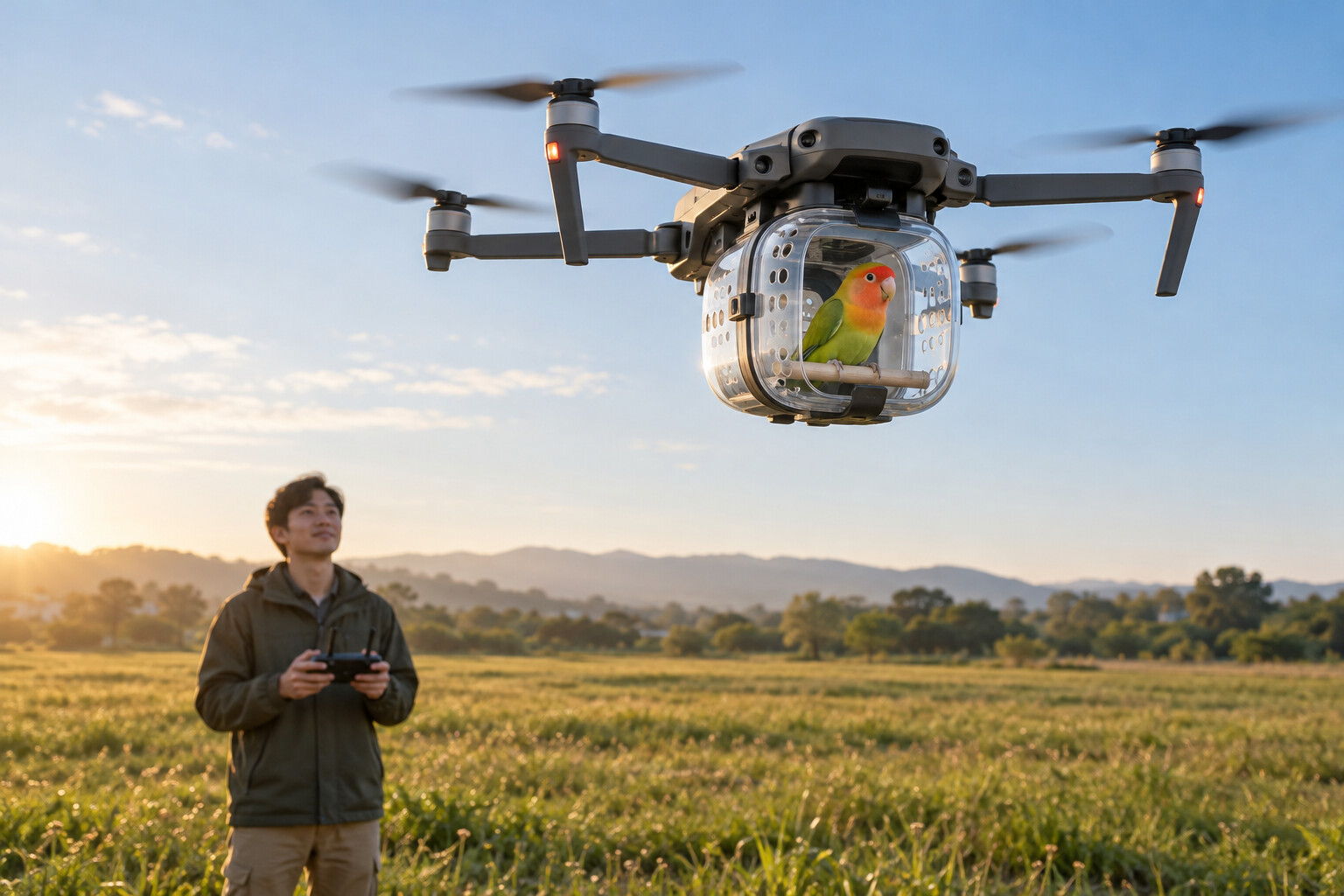
The project was created by Nitya’s owner, Marc Joseph Colando, in Davao, Philippines, after a cat attack left the bird unable to stand, walk or land normally. Video published in 2026 shows the lovebird secured inside the clear capsule as the drone rises, travels over open land and descends.
Nitya is not flying under her own power. The device gives her an assisted airborne experience while Colando controls the drone from the ground.
Why Nitya could no longer fly normally
Colando told People that a cat grabbed Nitya from a friend’s shoulder. The bird survived and eventually managed short, low flights, but the injury affected coordination in her toes. That meant she could not stand, walk or land properly—the final stage of a normal flight that keeps a bird from crashing or being injured again.
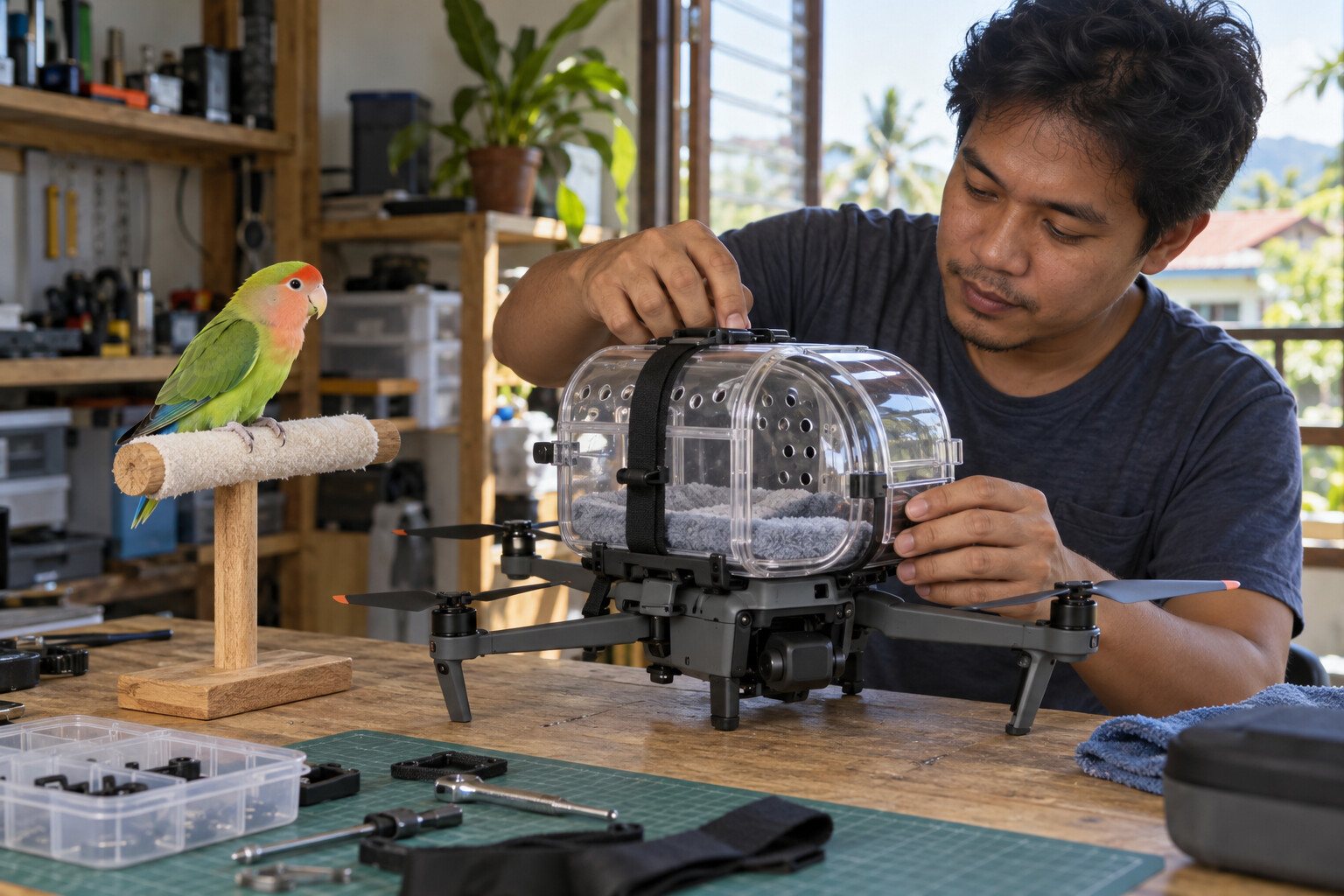
According to Colando, the drone idea came during a morning meditation. He fitted the aircraft with a small clear cabin and a perch, creating an enclosed space for the bird rather than attaching her directly to the machine.
A video distributed by KameraOne identifies the location as Davao and says a flight over farmland took place on April 13, 2026. The footage supports the central claim that the customized drone carried Nitya in the cabin.
What can—and cannot—be concluded from the video
In the footage, Nitya can be heard vocalizing while the drone is airborne. Colando said she feels happy after the experience and described her as his “second heartbeat.” That is the owner’s interpretation of his bird’s behavior, not a scientific measurement of her emotional state.
It is therefore more accurate to say that the drone allowed Nitya to experience being airborne again than to claim with certainty that she understood the ride as flight or felt the same joy she once experienced using her own wings.
Animal safety must come before a viral moment
The story has attracted attention because it combines affection, disability and inventive technology. It also raises practical welfare questions. Birds can be sensitive to noise, vibration, heat, sudden movement and unfamiliar confinement. A drone also carries mechanical and flight risks that would be serious for a small animal.
No one should copy the concept simply because a short video looks heartwarming. Any device involving a disabled animal should be evaluated around that individual animal’s health, behavior and stress signals, ideally with advice from an avian veterinarian. Secure ventilation, stable mounting, low-risk conditions and an immediate way to end the experience would all be essential considerations.
The most meaningful part of Nitya’s story is not that technology can replace natural flight. It cannot. The story is about an owner trying to adapt an experience for an animal whose body now works differently, while reminding viewers that compassion also requires caution.
Sources
- People: interview and footage details, April 30, 2026
- KameraOne video description: Nitya’s drone-assisted flight in Davao
