
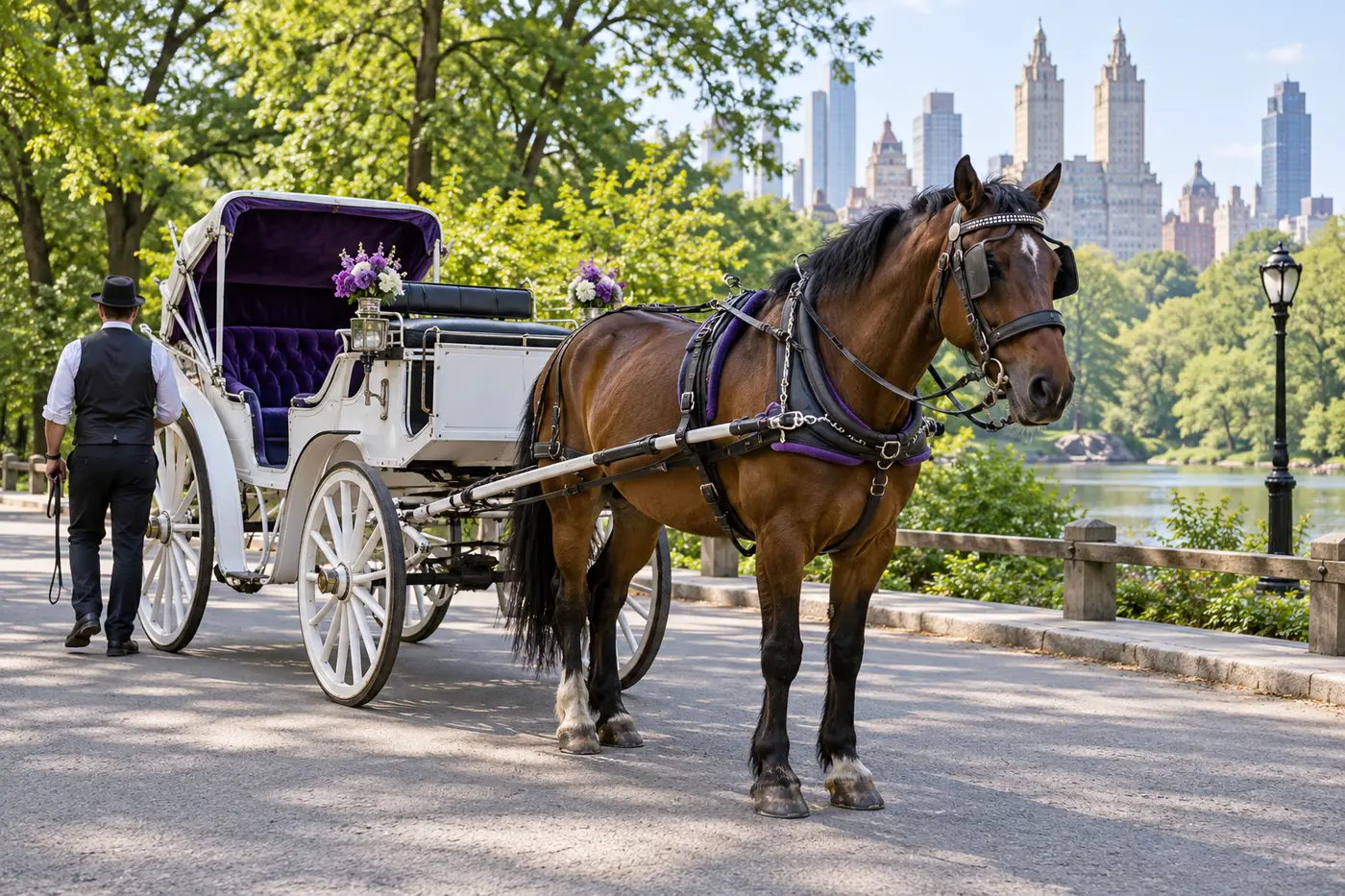
New York City’s long-running dispute over horse-drawn carriages has entered a consequential new phase, but no citywide ban has taken effect.
Mayor Zohran Mamdani said in June that he supports removing horse carriages from Central Park and wants to work with union and community leaders on the transition. His statement came amid renewed scrutiny of the industry and before a fatal carriage incident intensified the public-safety debate.
A fatal accident changed the debate
On June 17, 2026, 18-year-old visitor Romanch Mahajan died from injuries suffered in a horse-carriage incident in Central Park. The Central Park Conservancy confirmed his death and renewed its call for the city to pass legislation ending the carriage industry.
The New York City Council’s speaker and health committee chair called the death horrific and said the Council would hold a hearing on Ryder’s Law. Their statement also noted that a carriage horse had died one week earlier.
Public records and local reporting describe Mahajan as a tourist from India who was riding with other passengers when the horse bolted and the carriage overturned. The incident made the debate about more than animal welfare: it also centered the safety of passengers, drivers and people using one of the country’s busiest parks.
Ryder’s Law proposes a phaseout, not an immediate ban
Introduction 943-2026, known as Ryder’s Law, would stop the issuance of new horse-drawn-cab licenses and prohibit carriage operations beginning June 1, 2028. It would also require humane disposition of the horses and bar their sale or transfer for slaughter or another horse-carriage business.
The proposal includes a workforce-development program for drivers and other workers to help them move into new fields. That transition component reflects a central challenge: supporters of a phaseout want to end the use of horses without treating the workers’ livelihoods as an afterthought.
As of October 3, the Council’s legislative record lists the bill as laid over by the Health Committee after a July 15 hearing. That means it remains pending and should not be described as an enacted ban.
Mamdani’s official June 10 remarks focused specifically on Central Park. He said he supported removal from the park and wanted to work with union and community leaders, but did not present the change as something already accomplished.

The Council is considering a competing approach
A separate measure, Introduction 937-2026, would regulate rather than eliminate horse-carriage operations. It proposes studies, revised temperature measurements, hitching-post surveys and practical examinations for some drivers.
That competing bill reflects arguments from industry supporters who say better oversight, working conditions and safety rules can preserve a historic attraction. Opponents respond that urban traffic, noise, crowding and unpredictable incidents create risks that regulation cannot remove.
The question before New York is therefore not a simple contest between tradition and change. It involves animal welfare, public safety, employment, retirement protections for horses and the city’s responsibility to manage crowded public space.
The verified development is clear: the mayor supports ending carriage rides in Central Park, a fatal June accident accelerated demands for action, and lawmakers are considering sharply different paths. The final legal outcome remains undecided.
Sources: NYC Mayor’s Office transcript; Ryder’s Law legislative record; competing regulatory bill; Central Park Conservancy; New York City Council statement.
