
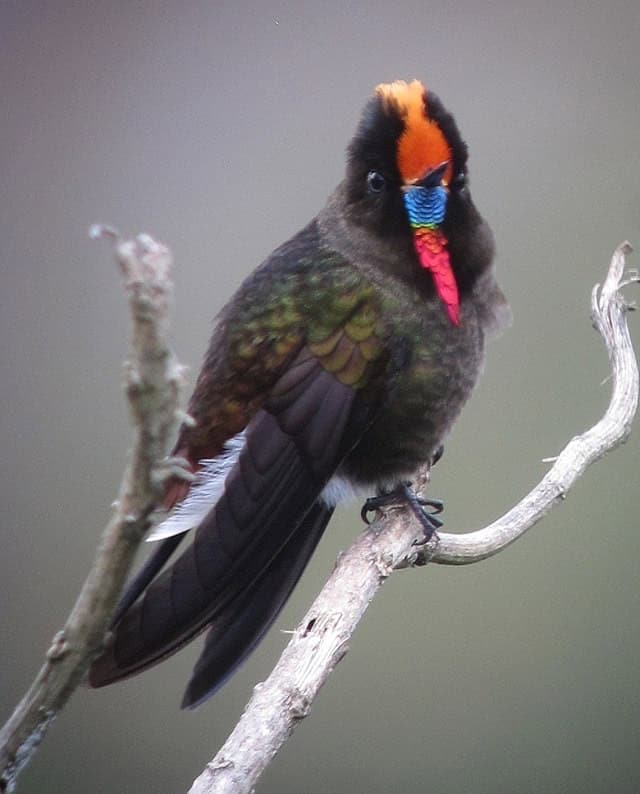
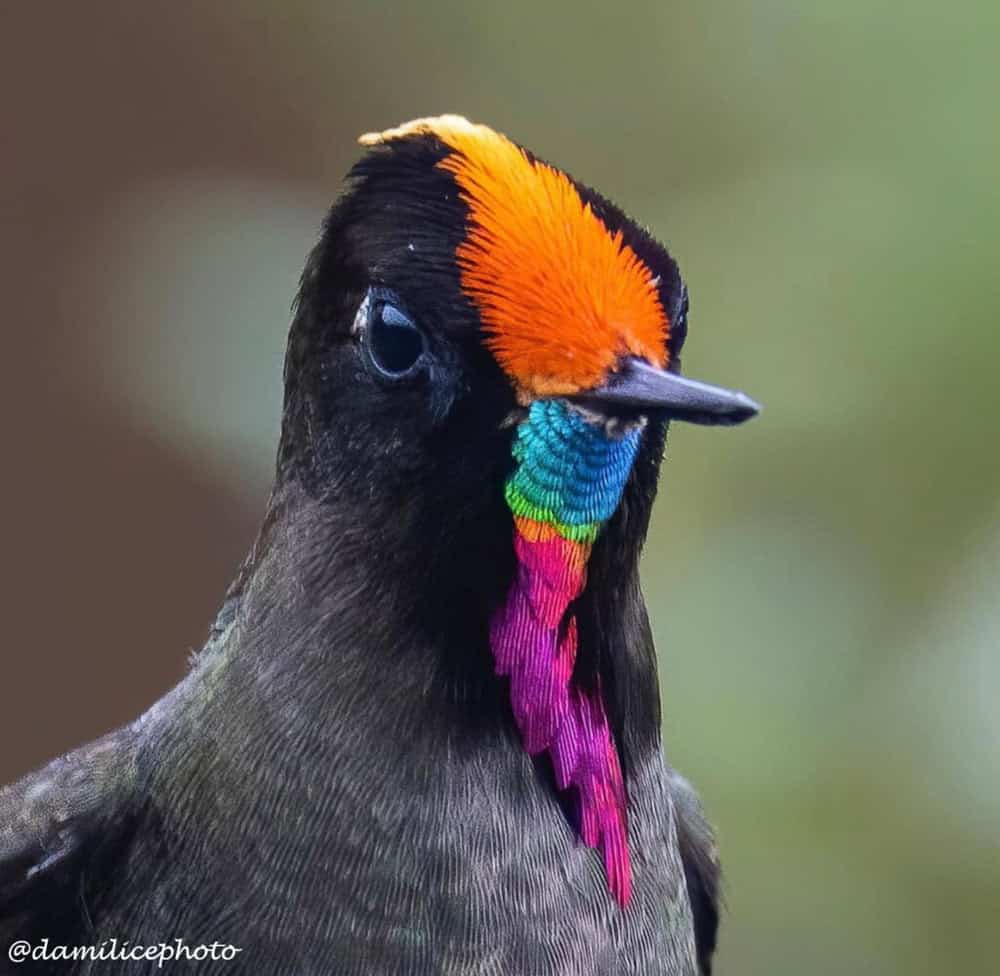
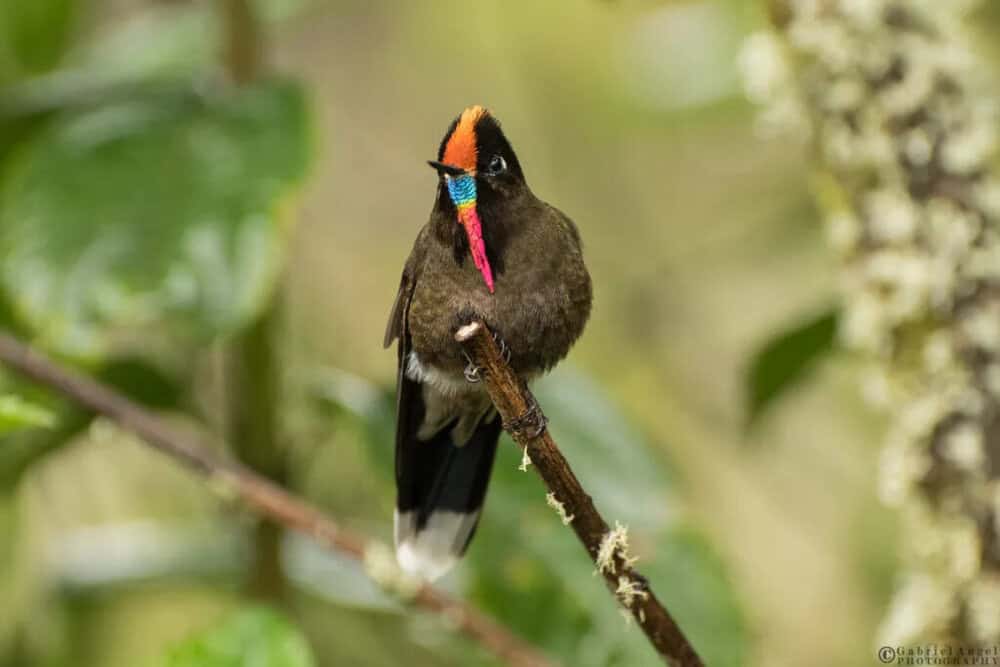
The Rainbow-bearded Thornbill is a hummingbird that leaves an unforgettable impression, standing out not only for its size, about 10.8 to 10.9 cm but for its vivid, iridescent colors.
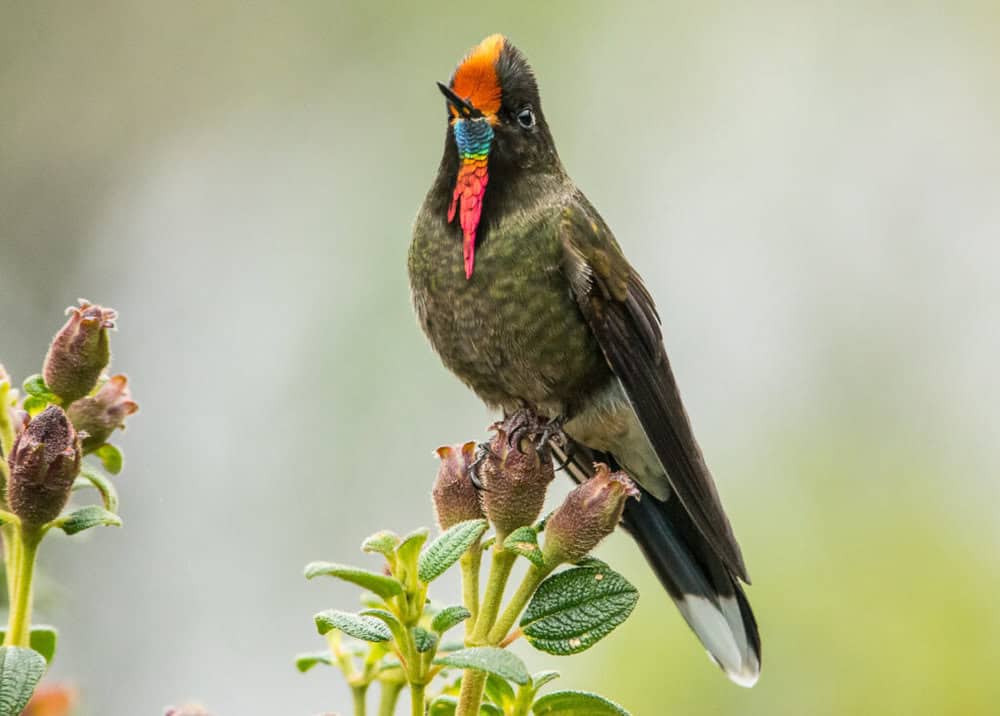
Its dark green head is accentuated by a white dot behind each eye and a striking rufous crest, but its true brilliance is in the vibrant beard, or “gorget,” on its throat.
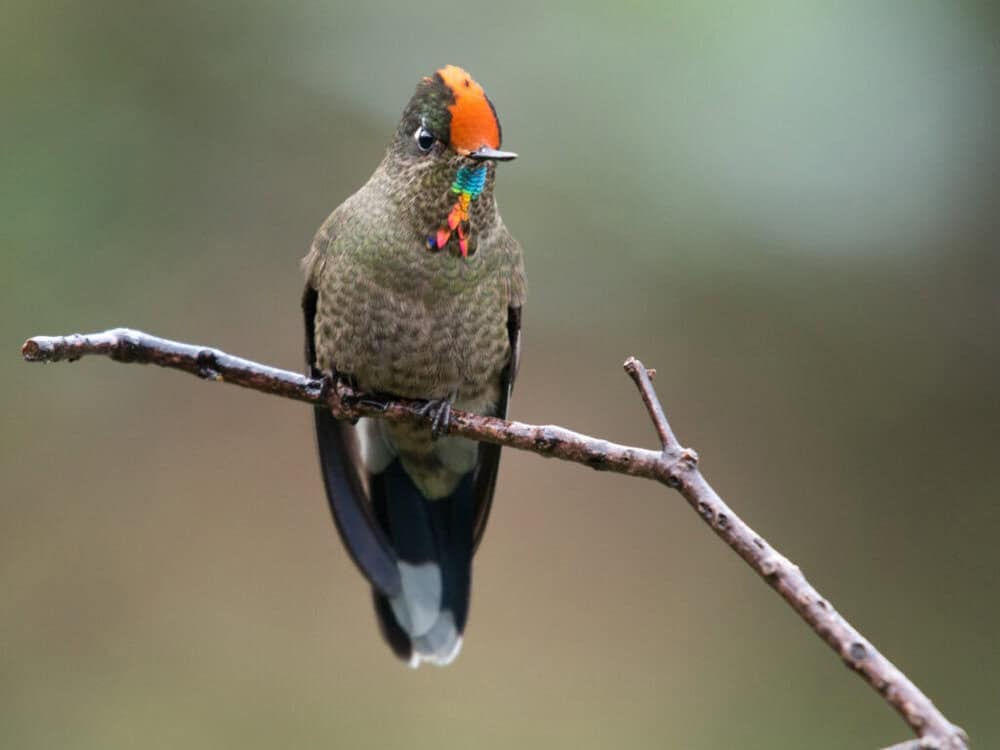
This patch of feathers displays a rainbow of celadon green, turquoise, yellow, and red, sparkling in different colors when hit by sunlight. Belonging to the Trochilidae family, this hummingbird has a short, needle-like bill ideal for feeding on nectar.
While males are known for their dazzling colors, females have a more subtle look, with yellowish-ochre underparts. Juveniles are even more distinct, lacking the colorful beards and featuring white speckles on their throats.
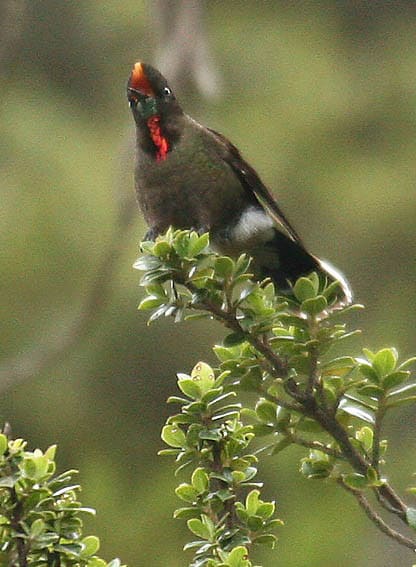
This species thrives in diverse environments, ranging from high-altitude grasslands and elfin forests to open country areas with bushes and bromeliads. They feed mainly on nectar from small flowers, bushes, and shrubs but also eat insects when available, demonstrating their adaptability.
When it comes to reproduction, the male’s role ends after mating. The female is responsible for building the nest, incubating, and raising the young.
She camouflages a cup-shaped nest from plant fibers, moss, and animal hair in bushes or trees. After laying a white egg, the chicks will be fully fledged in 7 to 10 days.
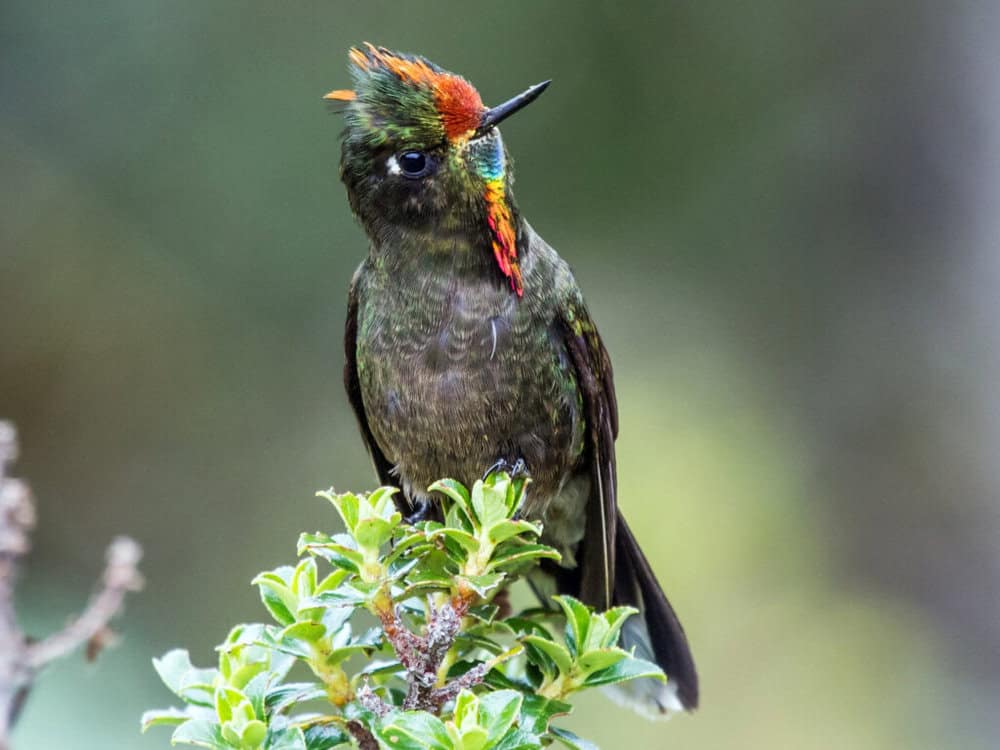
Although its breeding range is somewhat limited, the Rainbow-bearded Thornbill remains fairly common in its habitat, with no major threats reported. This bird is a remarkable sight, with its colorful appearance and unique behavior adding life to the landscapes it inhabits.
Admiring the Rainbow-bearded Thornbill allows us to appreciate the beauty of nature. It serves as a reminder of the importance of conservation efforts to protect such unique species for future generations.
Read More Birds