
New York’s restrictions on the sale of cosmetics newly tested on animals are real—but they are not a new development. Governor Kathy Hochul signed the New York Cruelty-Free Cosmetics Act in December 2022, and the law took effect on January 1, 2023. Any account presenting the signing as fresh news in 2026 leaves out essential context.
The measure, enacted as Senate Bill S4839B/Assembly Bill A5653B, added Section 399-aaaaa to New York’s General Business Law. In broad terms, it bars a manufacturer from importing for profit, selling, or offering for sale in the state a cosmetic when the manufacturer knew—or reasonably should have known—that animal testing was conducted or contracted by the manufacturer or one of its suppliers after the law’s effective date.

What the New York law actually does
The law targets cosmetic animal testing conducted after January 1, 2023. It does not retroactively ban every cosmetic containing an ingredient that was ever tested on animals. The statutory language also focuses on manufacturers’ knowledge and on testing performed by, or on behalf of, a manufacturer or supplier.
New York lawmakers described the policy as a move away from animal tests in a sector where non-animal approaches are increasingly available. Those approaches can include reconstructed human tissue models, cell-based methods, computer modeling, and the use of existing safety data. Which method is appropriate depends on the product, ingredient, and safety question being evaluated.
Important exceptions remain
The prohibition is not absolute. New York’s current statute contains exceptions for certain animal testing required by federal or state regulators, provided specific conditions are met. It also addresses testing required by a foreign regulatory authority and testing conducted for purposes unrelated to cosmetics, again subject to statutory safeguards.
The law further protects the use of data from animal testing performed before the effective date, including for ingredients that had already been tested and sold in New York. These details matter because “New York banned animal-tested cosmetics” is a useful shorthand, but it is broader than the precise legal rule.
Why the timing still matters
The law remains significant for animal welfare because it limits the market for cosmetics tied to newly conducted animal tests and reinforces incentives to use validated alternatives. But accuracy is part of responsible advocacy. The bill passed the Legislature in 2022, was signed that December, and has been in effect since January 2023—not newly enacted in 2026.
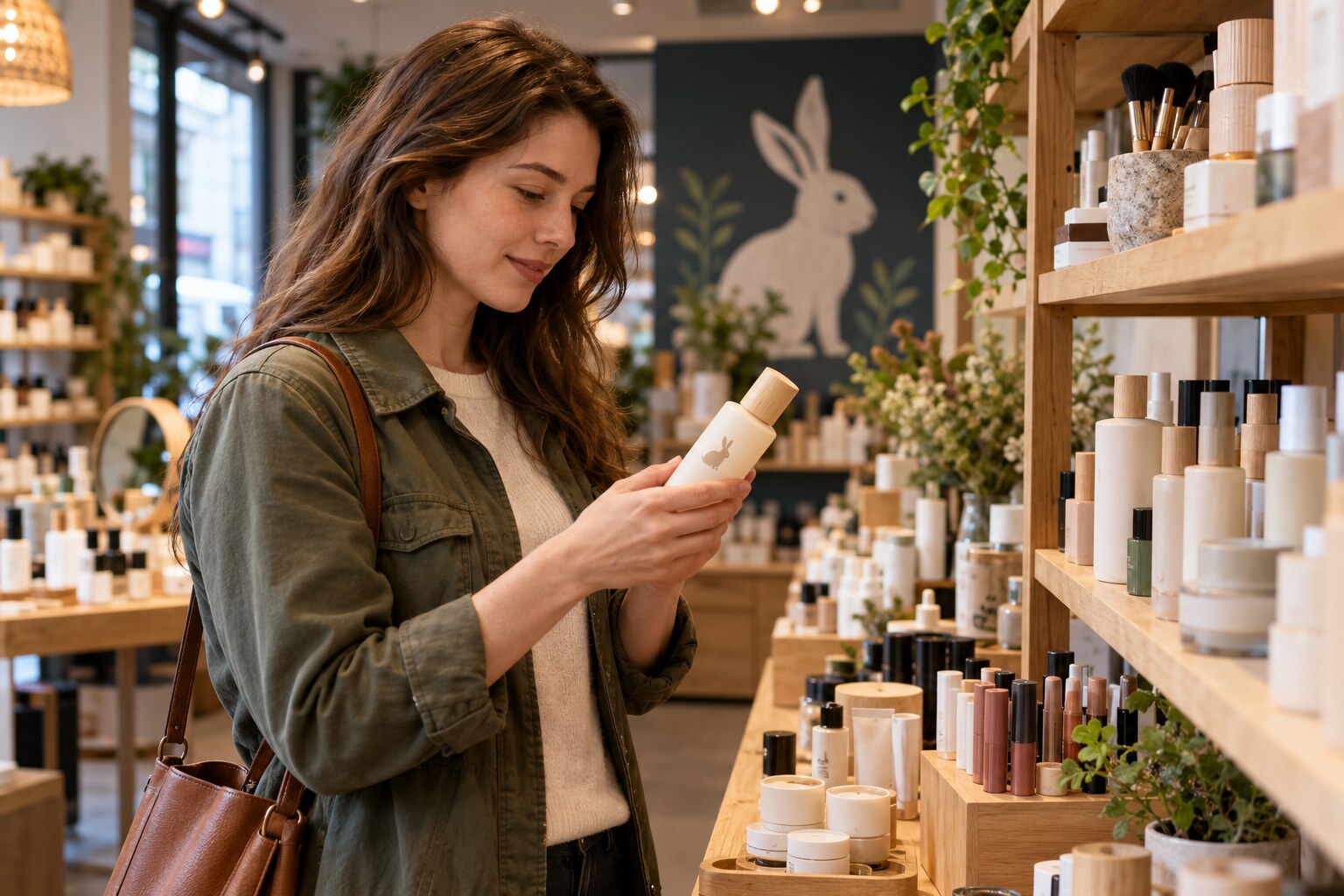
Consumers who want to avoid animal-tested cosmetics should also distinguish between a company’s own claims and independent certification programs. A rabbit symbol, a “cruelty-free” statement, and compliance with a state sales law do not necessarily mean exactly the same thing. Checking the scope and criteria behind a label provides a clearer picture.
For New York shoppers, the central takeaway is straightforward: the state has had a legally enforceable restriction on the sale of certain cosmetics associated with animal testing conducted after January 1, 2023. The policy is a meaningful part of the wider shift toward non-animal testing, while its exceptions and effective date should remain visible in any accurate retelling.
Sources
- New York State Senate — S4839B bill record and text
- New York State Senate — General Business Law §399-AAAAA
- New York State Assembly — announcement that the Cruelty-Free Cosmetics Act was signed
