
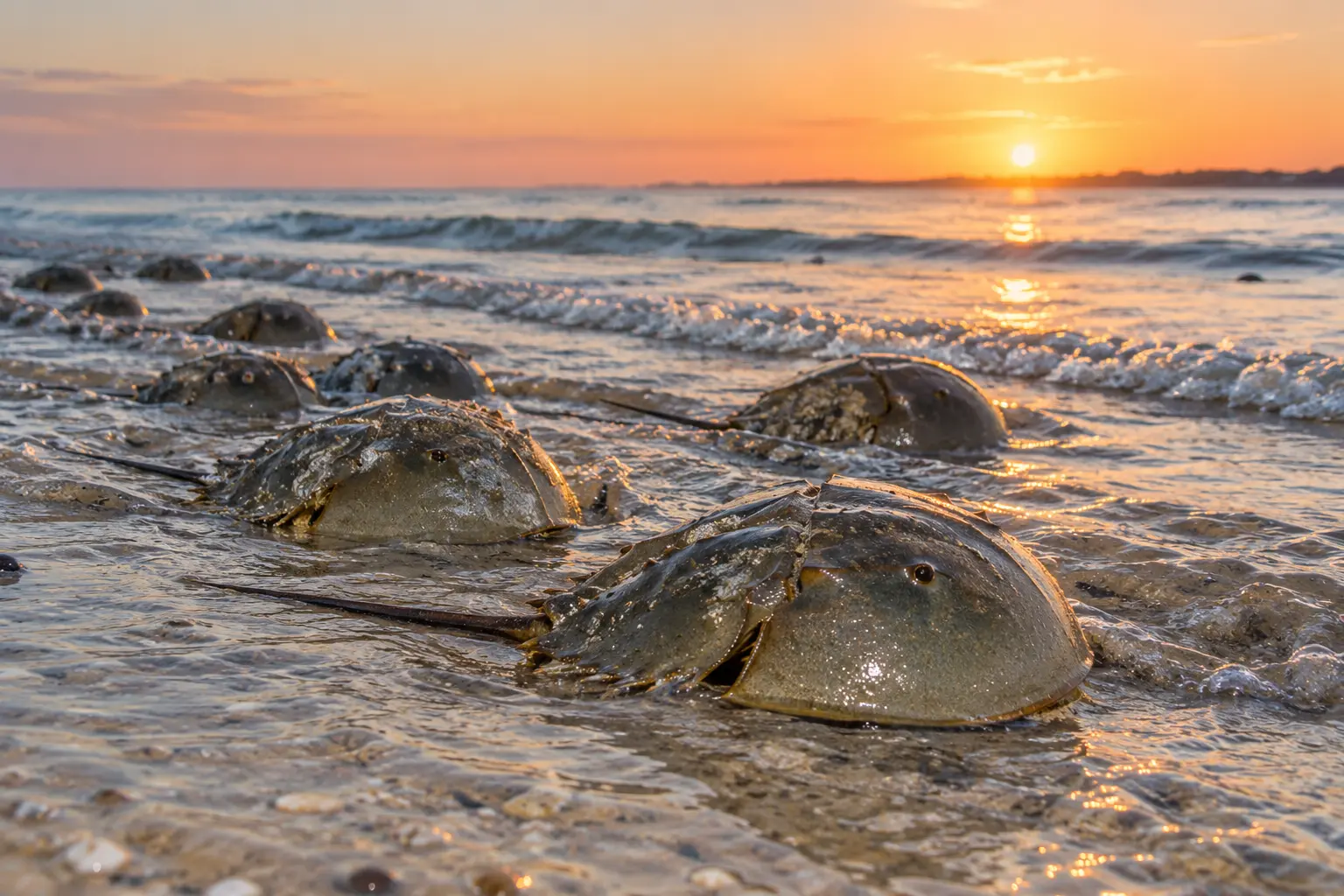
New York is phasing out the taking of horseshoe crabs from state waters, giving one of the Atlantic coast’s oldest animals a clear path toward full protection.
Governor Kathy Hochul signed the legislation on December 19, 2025. The law reduces the permitted harvest during a transition period and establishes a statewide prohibition beginning January 1, 2029. Once the ban takes effect, taking horseshoe crabs for commercial or biomedical purposes will be prohibited, while limited collection for bona fide scientific or educational purposes may still be authorized.
A phased reduction before the 2029 ban
The change is not immediate. The legislation directs New York’s Department of Environmental Conservation to keep annual horseshoe crab quotas at no more than 75% of the 2025 quota in 2026, 50% in 2027 and 25% in 2028. The state’s 2025 quota was 150,000 crabs, making the 2026 limit 112,500.
DEC says existing commercial limits, permits and reporting requirements remain in force until the full prohibition begins. Seasonal closures around full and new moons also continue during the transition.
The current text of New York Environmental Conservation Law §13-0331 states that, from January 1, 2029, no person may take horseshoe crabs from state waters, including for commercial or biomedical purposes. It preserves an exception for approved scientific and educational work, including qualifying public or nonprofit zoos and aquariums.
Why horseshoe crabs matter
Despite their name, horseshoe crabs are not true crabs. They are marine arthropods whose ancestors appeared hundreds of millions of years ago. Their seasonal spawning events also support a wider food web along the Atlantic coast.
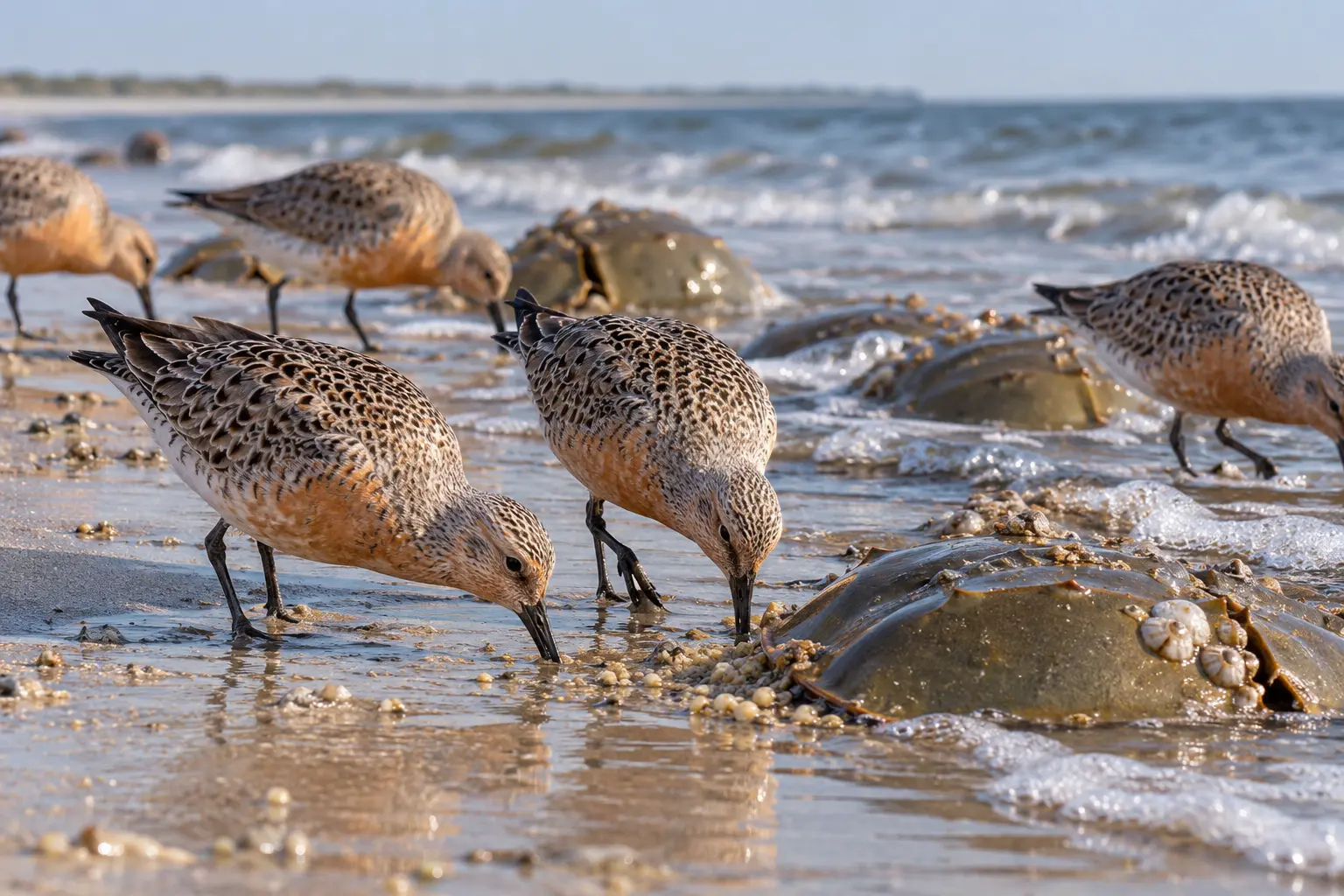
Horseshoe crab eggs are an important food source for migratory shorebirds, including the red knot, which must rapidly rebuild energy during its long-distance journey. Protecting spawning adults can therefore benefit more than one species.
People have harvested horseshoe crabs for fishing bait, while their blue blood has been used to produce Limulus amebocyte lysate, or LAL, for detecting bacterial endotoxins in medical products. New York’s prohibition addresses taking for both commercial and biomedical purposes.
What changes now
For the next three years, harvesters must continue following DEC quotas, closures, permit rules and reporting requirements. The reductions are intended to give affected fisheries time to adjust before the prohibition becomes complete.
The New York State Department of Environmental Conservation confirms that all taking of horseshoe crabs from state waters will be prohibited on January 1, 2029. The phase-out makes New York part of a broader regional effort to reduce pressure on horseshoe crabs and the coastal wildlife that depends on them.
