
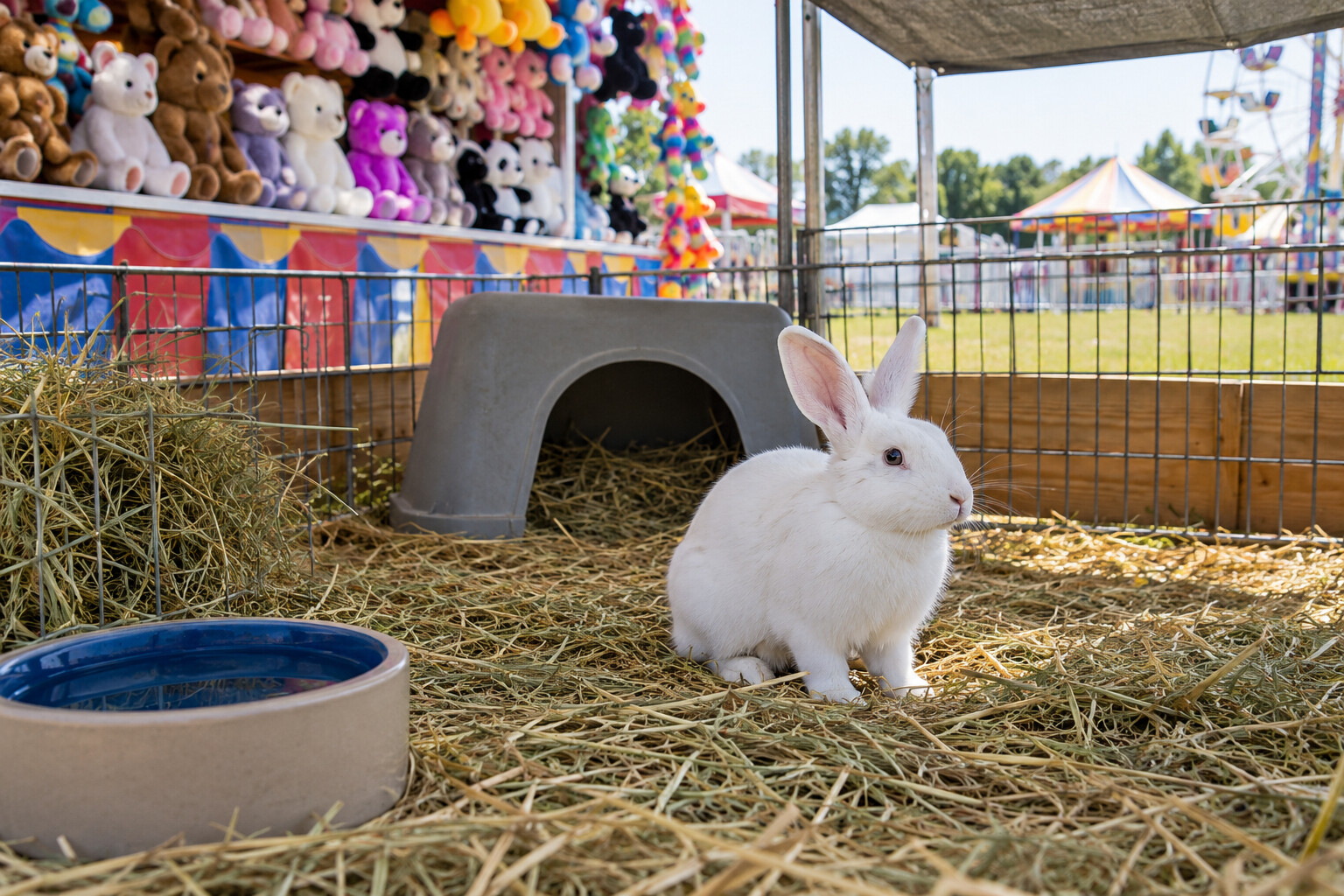
Pennsylvania law generally prohibits giving away live animals as prizes in drawings, lotteries, contests, sweepstakes and other games. The rule means that, at most carnival-style games and similar events, a rabbit, puppy, chick or other living animal cannot legally be treated like a toy someone wins.
This is not a new ban announced in 2026. It is a longstanding protection now codified at 18 Pa.C.S. § 5547, and the Pennsylvania Department of Agriculture continues to explain and administer the law.
What Pennsylvania law says
Section 5547 states that no person may give or offer to give away a live animal as a prize in a drawing, lottery, contest, sweepstakes or other game. It also prohibits an operator from selling or offering to sell a live animal in connection with such a game.
The statute creates an important exception: fish are excluded from the general prohibition. That means the law does not provide fish with the same protection from prize giveaways that it gives most other live animals.
A limited exception for approved programs
The law also allows a narrow exception for domestic animals offered in connection with agricultural, educational or vocational programs sponsored or sanctioned by the Pennsylvania Department of Agriculture.
The department says programs that are not already sponsored must apply and receive written confirmation before conducting a game involving a domestic animal as a prize. State regulations add conditions for these offerings. The exception is therefore not a general loophole for ordinary carnival vendors.
A violation of Section 5547 is a summary offense punishable by a fine of up to $250. The statute separately regulates the sale or giveaway of very young chickens, ducklings and other fowl, as well as rabbits under two months old, when they are offered as pets, toys, premiums or novelties. It also prohibits artificially changing their natural color.
Why animals should not be impulse prizes
A stuffed toy can be carried home and placed on a shelf. A living animal immediately needs appropriate food, housing, veterinary care, safe handling and a long-term commitment. A person who unexpectedly wins an animal may not have the equipment, knowledge or resources to provide that care.
Rabbits, for example, need far more than a small cage. They require room to move, suitable nutrition based largely on hay, a clean living area, enrichment and access to veterinary care. They can live for years. A few minutes of excitement at a game can therefore become a major responsibility for a family—and a welfare risk for the animal.

A meaningful protection, with gaps
Pennsylvania’s law reflects a basic animal-welfare principle: bringing an animal into a home should be a deliberate decision, not the accidental result of winning a game. The protection also helps separate living beings from the merchandise displayed at an entertainment booth.
At the same time, the fish exception remains significant. Fish have species-specific welfare needs, including adequate water volume, filtration, temperature and water chemistry. Being legal to offer as a prize does not remove those needs or guarantee that a winner is prepared to meet them.
The most accurate conclusion is therefore measured. Pennsylvania does prohibit most live animals from being used as game prizes, and the rule includes a limited pathway for approved agricultural, educational and vocational programs. But it does not ban every live-animal prize in every circumstance.
Sources
- Pennsylvania General Assembly — 18 Pa.C.S. § 5547
- Pennsylvania Department of Agriculture — Animals as Prizes
- 7 Pa. Code § 20.8 — Conditions and requirements of domestic animal offerings
Image disclosure: The featured image and both supporting images are editorial reconstructions created to illustrate the subject. They do not depict a specific enforcement action, identified fair, family or animal.
