
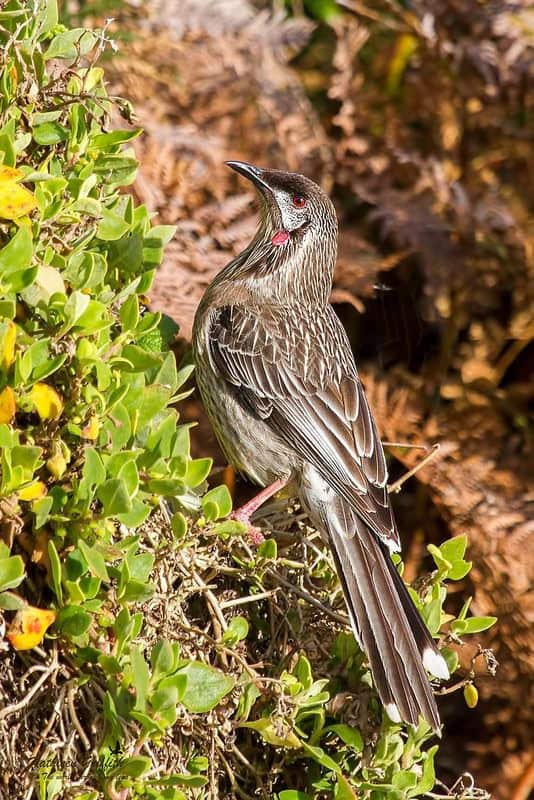
The Red Wattlebird (Anthochaera carunculata), one of Australia’s iconic birds, captures the attention of bird enthusiasts and nature lovers with its unique look, varied calls, and intriguing behavior. Known for its prominent red wattles and striking plumage, this large honeyeater is a common sight across eastern and southern Australia.
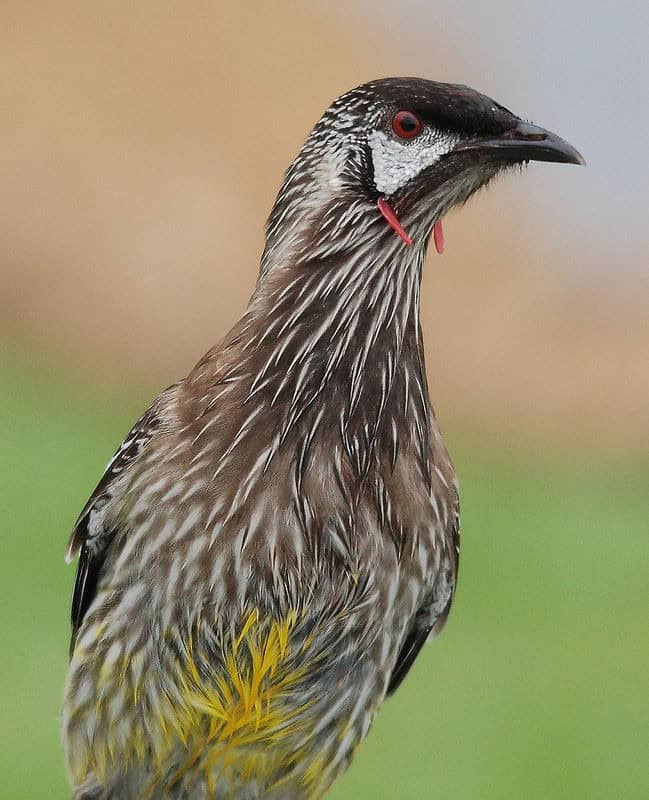
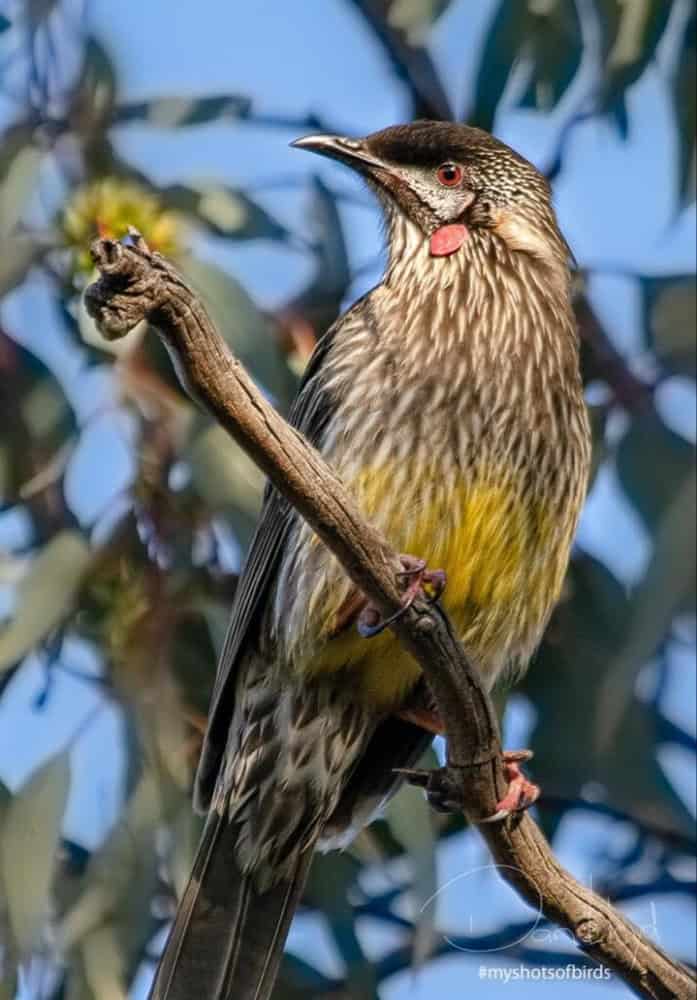
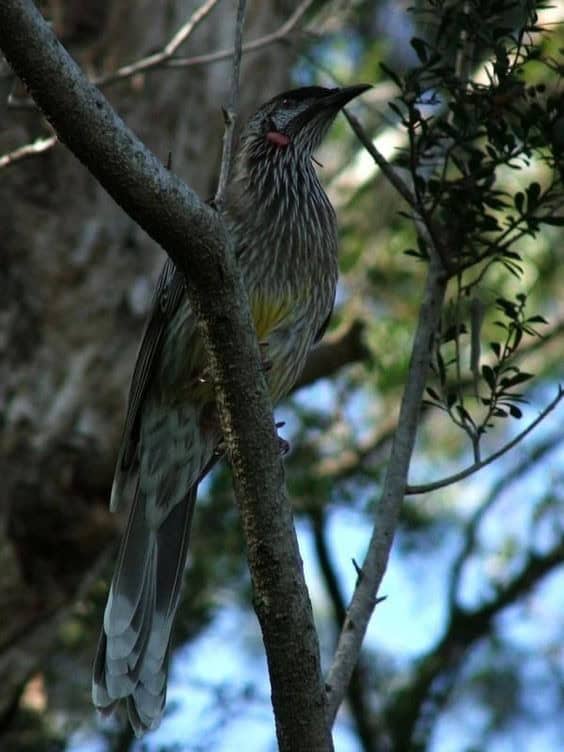
The Red Wattlebird stands out with its vibrant red wattles hanging from its neck, lending the bird its name and a distinct appearance. Its feathers are a mix of brown, grey, and white, creating a beautiful contrast to the fiery wattles and making it easily recognizable.
One of this species’ most notable characteristics is its vocal variety, which includes a blend of chattering, whistles, and occasional screeches. These sounds help the birds communicate with each other, mark their territory, and attract mates during the breeding season, adding a lively soundtrack to Australia’s landscapes.
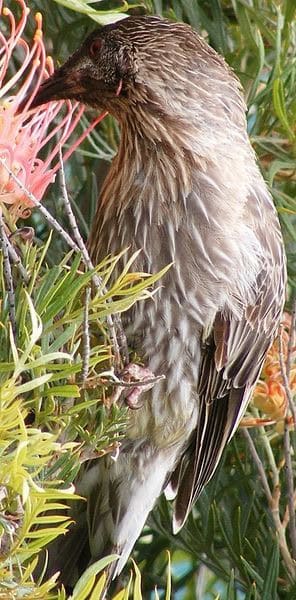
Highly adaptable, Red Wattlebirds live in various habitats, from coastal heathlands and open woodlands to urban gardens and parks. Their diet centers around nectar from native flowers, particularly banksias, eucalyptus, and grevilleas, which they access using long, curved bills.
They also consume insects, fruits, and even small vertebrates, showing remarkable foraging versatility. The breeding season generally spans from spring to early summer.
During this time, males perform aerial displays, showing off their plumage and calls to attract mates. After pairing, they build a large, cup-shaped nest from twigs, grass, and other plant materials.
Typically, the female lays two or three eggs, with both parents taking turns incubating them over two weeks. Despite the species’ adaptability, the Red Wattlebird faces challenges from habitat loss and fragmentation caused by urban expansion and land clearing, which limit their suitable habitats.
However, they have shown resilience by thriving in urban areas, often spotted in flowering gardens and public parks. To support the Red Wattlebird’s long-term survival, conservation efforts like planting native vegetation, fostering wildlife-friendly gardens, and preserving natural habitats are essential.
By raising awareness and taking steps to protect these unique birds and their environments, we can help sustain the population of this vibrant species for future generations.
The Red Wattlebird remains a distinctive symbol of Australia’s diverse wildlife, bringing beauty and song to the country’s varied landscapes. Through appreciation and conservation, we can preserve this remarkable species well into the future.
Read More Birds