
Rome is moving closer to a future without its traditional horse-drawn tourist carriages, known as botticelle, but the change is not complete and no nationwide ban has yet become law.
The latest push follows a carriage horse’s collapse on Ponte Cavour on July 4, 2026, during intense summer heat and heavy traffic. The incident renewed pressure on city leaders to end a practice that animal-welfare advocates say is incompatible with modern traffic, hot asphalt and increasingly severe heat.
What Rome is actually changing
Rome has been trying for years to move horse-drawn carriage services away from busy streets. A municipal regulation approved in December 2020 limited the service to designated parks and historic villas, required veterinary checks and set work and rest rules. It also prohibited circulation during the hottest hours of July and August and whenever temperatures reach 30°C or higher.
The city’s more recent plan goes further. According to local reporting, Rome announced in June 2026 that 15 of the 16 remaining licence holders had agreed in principle to convert their carriage licences into taxi licences. Officials were also exploring help with vehicle purchases to make the transition financially workable.

That agreement is important, but it is not the same as a completed phaseout. A voluntary licence conversion still requires implementation, and one operator was not included in the reported agreement. Until those steps are finished, it would be inaccurate to say Rome has already abolished the botticelle.
Why national legislation matters
Municipal action has repeatedly faced legal obstacles because Italy’s national Highway Code still regulates and permits public-hire services using animal-drawn vehicles. That conflict helps explain why local restrictions have not produced a definitive end to carriage rides.
On July 29, 2026, lawmakers from the Democratic Party, Green and Left Alliance and Five Star Movement presented a bill in the Chamber of Deputies. The proposal would repeal the Highway Code provision governing animal-drawn public-hire vehicles and prohibit the use of animals to pull vehicles for tourist, recreational, ceremonial and other non-scheduled public-transport services.
The bill’s introduction marked a significant political step, but it remains a proposal. It must pass through Italy’s legislative process before it can change national law. For now, the legally accurate description is that lawmakers are seeking a nationwide ban—not that one has already taken effect.
The welfare concern behind the debate
Witnesses said the horse that fell on July 4 collapsed at about 11:30 a.m. on scorching cobblestones amid traffic. Rome’s animal-welfare ombudswoman, Patrizia Prestipino, called the incident foreseeable and argued that the city’s heat, asphalt and congestion are no longer suitable for carriage horses.
The episode was not the first involving a carriage horse in Rome. Previous collapses and a fatal 2008 collision near the Colosseum have kept the issue in public view. Campaigners say even tightly written rules cannot eliminate the risks created by heavy traffic, noise, hard road surfaces and extreme temperatures.
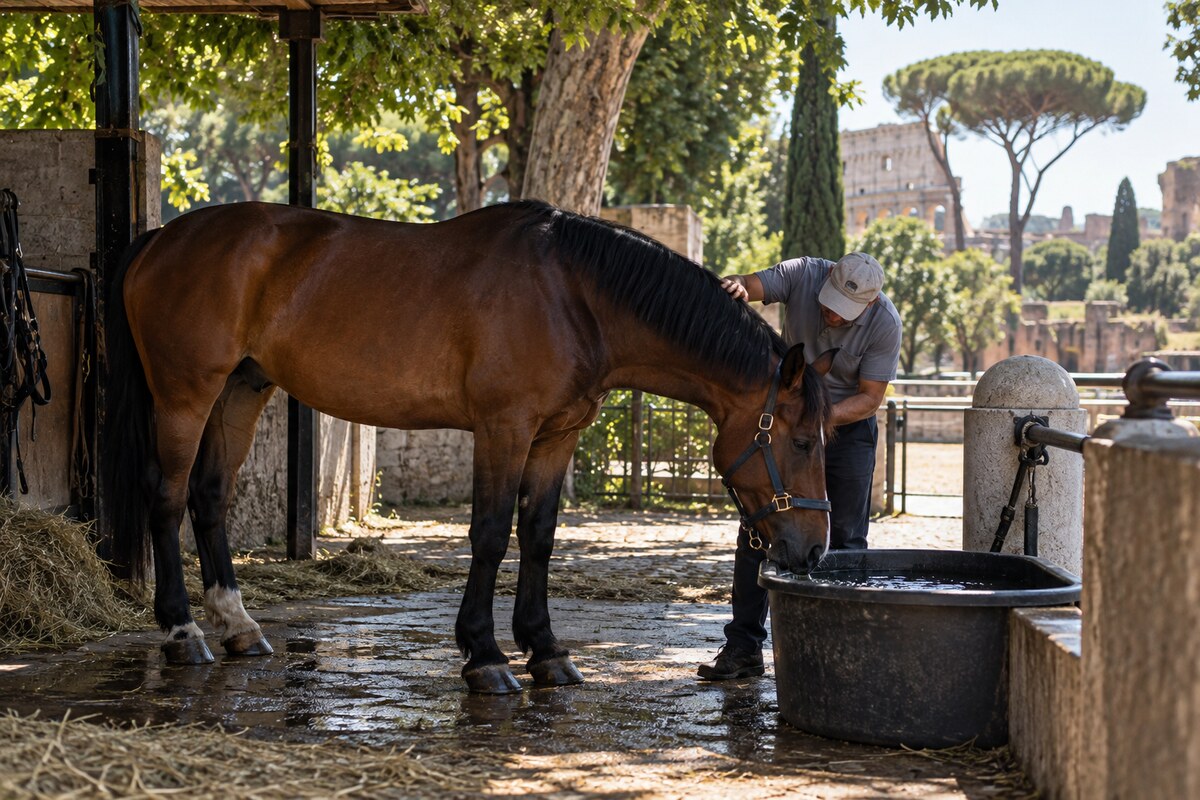
Supporters of the carriage tradition often emphasize its historical identity and the livelihoods tied to it. Rome’s taxi-licence conversion plan attempts to address that concern by offering operators a route into another regulated transport business rather than simply eliminating their work.
What happens next
Two separate processes now matter. Rome must turn the reported licence-conversion agreement into an operational phaseout, while national lawmakers must debate and vote on the proposed amendment to the Highway Code. Either process could change, slow down or face further legal and political challenges.
For horses, the direction of travel is clearer than the timetable. Rome’s own rules already recognize that city streets and summer heat can threaten welfare, most remaining operators have reportedly shown willingness to leave the carriage trade, and a national bill now seeks to remove the legal basis for animal-drawn tourist transport across Italy.
That makes this a potentially historic transition—but still a transition in progress.
Sources
- Roma Capitale: 2020 botticelle regulation
- Roma Capitale: Regulation DAC 132/2020
- Wanted in Rome: July 4 collapse and licence-conversion agreement
- Euronews: July 29 national bill
