
A dog tied to a fence or post cannot simply move indoors when the temperature climbs. If the tether keeps the animal away from shade or water, a routine-looking backyard scene can become a medical emergency—and, in some places, a criminal case.
The question in the accompanying image has no single nationwide answer. Animal-cruelty and tethering laws vary by state and city, and prosecutors still must prove the elements of the local offense. But the broad answer is yes: knowingly leaving a dependent animal restrained in dangerous heat can lead to neglect or cruelty charges where the facts and the law support them.
Why tethering makes extreme heat more dangerous
Dogs cool themselves mainly by panting, with limited heat loss through their paws. Direct sun, high humidity, poor airflow, dehydration, age, obesity and short-nosed anatomy can all increase risk. A tether adds another hazard because it may prevent the dog from reaching shade, clean water or a cooler surface.
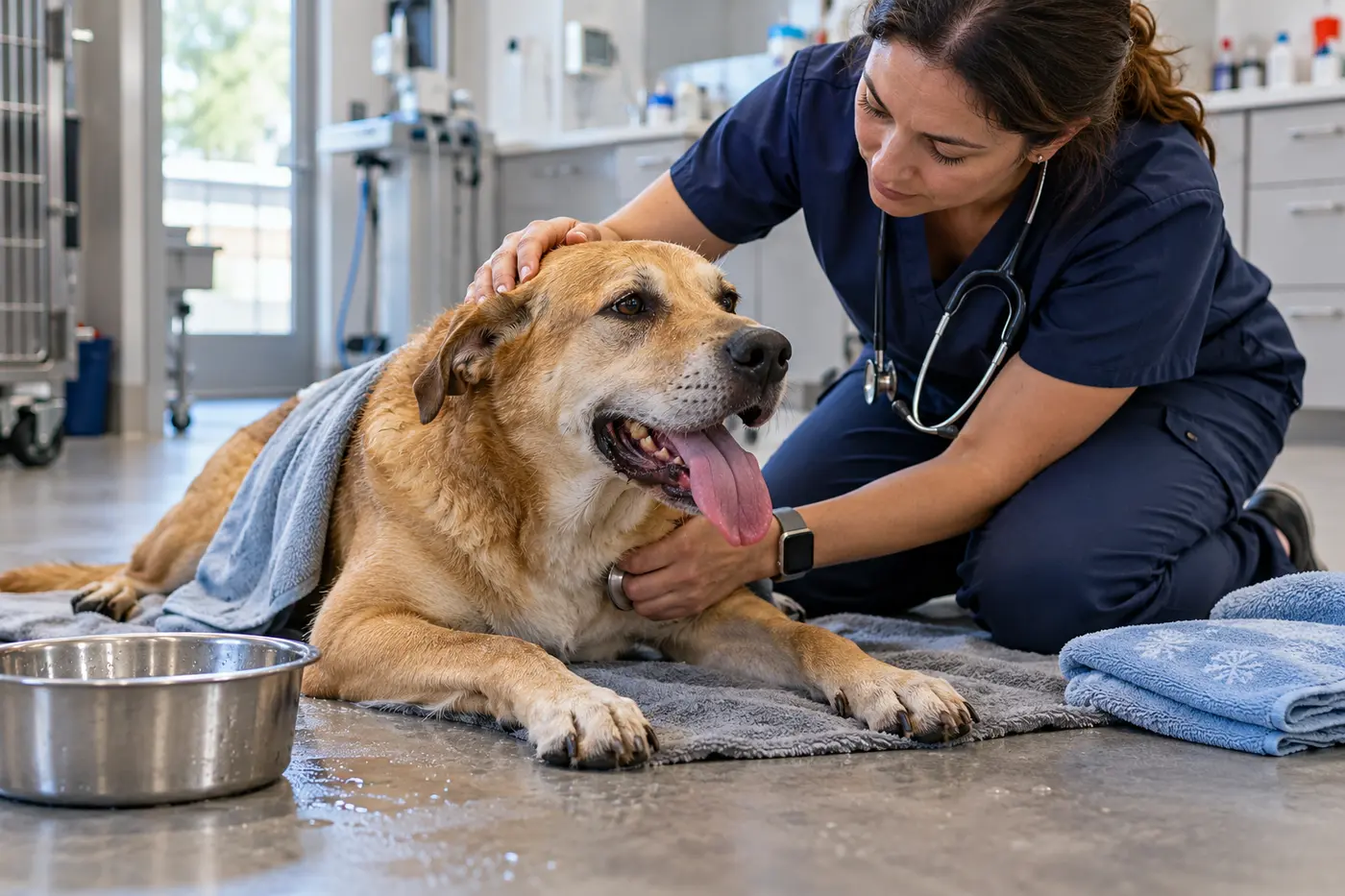
Heavy panting and drooling can be early warnings. Weakness, confusion, vomiting, collapse, seizures or loss of consciousness demand urgent veterinary attention. Heatstroke can damage multiple organs, so waiting to see whether the animal “gets better” can cost critical time.
If a dog appears overheated, move the animal to a cooler place if it is safe and lawful to do so, offer small amounts of cool water, wet the body with cool—not ice-cold—water, and contact a veterinarian immediately. Do not cover the dog with wet towels for long periods, because they can trap heat as they warm.
Criminal liability depends on location and evidence
There is no general federal law that governs every privately owned pet in every backyard. The federal Animal Welfare Act applies mainly to certain animals in regulated activities such as commercial dealing, exhibition, transport and research. Ordinary pet neglect is usually handled under state or local law.
Those laws take different approaches. Some jurisdictions expressly restrict tethering during extreme weather. Others use broader duties requiring adequate shelter, potable water and protection from dangerous conditions. In a severe case, authorities may rely on general cruelty or neglect provisions rather than a temperature-specific tethering rule.
Texas, for example, prohibits leaving a dog unattended outdoors while restrained unless the owner provides adequate shelter, an area protected from standing water, shade from direct sunlight and potable water. The statute also limits restraints and allows enforcement under its criminal provisions. Other states and municipalities use their own temperature thresholds, time limits or emergency-weather definitions.
Whether a charge is filed can turn on the temperature and humidity, duration of exposure, access to shade and water, the dog’s condition, prior warnings, and what the owner knew. A violation may be handled as a citation or misdemeanor in one place, while severe injury, death or repeated conduct can expose an owner to more serious consequences elsewhere.
What a witness should do
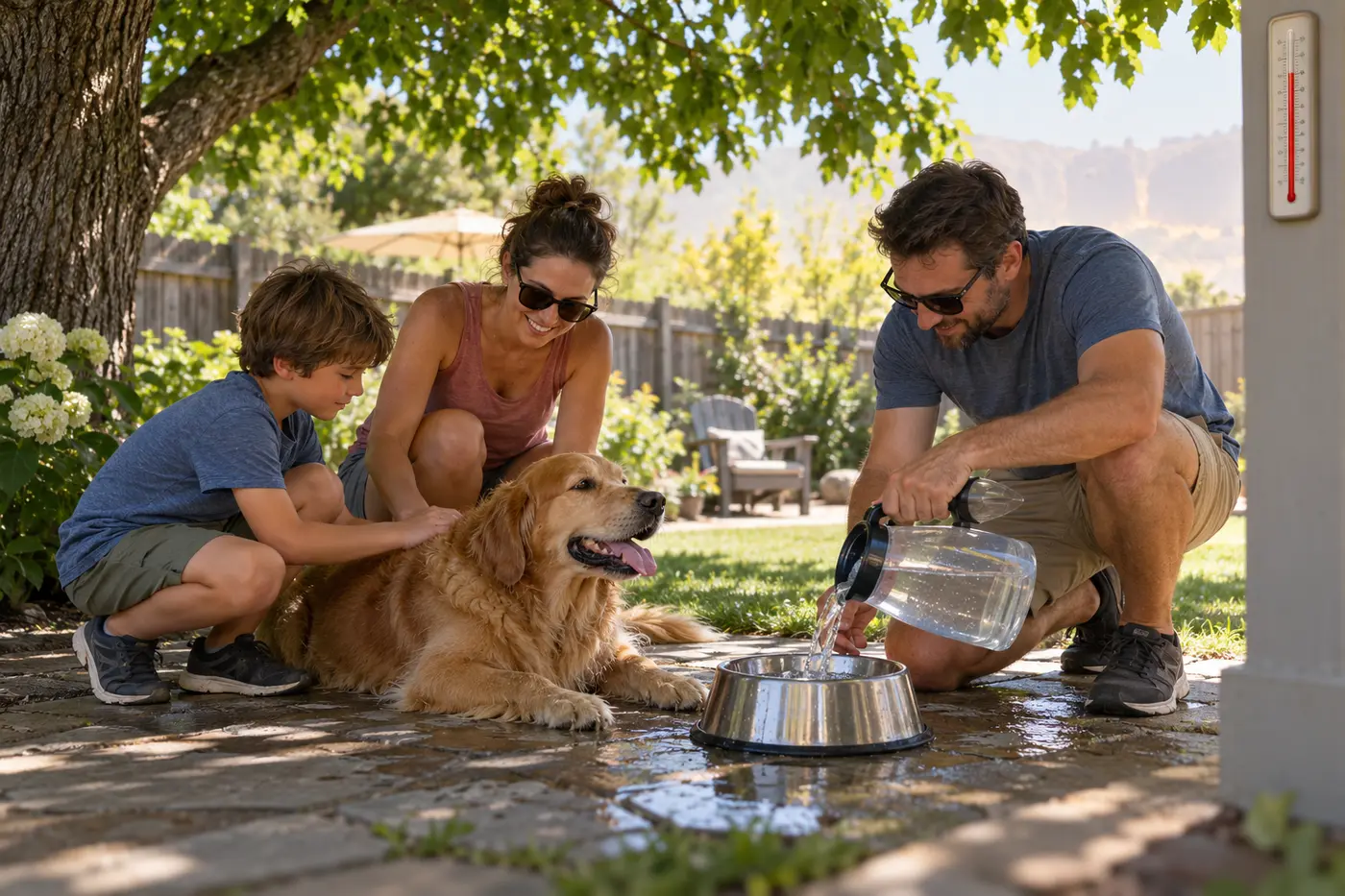
If an animal appears to be in immediate danger, call local animal control or police and give the exact location. Describe the animal’s condition, whether water and shade are available, and how long the situation has been observed. Photos or video taken from a lawful location, along with the time and weather reading, may help responders assess the risk.
Do not trespass or put yourself in danger. Emergency-entry laws differ, and rules that allow rescuing an animal from a hot vehicle do not necessarily authorize entering private property or cutting a tether. Ask the dispatcher what to do while help is coming.
The safest standard is simpler than the legal debate: during dangerous heat, bring companion animals indoors whenever possible. If they must be outside briefly, provide continuous access to clean water, deep shade, airflow and supervision—and never use a tether that prevents them from reaching relief.
Sources
- USDA National Agricultural Library: Animal Welfare Act
- Texas Health and Safety Code, Chapter 821
- American Veterinary Medical Association: Warm weather pet safety
- American Red Cross: Keeping pets safe in hot weather
