
The greater scaup, commonly known as the “bluebill” in North America, is a social diving duck and the type species of the genus Aythya, first identified in the 18th century in Lapland, Finland. Ancient records from Aristotle describe a seabird laying eggs on rocky shores, which he named aithuia.
This term later became the genus name for diving ducks, designated by German zoologist Friedrich Boie in the 19th century. The species name, marila, is derived from the Greek word for coal embers, reflecting its distinct appearance.

Recognizing the Greater Scaup
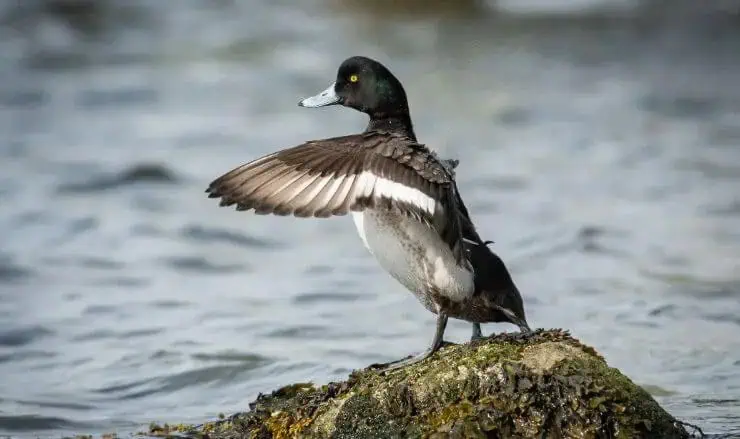
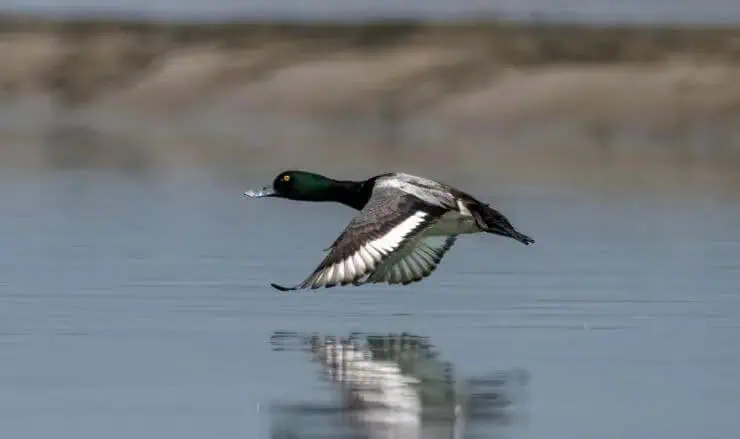
Greater scaups are slightly larger than their close relatives, and the lesser scaups have more rounded heads and distinctive blue bills. Male scaups have a black head that shimmers with green in the light, a pale gray back, a black breast, and a white belly.
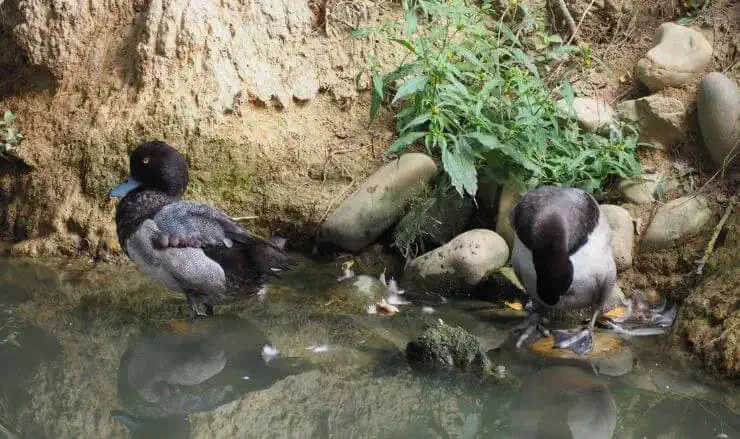
Females are primarily brown, with a lighter color in winter, and bear white patches near the base of their bills. Both sexes have yellow eyes and gray webbed feet.
Habitat and Migration
This species is unique in its range, being the only circumpolar duck within Aythya. Greater scaups breed across the Arctic in regions such as Alaska, northern Europe, and Asia.
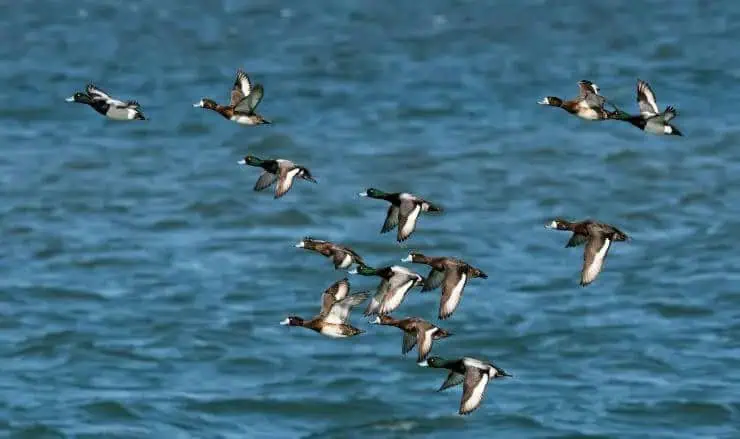
Many migrate southward during winter, gathering in large flocks along the Northern Hemisphere’s coasts. However, some populations remain in the Aleutian Islands year-round.
In spring, males perform courtship displays to attract females back to breeding grounds during their migration. Pairs nest in colonies on tundra wetlands, with the female creating a shallow nest lined with her own down.
The hen incubates a clutch of six to nine olive-brown eggs, with ducklings hatching able to swim and feed themselves but staying under the hen’s protection until they can fly.
Feeding and Diving Abilities
Greater scaups are proficient divers, reaching depths of up to 20 feet in search of food on lakebeds. Their diet includes mollusks, crustaceans, insects, and aquatic plants, which they dredge up using their large bills. By diving deeply, they avoid competition with other waterfowl, maximizing their feeding success.
Conservation Concerns and Population Threats
The species faces numerous threats, including predation from mammals such as coyotes and raccoons and egg predation from gulls and ravens. Human activities also take a toll; hunting is common, and habitat degradation, pollution, and climate change continue to impact scaup populations.
Most wintering scaups reside along the Atlantic Flyway, exposed to urban pollution, oil spills, and chemical runoff. Studies have shown elevated levels of heavy metals and toxins in scaup tissues, eggs, and food sources, leading to health risks.
Invasive species, such as zebra mussels, further endanger greater scaups. These mussels contain high levels of selenium, which can harm reproduction, even causing sterility in some females.
Despite these issues, the IUCN classifies the greater scaup as “least concern” due to its extensive range and the challenges in accurately tracking populations, as it is often confused with the lesser scaup in surveys.
Conservation efforts include a banding program to monitor migration, survival rates, and hunting impacts. Yet, preserving their habitat and reducing pollution remain essential for the long-term survival of this social and resilient diving duck.
Read More Birds