
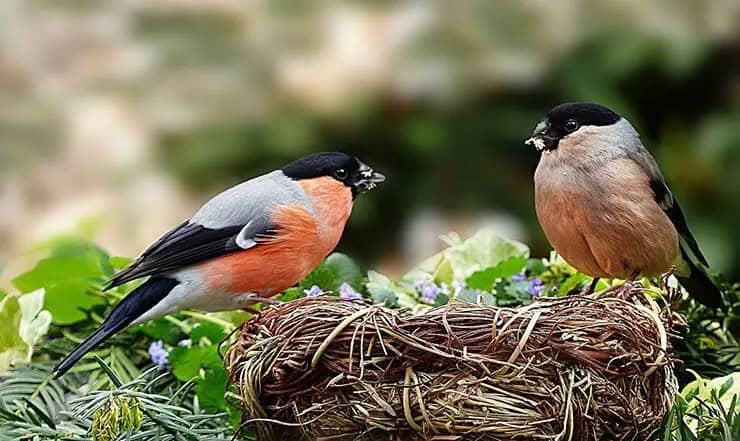
The Bullfinch, with its vibrant colors and distinct appearance, is a treasured inhabitant of our woodlands. The male’s striking plumage contrasts with the more muted, elegant tones of the female, though both share a quiet, elusive nature, rarely venturing into open spaces.
With a sharp, sturdy beak well-suited for breaking seeds and buds, Bullfinches adapt to various environments and can sometimes be spotted near populated areas during colder months.
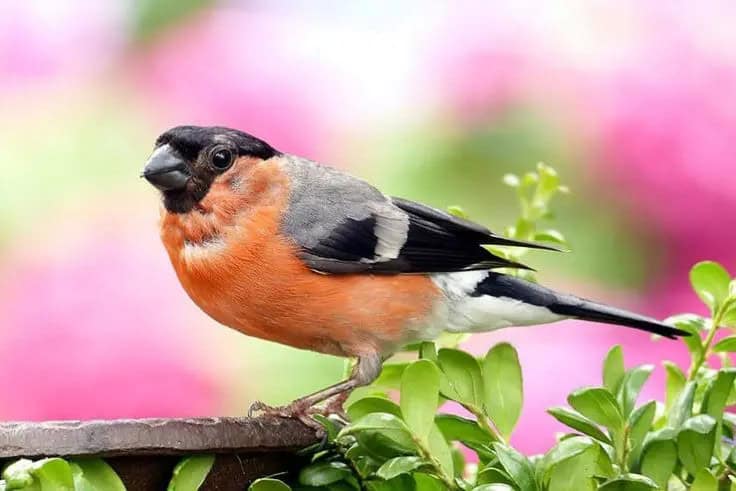
However, fewer of these birds venture closer to human dwellings in winter, possibly due to milder, snowless seasons.
Though not particularly territorial, the Bullfinch’s courtship displays are captivating. Males woo females with graceful dances and gentle whistles, creating a beautiful ritual.
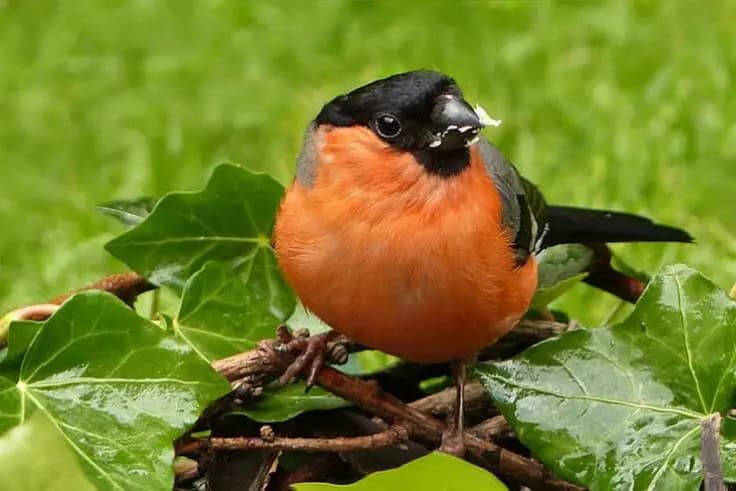
These birds generally stay in pairs, with larger gatherings being rare. The Bullfinch is also known for its remarkable ability to learn melodies, even picking up short musical sequences with ease.
Fascinating Facts About the Bullfinch
The Bullfinch, scientifically known as Pyrrhula pyrrhula, has fascinated people since the 17th century for its musical mimicry skills. Captive breeding has long been popular, highlighting the bird’s extraordinary knack for remembering and reproducing musical motifs.
According to avian researchers, Bullfinches can sing in phrases similar to humans. If interrupted, they continue their melody from where they paused, often breaking the tune into units of 4 to 12 notes. This skill makes these charming “musicians” stand out.
- Scientific Name: Pyrrhula pyrrhula
- Weight: 21–27 grams
- Wingspan: 22–26 cm
- Lifespan: Up to 12 years
- Diet: Seeds, buds, and seasonal berries
- Habitat: Forests, parks, and urban areas
- Threats: Illegal hunting, habitat fragmentation, and the clearing of undergrowth.
Physical Characteristics
Adult male Bullfinches have a gray back and shoulder area, a completely black tail, and black wings with distinctive white and gray markings. Their heads, faces, and tiny bibs are also black, while their throats, cheeks, chests, and bellies are vibrant orange-red.
Females look similar but with a tawny gray color replacing the male’s red tones, while young birds resemble females with lighter brown head feathers and dark gray beaks.
Habitat and Range
Bullfinches are found across Europe, Asia, and Siberia, often inhabiting parks, forests, gardens, mountains, and hills. While they can withstand the cold, they often move to lower altitudes during winter.
Bullfinches adapt well to human presence but tend to remain inconspicuous. These birds are monogamous, with pairs rarely separating, and they typically travel in pairs rather than larger groups.
Diet
The Bullfinch’s diet consists of a variety of seeds, even those with tough shells that they break with their strong beaks. In addition to seeds, they enjoy broccoli and berries like firethorn and hawthorn. During the breeding season, Bullfinches also seek small insects and larvae to feed their young.
Breeding
Bullfinches breed from April to August, with females laying 4 to 5 blueish eggs, speckled with red-violet and black. They may have two or three clutches per year, incubating each clutch for about two weeks.
Both parents tend to the brown-feathered chicks, which fledge in 16-17 days. The species is notably monogamous, with pairs typically remaining bonded for life.
Conservation Status
Since the mid-1960s, Bullfinch populations have shown only minor fluctuations across Europe, with the species maintaining stable numbers. Dense shrub areas host the highest densities of Bullfinches, with up to 20 pairs per square kilometer, although these numbers are lower in forested regions.
For conservation, maintaining undergrowth in forests and hedgerows in agricultural landscapes supports their habitat. Creating additional woodland areas could help connect isolated Bullfinch populations, enhancing the bird’s ecological network and supporting population stability.
Read More Birds