
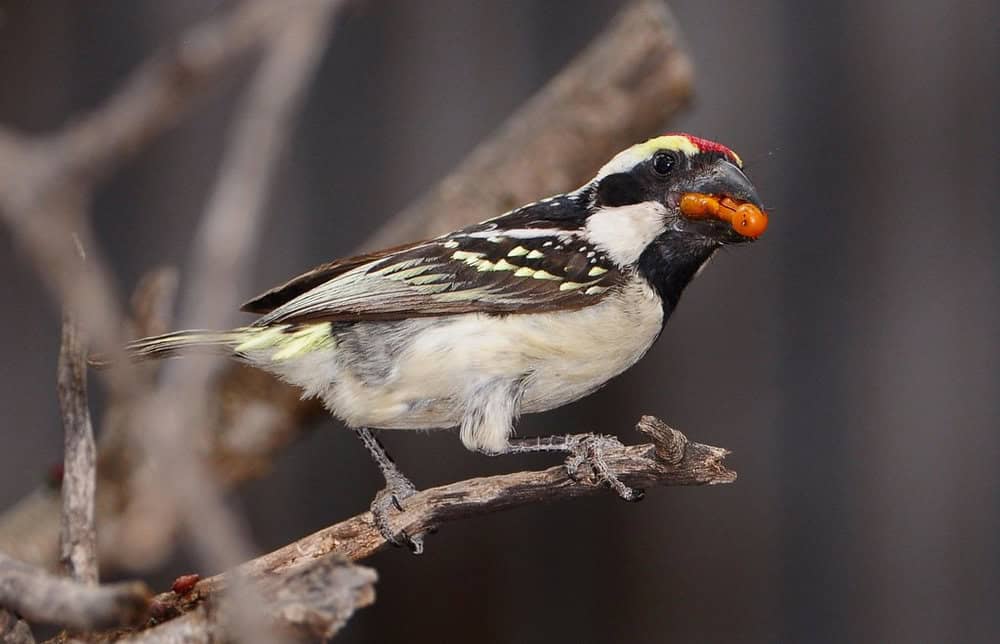
The White-Eyebrowed Bird, also known as the pied barbet or acacia pied barbet (Tricholaema leucomelas), stands out in the bird world with its vibrant mix of colors. Found across southern Africa, this bird’s unique appearance makes it a striking sight in its natural habitat.
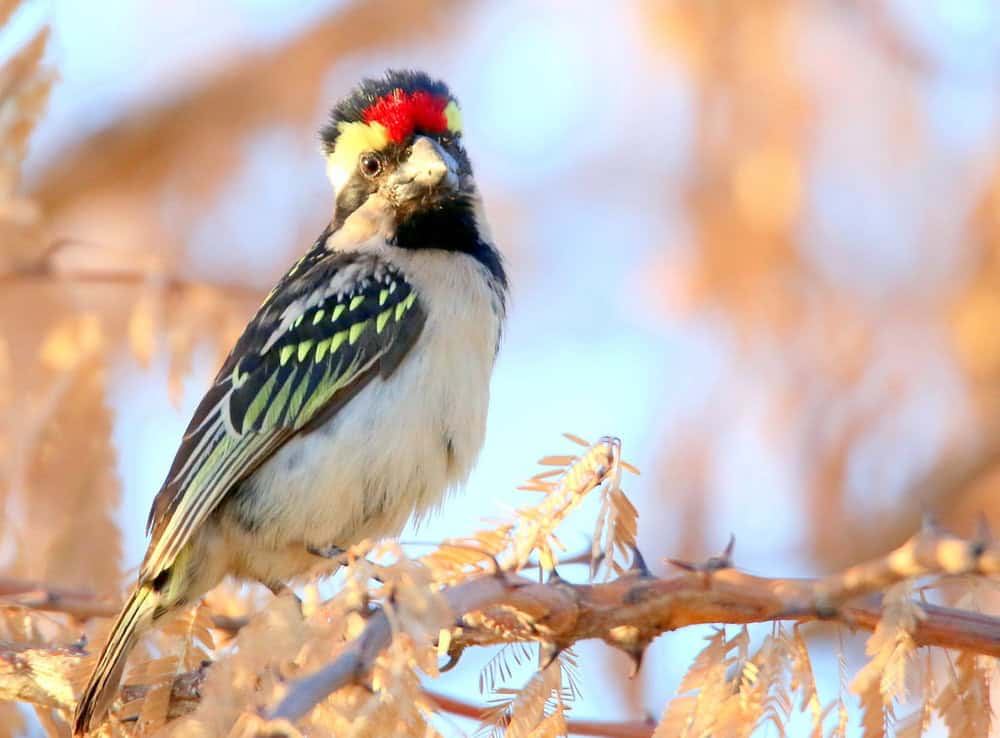
One of the most notable features of the pied barbet is its bright crimson forehead, which contrasts sharply with its black-and-white striped head. Above the eyes, yellow and white markings create a striking frame, while a pale yellow stripe highlights the red forehead even more.
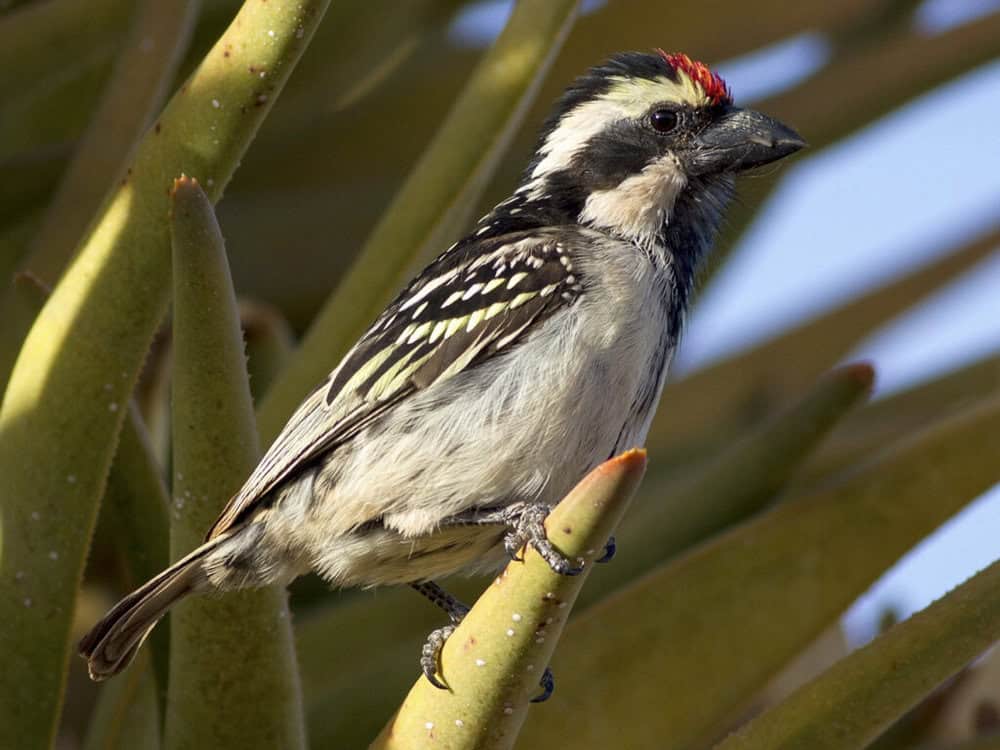
The bird also sports a bold black bib, with its chest and belly showing off clean white feathers, especially in dry regions. Dark brown eyes and blackish legs and feet complete the bird’s distinct look.
Both male and female pied barbets share this colorful plumage, although juvenile birds are slightly different, missing the red forehead but featuring more pronounced streaks as they develop.
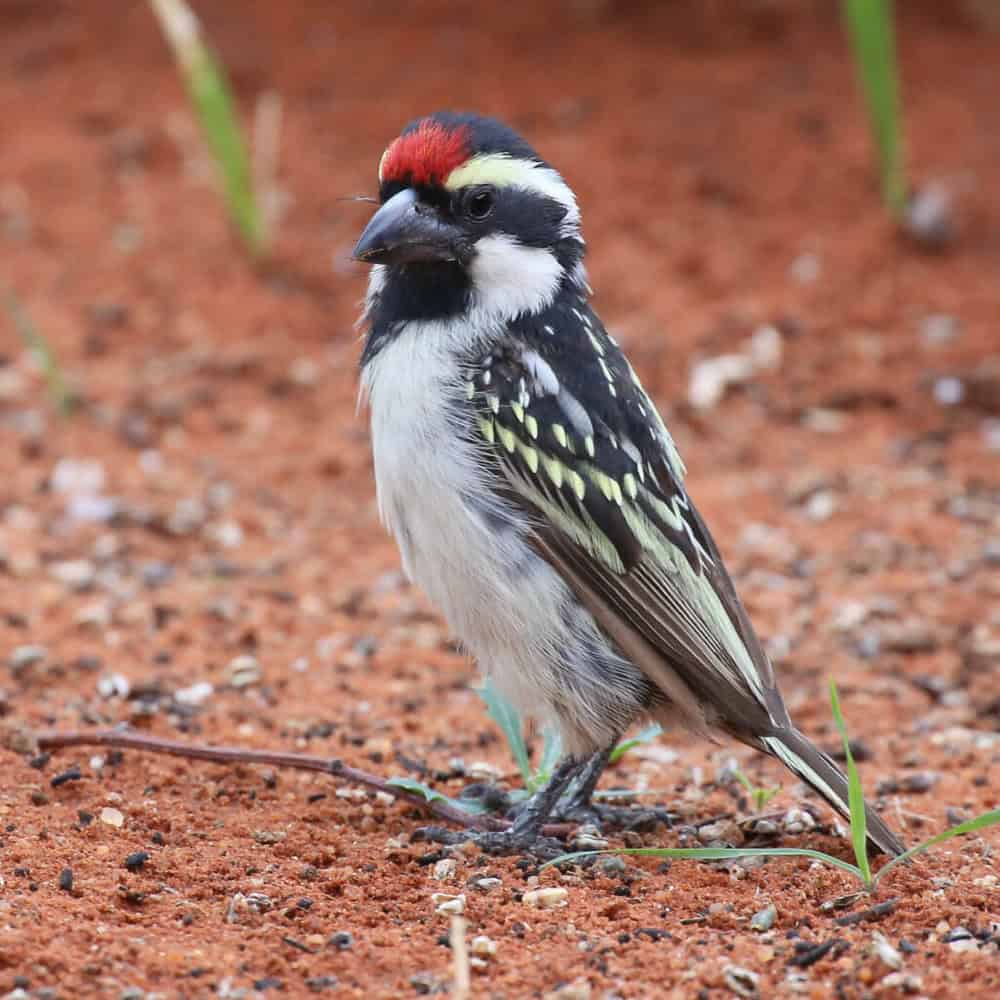
Native to southern Africa, the pied barbet’s range covers areas from southern Angola and Zimbabwe to Namibia, Botswana, and throughout South Africa. These birds prefer dry savannas with Acacia and Baikiaea trees but thrive in scrublands, plantations, gardens, and even urban spaces.
Pied barbets breed between September and June, remaining monogamous and territorial. They work together to carve out nesting holes on the undersides of branches.
Females typically lay 2 to 4 eggs, with both parents taking turns incubating them for 12 to 18 days. After hatching, the chicks are fed and cared for by both parents and fledge about 35 days later.
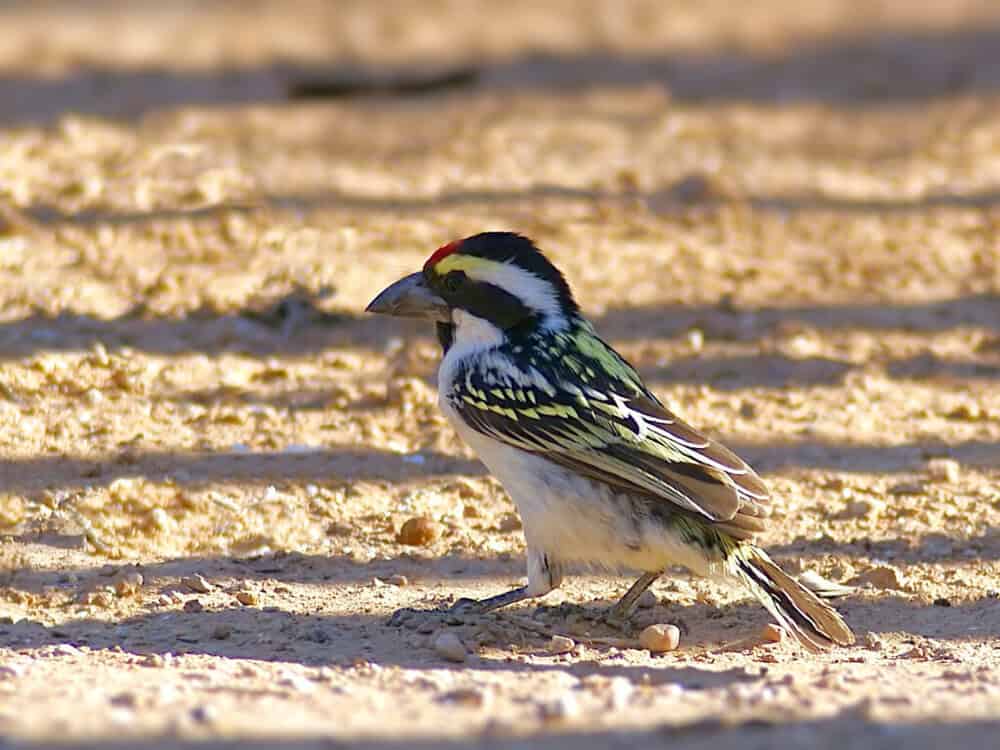
Thanks to their adaptability, these birds maintain stable populations, even expanding in some areas where non-native trees provide additional nesting sites. Their resilience and striking beauty ensure the pied barbet continues to thrive across its wide range.
Read More Birds