
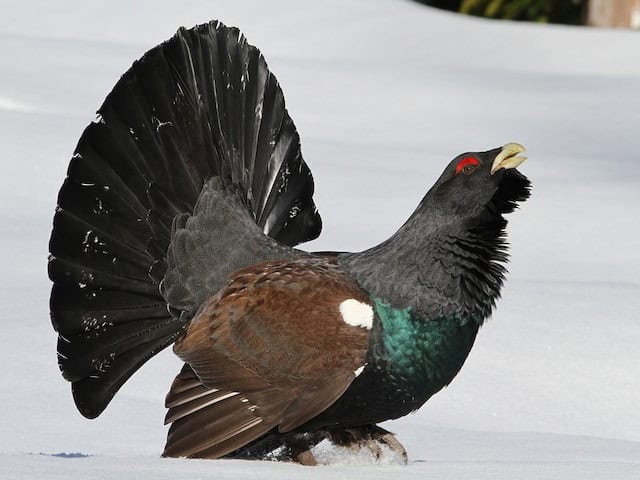
The Western Capercaillie, known for its striking appearance and unique behaviors, is a remarkable bird. Mature males are primarily colored in shades of black and dark grey.
Their head and neck blend black and mid-grey tones, while the back and rump are dark grey. Their wings take on a brown hue, and the tail displays a mix of black and white speckles.
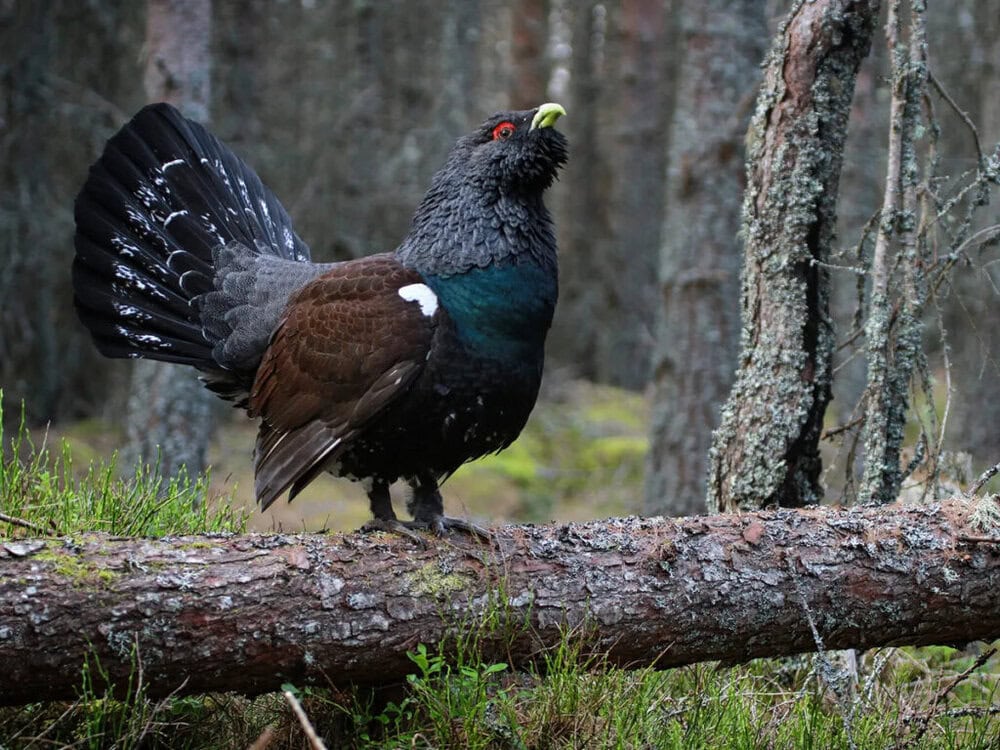
The lower chest and belly showcase a dark green sheen over black, with a noticeable white spot on the shoulder. One of the bird’s most recognizable features is the bright red wattle surrounding its eyes. Males also have spiky black feathers on their chin and throat, giving them a bearded look.
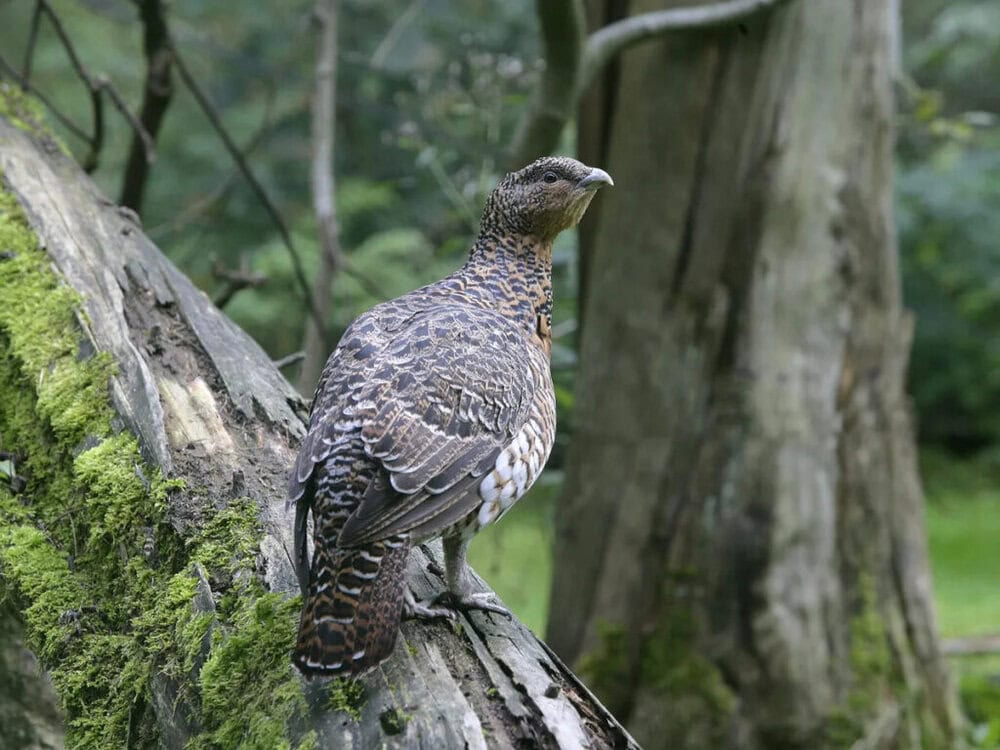
In contrast, female Western Capercaillies are smaller and have a ginger-orange chest with dark brown markings. Their flanks and belly are adorned with white patches, and brown and black bars add further detail to their appearance.
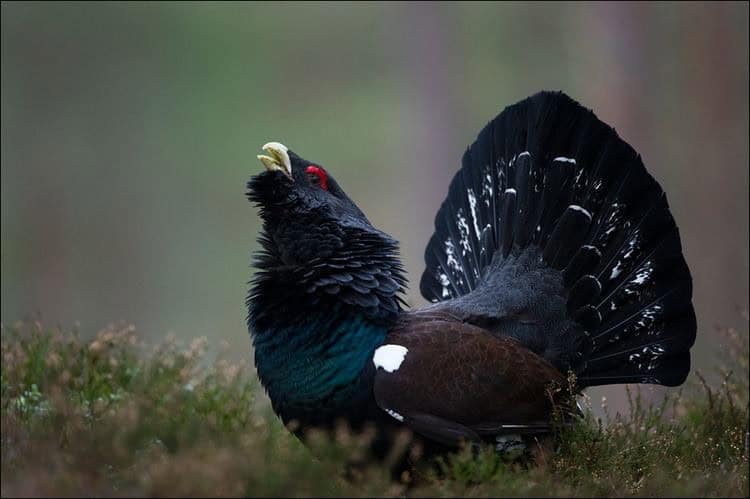
During the breeding season, males put on elaborate displays known as lekking to attract females. Their courtship calls consist of croaks, clicks, and a distinct pop resembling the sound of a champagne cork. Occasionally, they produce crowing sounds similar to pheasants.
The Western Capercaillie’s diet mostly comprises pine needles and berries, with a preference for juniper, bilberry, and blackberry. They also eat herbs, grasses, leaves, shoots, and occasionally insects.
These birds typically reside in old pine forests or plantations. In winter, they forage in treetops, while in warmer months, they search for food on the ground, especially in open marshland.
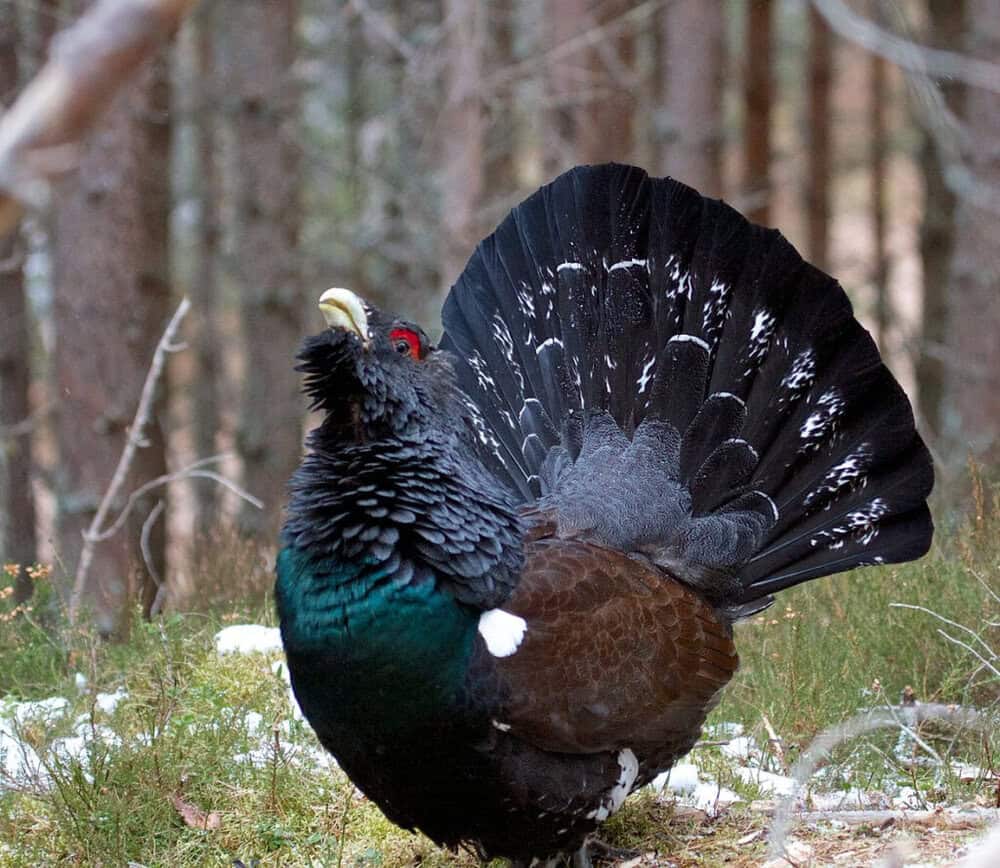
During spring, males perform courtship displays in front of females at specific lekking sites, strutting and fanning their large tails. Though they share habitats with the black-billed capercaillie in eastern and central Siberia, their size, plumage, and calls make them easily distinguish.
After a successful display, females choose their mates. Lekking often occurs in woodland clearings, where six to twelve males perform from dawn onwards. In rare cases, gatherings can include over seventy males.
Males frequently mate with multiple females, and the nests, built-in ground hollows within a dense cover, house a clutch of 5-9 pale yellow eggs with reddish-brown spots. The female incubates the eggs for up to 29 days, with the chicks fledging around three weeks after hatching.
Western Capercaillies live up to ten years in the wild, although those in captivity tend to have longer lifespans.
Read More Birds