
Torrance, California, has ended its routine coyote-trapping program after the City Council voted unanimously on September 15, 2026, not to renew its longtime trapping contract.
The decision does not mean the city will ignore dangerous wildlife incidents. Instead, Torrance is moving away from year-round lethal control and toward public education, monitoring and targeted responses when a specific coyote poses a public-safety threat.
What the council decided
The council considered its fiscal year 2025–26 Coyote Management Program update as item 10A at the September 15 meeting. The published agenda asked the council to review the program and discuss a reduced schedule of coyote-abatement services. Council members ultimately chose not to renew the routine trapping contract.
According to reporting and statements released after the vote, the previous program had killed more than 140 coyotes since 2019 and cost approximately $80,000 a year. The new approach emphasizes expanded online guidance, outreach in neighborhoods where conflicts are reported and possible future rules against feeding wildlife.
The distinction matters: Torrance did not declare coyotes harmless, nor did it prohibit every possible response to an aggressive animal. The city ended its standing, routine trapping arrangement and shifted toward prevention and case-specific action.
Why coexistence is part of public safety
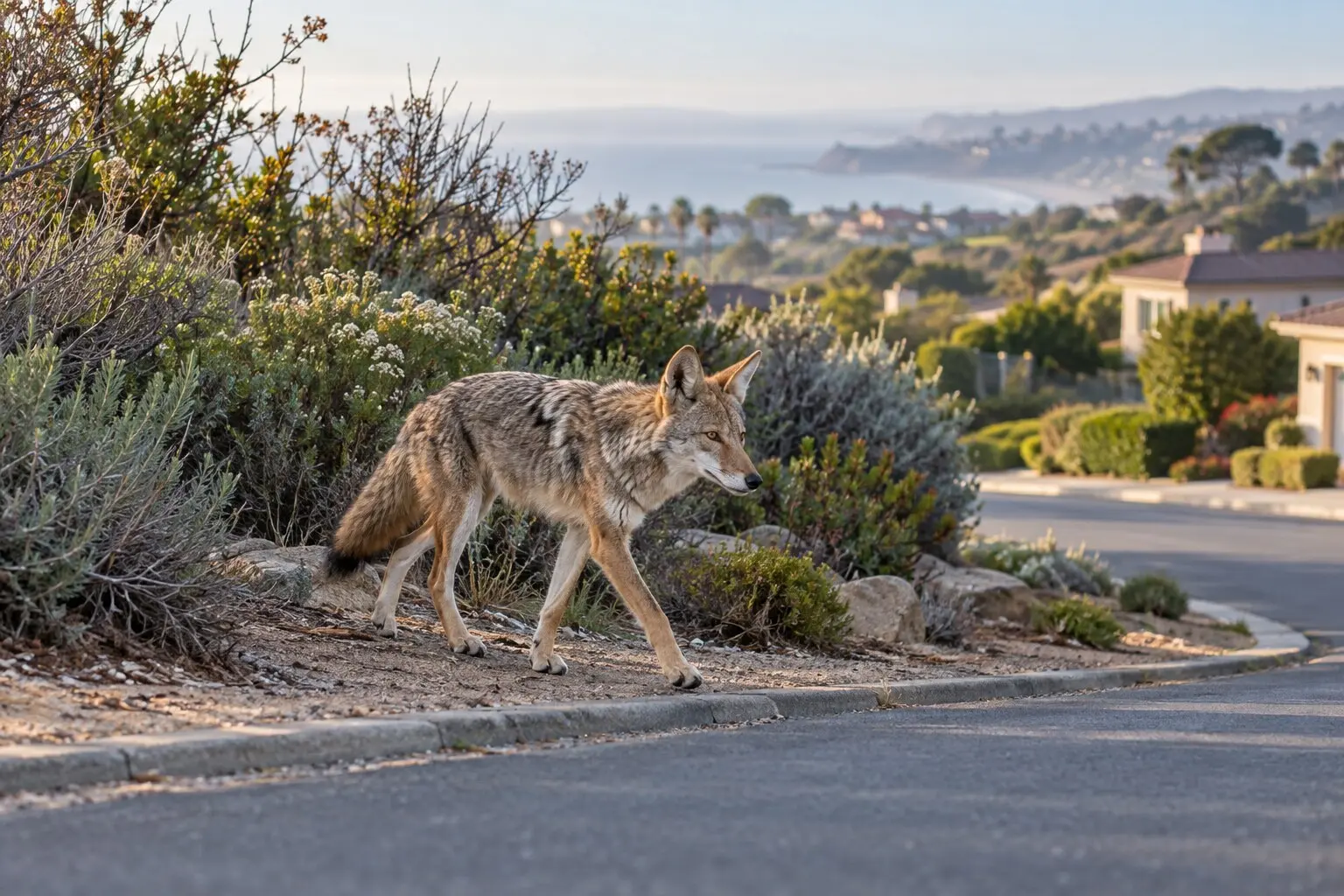
Coyotes are native to California and can live in rural, suburban and urban environments. The California Department of Fish and Wildlife says conflicts may involve property damage, pets or livestock, and risks to human safety when coyotes lose their natural fear of people.
State wildlife guidance focuses heavily on preventing that habituation. Residents can reduce attractants by securing garbage, removing outdoor pet food, collecting fallen fruit and never intentionally feeding coyotes. Small pets should be supervised outdoors, especially around dawn and dusk, and dogs should be kept on a leash during walks.

If a coyote approaches, wildlife agencies commonly advise people not to run. Instead, people should make themselves appear large, make noise and slowly back away while giving the animal an escape route. Any coyote that behaves aggressively or threatens public safety should be reported to local authorities.
A change after years of debate
Torrance’s trapping policy had been debated for years by residents, wildlife advocates and city officials. Supporters of lethal control argued that trapping addressed concerns about pets and repeated sightings. Opponents said routine killing did not resolve the underlying causes of conflict and called for more education and better management of food attractants.
The September vote places Torrance alongside other Southern California communities that have emphasized nonlethal coyote management. It also gives the city a chance to measure whether sustained education, reporting and focused intervention can protect residents while reducing unnecessary killing.
What residents should know
Ending routine trapping does not transfer the entire burden to individual residents. A workable coexistence policy depends on clear city communication, reliable reporting systems and prompt intervention when an animal presents a genuine danger. It also depends on residents changing behaviors that unintentionally draw coyotes into close contact with people.
The most immediate steps are practical: keep cats indoors, supervise small dogs, use secure trash containers, clear dense cover near homes and coordinate with neighbors when coyotes are repeatedly seen in the same area.
Torrance’s decision recognizes that seeing a coyote is not automatically an emergency. Coyotes belong to California’s ecosystem, even where development has pushed human neighborhoods into their habitat. Managing the risks requires attention and preparation—but routine trapping is no longer the city’s default answer.
Sources
- City of Torrance, September 15, 2026 City Council agenda
- Project Coyote, September 24, 2026 media release
- California Department of Fish and Wildlife: Human-Wildlife Conflicts—Coyotes
