
Virginia law prohibits the use of bullhooks and several other devices intended to cause fear or pain when training or controlling elephants. The measure is not a new 2026 enactment: House Bill 1531 was approved on April 2, 2024, and took effect on July 1, 2024.
Now codified as Virginia Code § 3.2-6589.1, the law establishes specific welfare protections for elephants kept or handled in the Commonwealth. It focuses on abusive training and control practices rather than imposing a blanket ban on every exhibition or performance involving elephants.
What the Virginia law prohibits
The statute bars the use of electricity, martingales, block and tackle, or physical punishment that causes damage, scarring, or broken skin. It also prohibits inserting instruments into an elephant’s bodily openings to discipline the animal.

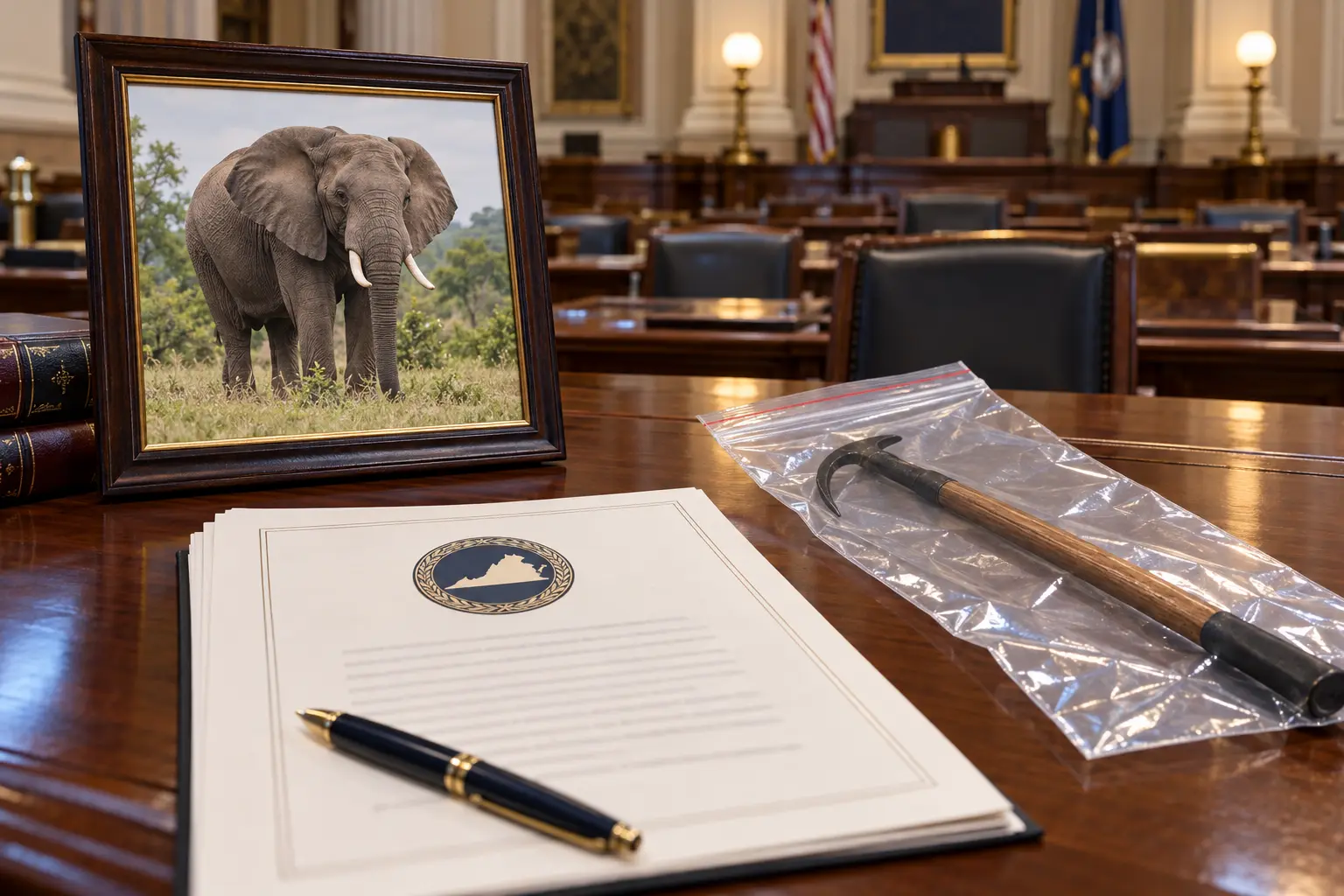
The law specifically names the bullhook, also called an ankus, as well as baseball bats, axe handles, and similar devices designed to inflict pain or create fear. Those items may not be used to train or control an elephant. Brandishing or displaying the prohibited devices in an elephant’s presence is also forbidden.
Penalties and enforcement
A violation can bring a civil penalty of up to $2,500 for a first offense and up to $5,000 for a subsequent offense. Each incident is treated as a separate offense. The law also allows the Attorney General, a Commonwealth’s attorney, or an attorney for a locality to seek attachment of a prohibited device used in a violation.
Why the date matters
Social-media posts can make established laws appear newly adopted when they resurface. Virginia’s official legislative history shows that the General Assembly passed HB 1531 during the 2024 session, Governor Glenn Youngkin approved it on April 2, 2024, and it became effective on July 1, 2024. The current code remains the clearest source for what is prohibited today.
The distinction matters because the law is precise. It does not say that every interaction with an elephant is illegal. Instead, it outlaws specified methods and tools associated with pain, injury, or fear, while setting enforceable penalties for those who use them.
A shift toward safer elephant care
Modern elephant-care programs increasingly rely on protected contact, positive reinforcement, and voluntary participation in routine health checks. These approaches allow keepers and veterinarians to examine feet, draw blood, or provide other care while maintaining a protective barrier and rewarding cooperation.
Virginia’s law makes that broader animal-welfare principle concrete: elephants may not be controlled through devices designed to hurt or frighten them. For readers checking a newly shared claim, the accurate summary is that Virginia has enforced these protections since July 1, 2024.
