
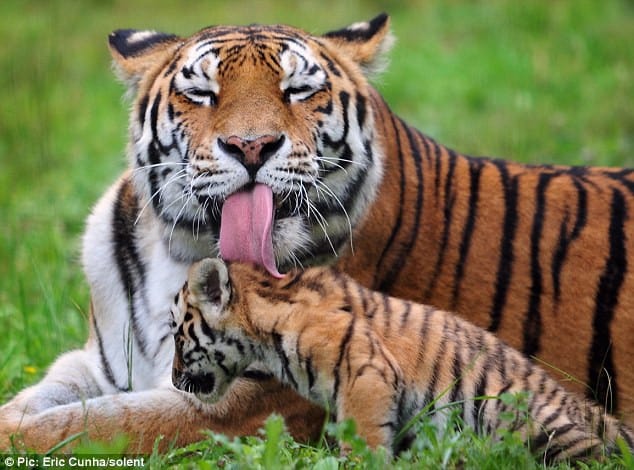
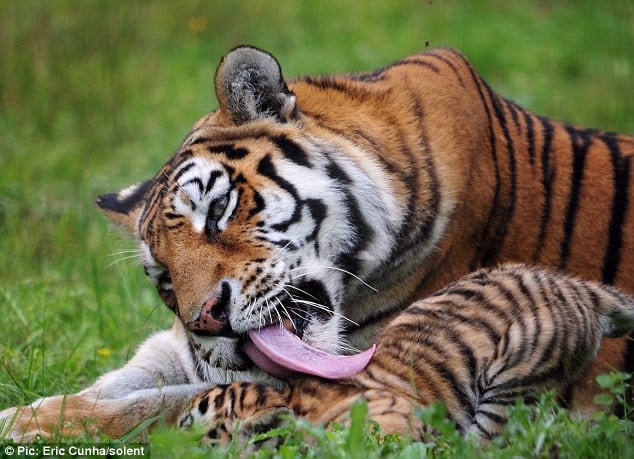
Photographer Eric Cunha captured endearing photographs of a Siberian tiger mother tenderly grooming her mischievous cubs at Parc des Félins in Seine-et-Marne, France.
The playful scene, filled with affection and determination, showcases the unique bond between these majestic creatures and their young.
If you prefer not to read the full story,
Skip ahead to watch the video ->
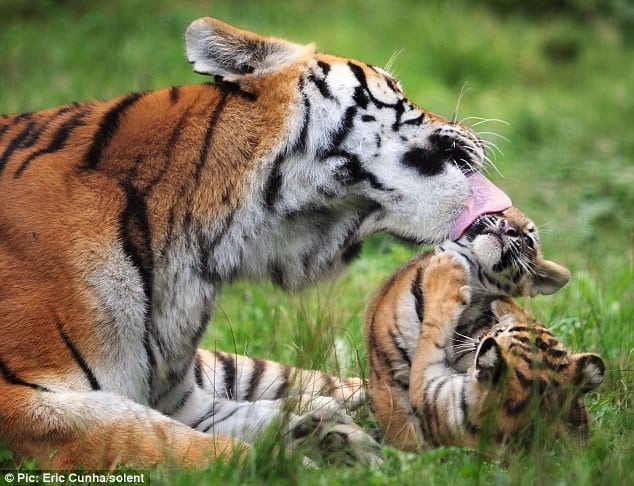
The cubs, initially reluctant and squirming under their mother’s care, soon gave in as she used her large paws to hold them in place. Despite their playful protests, the mother ensured each cub received a thorough cleaning, turning the grooming session into a heartwarming display of parental love.

The images, taken by Cunha over several days using powerful telephoto lenses, highlight the surprising tenderness of these otherwise formidable animals. “People are amazed by the tenderness these big cats show to their babies,” said Cunha, whose work has gained significant attention for its emotional depth.
Siberian tigers, also known as Amur tigers, are primarily found in the Sikhote-Alin mountain region and the southwest Primorye province of the Russian Far East. Conservation efforts have helped stabilize their population, with around 331–393 adult and sub-adult individuals reported in 2005. However, concerns remain about the decline of the population in Russia.
Unlike Bengal tigers, Siberian tigers rarely pose a threat to humans. They hold a revered place in the cultures of the Tungusic and Manchu people, who view them as near-deities. The Tungusic people affectionately call them “Grandfather” or “Old Man,” while the Manchu recognize them as “Hu Lin,” meaning king. Even the Qing Dynasty’s elite army unit bore the name “Hu Shen Ying,” or “Tiger God Battalion.”
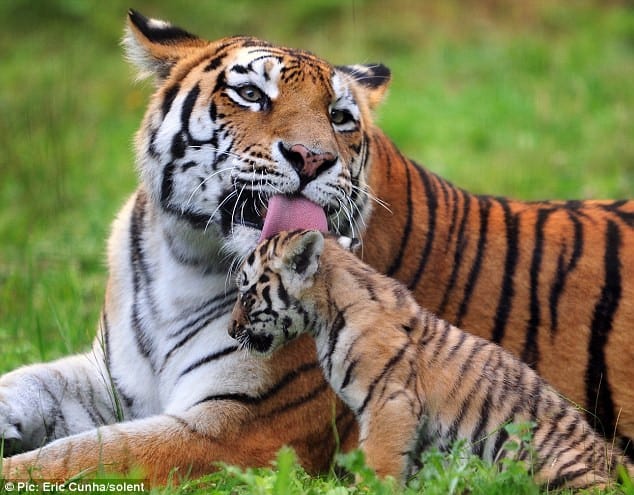
Cunha’s photographs not only capture the bond within the Siberian tiger family but also emphasize the importance of conservation. These magnificent animals, admired for their power and grace, continue to inspire efforts to protect their dwindling populations. Through moments like these, the need to ensure their survival for future generations becomes all the more evident.
Watch the video below:
Read more Wildlife News.


