
After being born at the Australia Zoo in Queensland, Sumatran tiger cubs Spot and Stripe found a temporary but loving home with animal expert and zookeeper Giles Clark.
With fewer than 500 Sumatran tigers left in the wild, breeding programs are vital for survival.
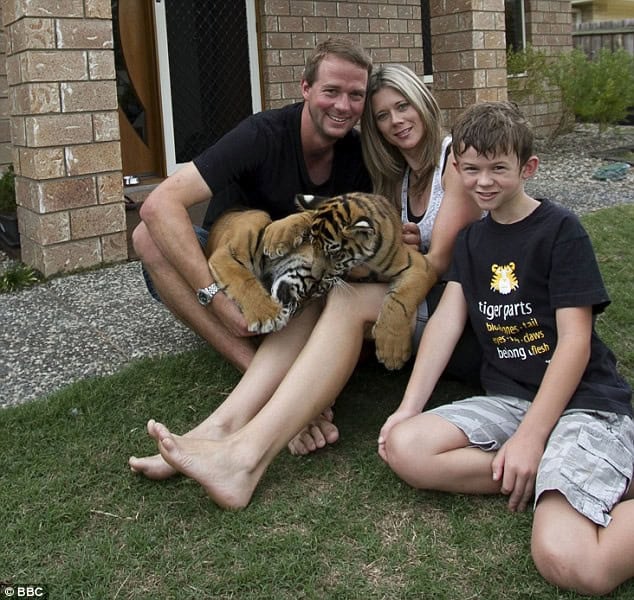
To help ensure Spot and Stripe’s well-being, Mr. Clark cared for the cubs at his home during their early months.
A third of Sumatran tiger cubs born in captivity don’t survive to adulthood, so the round-the-clock care provided by Mr. Clark was crucial.
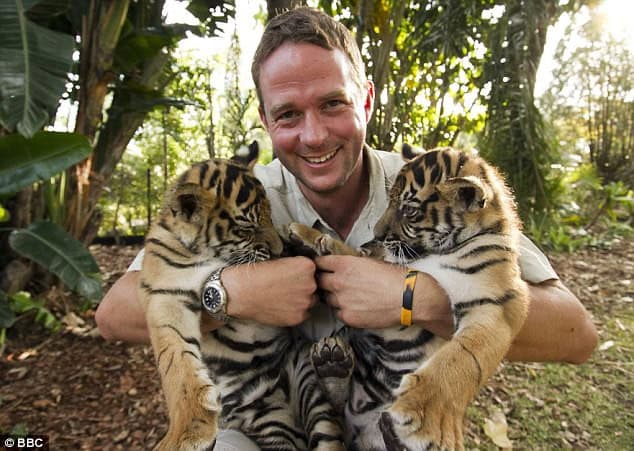
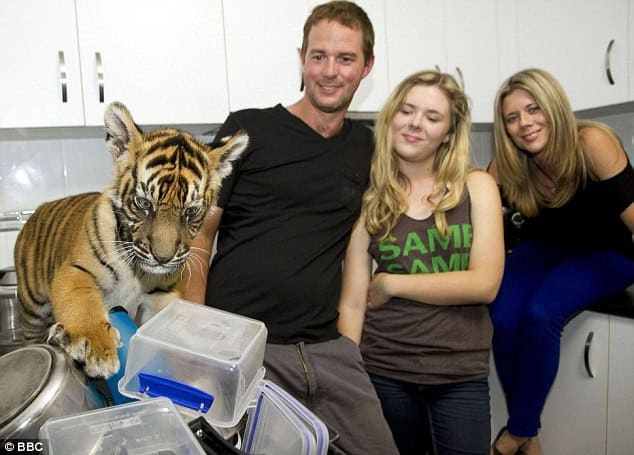
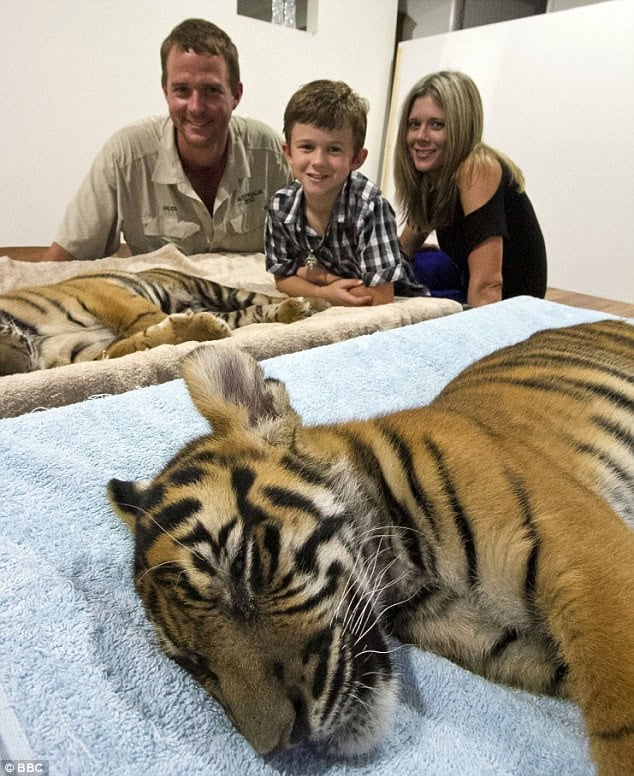
For several months, the cubs lived as part of the Clark family, adapting to a unique environment that blurred the lines between the wild and the human world.
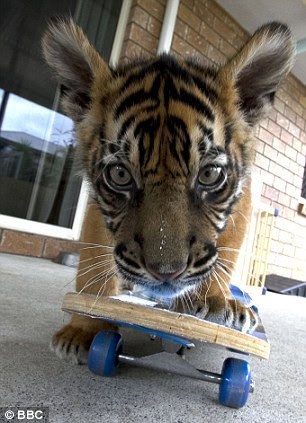
The cubs embraced a playful lifestyle during their stay, from riding skateboards to playing in sandpits.
A purpose-built pool helped them cool off in the heat, and they even made themselves comfortable on the family’s sofas and beds, often curling up for naps with Mr. Clark’s children, Alicia, 16, and Kynan, 8.
Giles Clark, a zookeeper and tiger enthusiast originally from Middlesex, England, became fascinated by big cats at 16 during a visit to a British zoo.
Now living his dream at Australia Zoo, Clark works closely with tigers, whether playing with them or taking them for walks in the nearby bushland.
Believing that closer interactions between humans and animals encourage conservation efforts, Mr. Clark was the natural choice to care for the cubs when their mother, Kaitlin, gave birth.
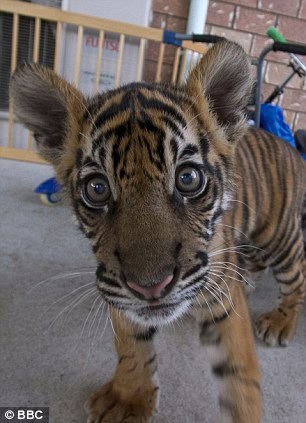
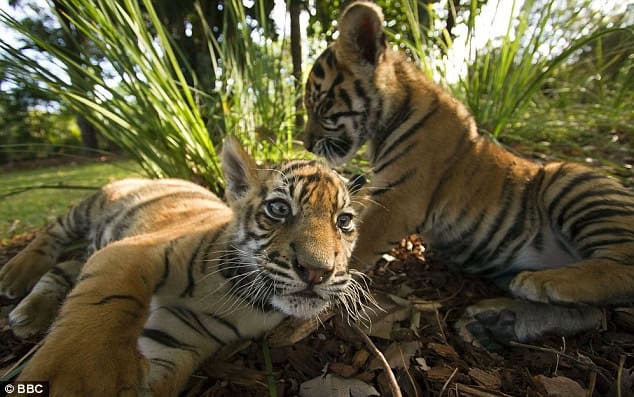
Spot and Stripe, named after their distinct markings, are among the most critically endangered tigers in the world.
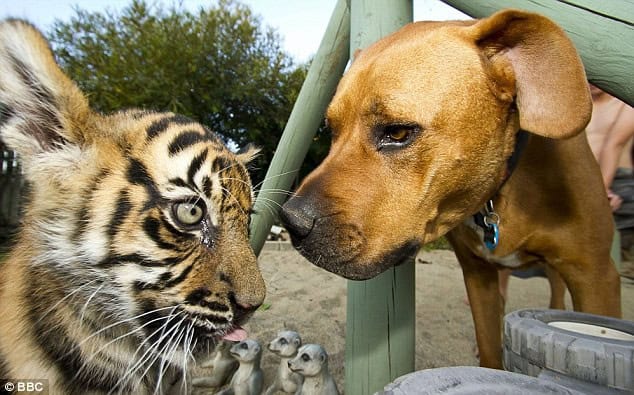
Safely within the Clark household, the cubs quickly formed strong bonds with the family, behaving like curious toddlers as they explored their new environment.
The responsibility of caring for these young cubs was enormous. Mr. Clark had to take on a motherly role, providing constant care and attention. “Like any baby, everything had to be clean and sterile, and the washing machine never stopped,” he recalled. “I was more tired than when my son was a baby.”
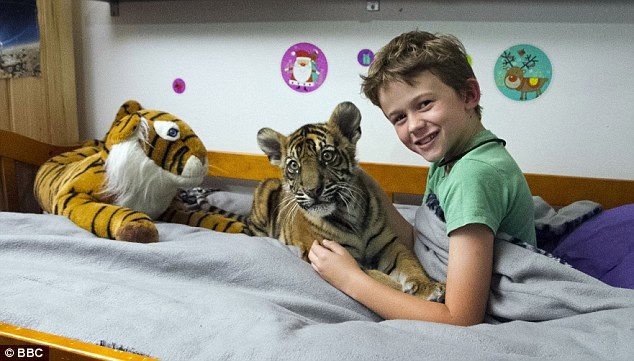
In their early days, the cubs needed help with basic needs, including being stimulated to go to the toilet. “Normally, the mother would lick them, so I had to mimic that with my hand,” Mr. Clark explained. “You never forget how dependent they are in those first few months. Every action affects them.”
The Clark family’s experience closely resembles the plot of Judith Kerr’s famous children’s book, The Tiger Who Came to Tea, where a tiger becomes an unexpected guest in a family’s home.
Spot and Stripe’s remarkable journey with the Clarks will be featured in a new BBC2 documentary, Tigers About the House.
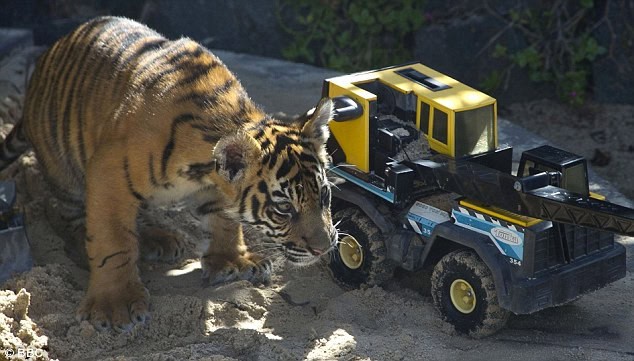
Speaking to the Radio Times, Mr. Clark emphasized the importance of building strong bonds with the animals in his care. “By forming this relationship, which I call a friendship, we can give them a much better quality of life. They’re not stressed or frustrated like tigers in other facilities. We play with them in a purpose-built pool, which would be impossible without this strong bond, and that has to start when they’re very young.”
Read more Wildlife News.


