One of the world’s most elusive and beautiful big cats, the snow leopard, has been captured on camera in the Karakoram mountains of northern Pakistan.
This rare sighting offers a glimpse of a species with only an estimated 4,000 to 6,500 individuals left in the wild.

The snow leopard, known for its shy nature, was seen calmly approaching a camera before giving it a quick snarl and walking away.
This moment was captured as part of a three-year carnivore ecology study focusing on non-invasive monitoring techniques.
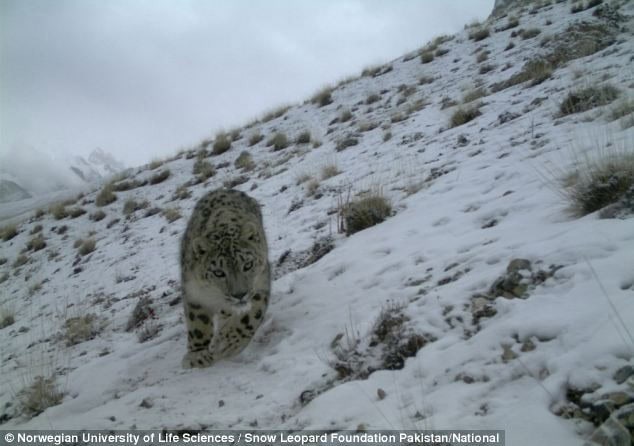
These leopards, often called “ghost cats” or the “grey ghost” due to their elusive behavior, were photographed using camera traps.
This method, alongside genetic sampling, allows scientists to study the animals without physically capturing them.
The study aims to understand better the status and ecology of carnivores in remote regions like the northern mountains of Pakistan.

Richard Bischof, a researcher from the Norwegian University of Life Sciences and the lead author of the study published in Methods in Ecology and Evolution, highlighted the significance of camera traps in wildlife research.
“In these remote, high-altitude areas with rough terrain, camera traps offer a non-invasive way to learn which animals are present and when they are there,” Bischof explained.
Photographing these predators, which included not just snow leopards but also red foxes and stone martens, proved to be a challenging task.
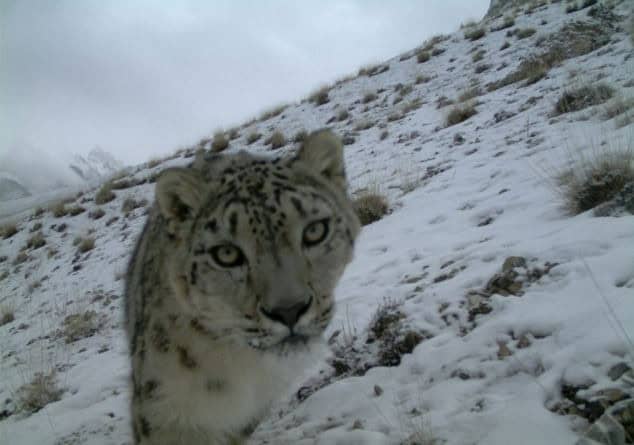
While camera traps can stay in place for weeks or months, capturing the elusive snow leopard takes about five times longer than photographing red foxes, even though both share the same habitat. Scent lures were sometimes used to draw the animals closer to the cameras.
Muhammad Ali Nawaz, director of the Pakistani non-profit Snow Leopard Foundation and a key collaborator in the study, emphasized the broader impact of these projects.
He pointed out that studies like this expand our knowledge of wild carnivores and their ecosystems and help train local wildlife professionals in advanced ecological and conservation techniques.


Read more Wildlife News.