
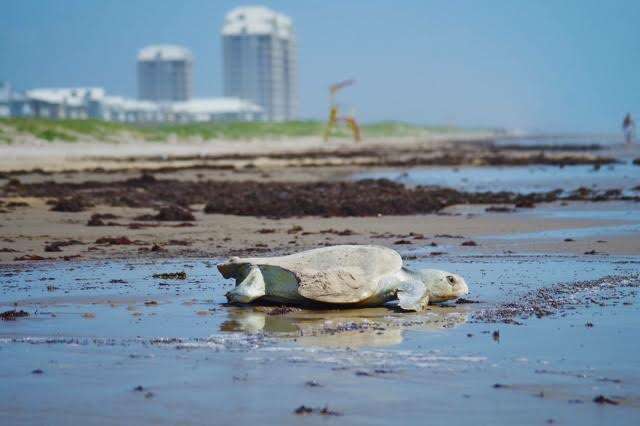
Two days ago, Jeff George, executive director of Sea Turtle, Inc., got a phone call. Someone on a beach on South Padre Island in Texas had spotted a distinctive-looking sea turtle with a large chunk missing from her shell.
George knew this turtle. A little over a month ago, she’d crawled onto the same beach, dug a nest, and laid 85 eggs. An intern had snapped a single photo of her, but the animal disappeared into the ocean before she could get another one.
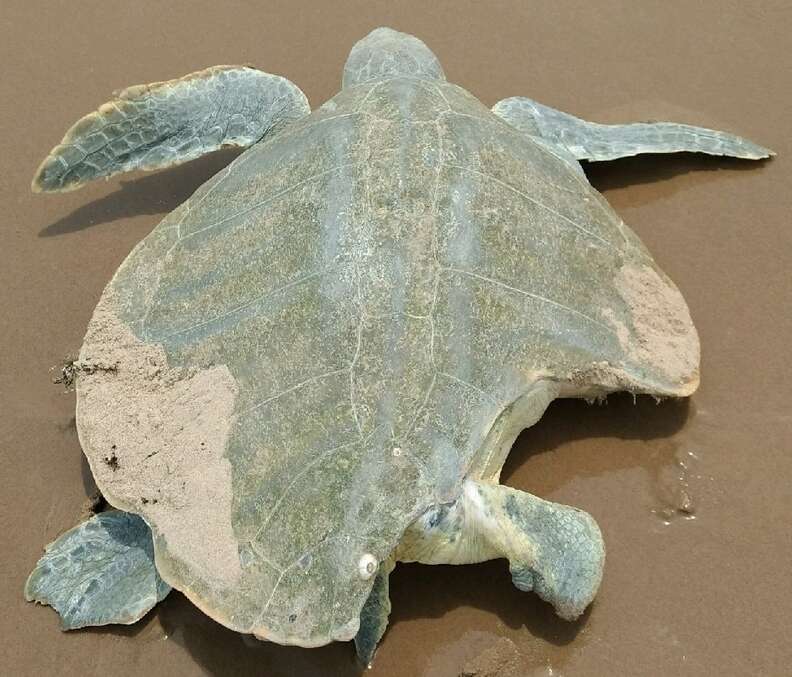
But now the turtle was back with a purpose — to dig another nest and lay more eggs.
While no one knows what happened to this turtle, a predator probably attacked her.
“Turtles are very small when they’re born, so this could have been a fish early on in her life, or it could have been a shark later on,” George said.
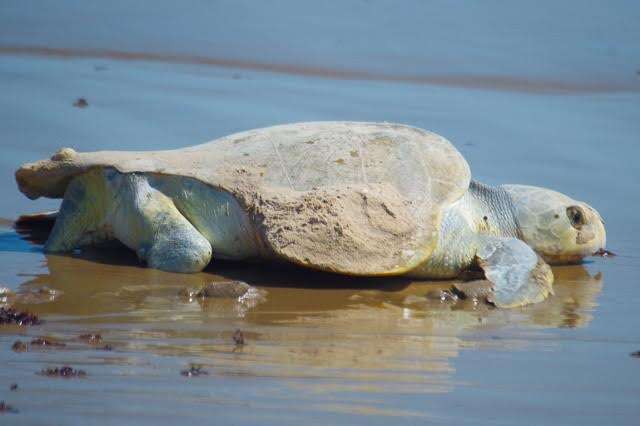
The missing chunk from her shell may have affected the turtle’s ability to swim and stay buoyant and her ability to move through sand.
“She seems to limp,” George said. “If a sea turtle can limp while they’re crawling, she certainly gave that appearance. She kind of walked sideways.”
But nothing was going to stop this mama turtle from doing what she needed to do — this time, she laid 62 eggs.
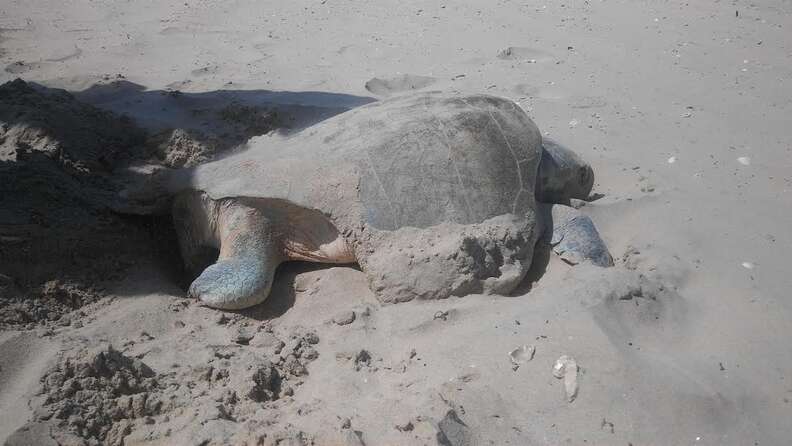
For George, seeing this turtle lay eggs was particularly uplifting — not only because of the turtle’s injury but also because she was a Kemp’s ridley sea turtle, which is the rarest and critically endangered sea turtle species. The main reason these turtles are endangered is the loss and destruction of their nesting grounds — they also get caught in fishing gear like nets and longlines.
While the turtle was nesting, George made the unusual decision to help her dig, as she seemed to be having a little trouble due to her injury.
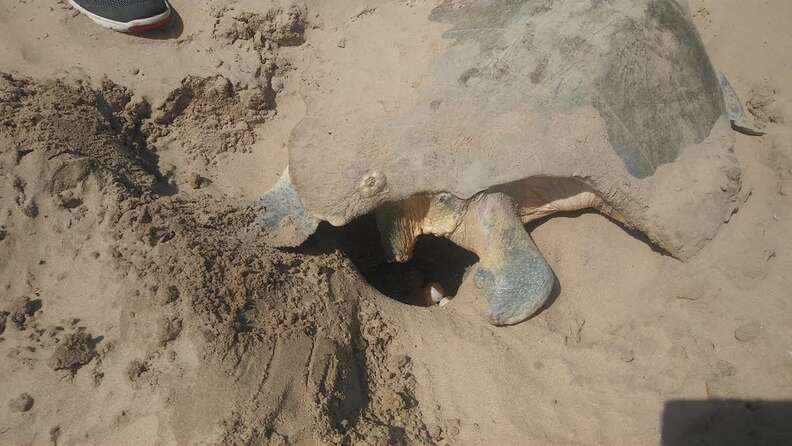
“She chose a rather poor spot to lay her eggs, where the sand was quite hard, and so I called to help,” he said. “As she tried to dig with the short stub [of her flipper], I dug for her.”
After the mother turtle laid her eggs, she packed the nest with sand and made a beeline for the ocean.
While the turtle won’t be around to see her babies hatch, George and his team will do everything possible to ensure the eggs are well taken care of. After the mother laid her eggs, the team moved them to a protected hatchery to ensure they reached the ocean.
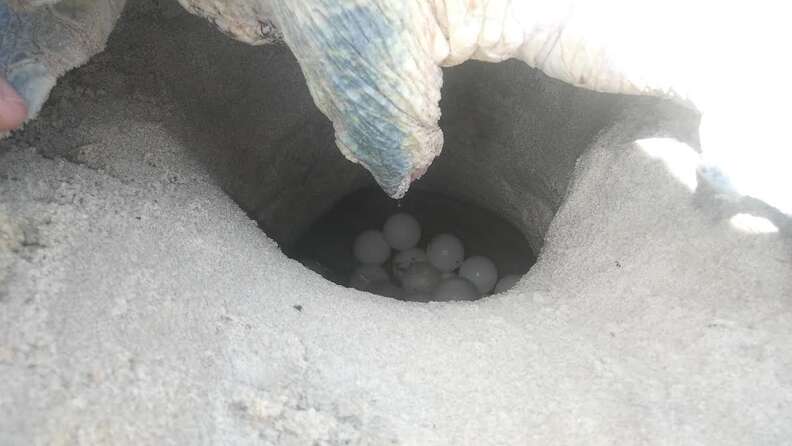
“They are in the hatchery and incubating,” George said.
It’s typical for Kemp’s ridley turtles to lay three lots of eggs, and George believes this lot may have been her third nest.
“The first nest is usually a hundred or more, so this was most likely a third nest for this mama,” he said. “Or it could be that because of the predator attack her reproductive system is smaller, and that this is the maximum amount that she can generate.”
And after her body recuperates, she’ll be ready to nest again in a couple of years, George said.
“Sea turtles have an incredible ability to survive and continue to do their instinctive things like laying eggs,” George said. “She is a testimony to the species’ survival and how hearty sea turtles are.”
Featured Videos
Read more Wildlife News.


