
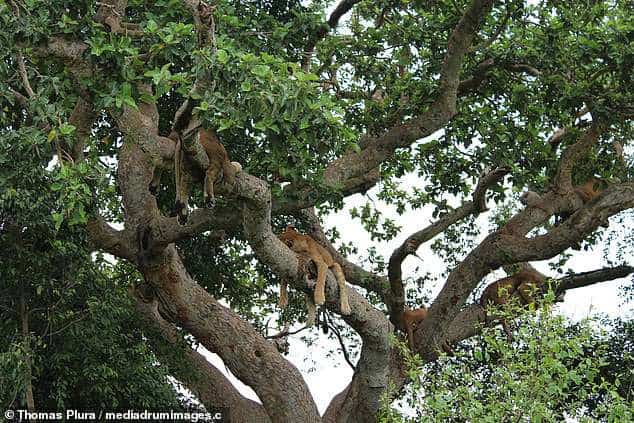
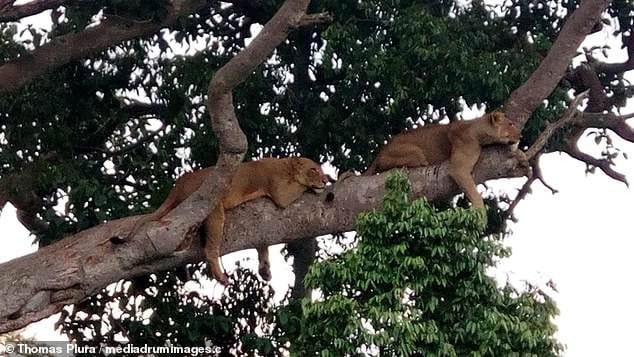
In the wild, nature never ceases to amaze with its spectacular displays. One such marvel is the sight of lions, typically associated with the savannah, lounging high in trees.
This uncommon behavior has been observed in various parts of Africa, where sturdy trees provide shade and strategic vantage points for hunting.
Lions are traditionally seen as ground dwellers, so the image of these majestic cats perched in treetops adds an intriguing twist to their already impressive reputation.
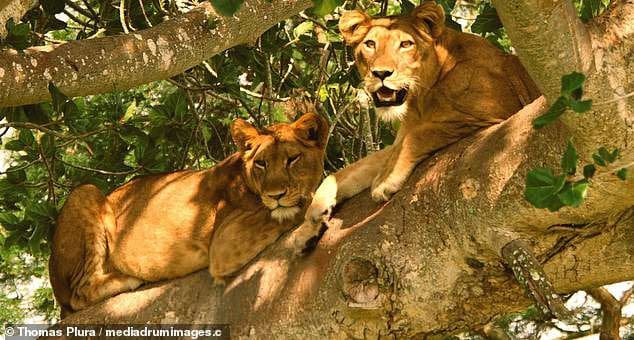
Several reasons explain why lions, despite their size and terrestrial nature, might seek refuge in tree branches.
Firstly, being in a tree elevates lions, enhancing their ability to monitor their surroundings for potential prey or threats.
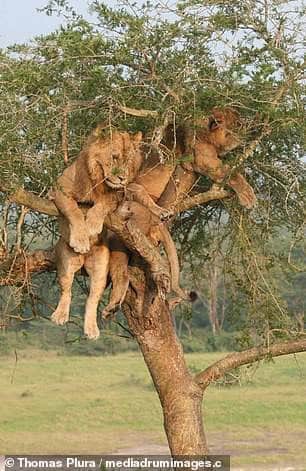
Additionally, the branches offer a cooler and more comfortable resting place, especially during the day’s scorching heat when the ground can become uncomfortably hot.
This behavior also helps lions escape pests like biting insects and bothersome ground-dwelling predators.
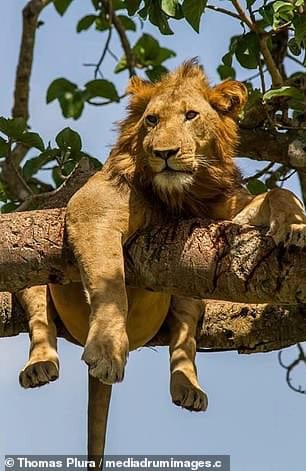
By climbing into the branches, they can avoid these nuisances and enjoy a peaceful nap away from the disturbances of the forest floor.
Seeing a lion in a tree also evokes a sense of surreal beauty and elegance. Against the backdrop of lush foliage, these apex predators exhibit a surprising grace and poise, adding to their enigmatic allure.
However, lounging in trees comes with its own set of challenges. Climbing and balancing on branches require significant agility and strength, skills that lions are not naturally adapted for. There have been instances of lions slipping or falling from trees, but such occurrences are rare.
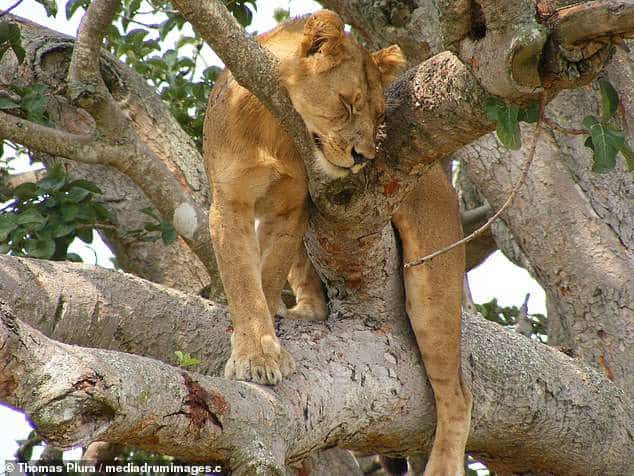
In summary, the sight of lions resting in trees provides a fascinating glimpse into the multifaceted nature of these iconic animals.
Beyond their fearsome reputation as hunters of the savannah, lions show surprising adaptability and a knack for making the most of their environment.
Whether escaping the heat, keeping a vigilant watch, or simply enjoying a nap, lions in trees highlight the majesty and mystery of the natural world.

Read more Wildlife News.


